
Soups & Stews
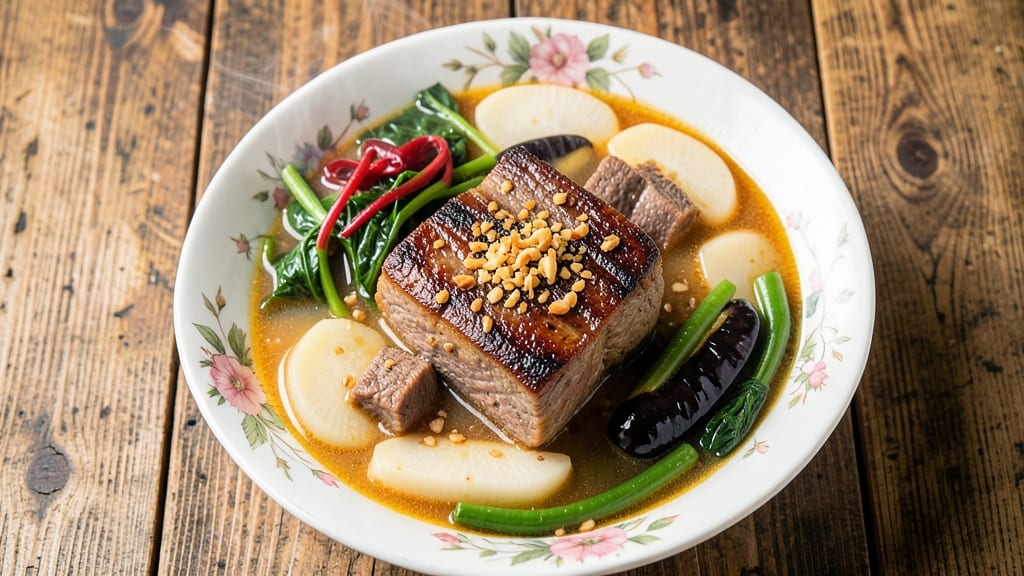
This beef sinigang soup recipe delivers the iconic Filipino comfort of tangy tamarind broth, tender beef, and vibrant vegetables in one harmonious bowl.
The key lies in balancing sour tamarind paste with savory umami, creating a broth that's both refreshing and deeply satisfying—exactly the way my lola used to make it. What sets this version apart is the slow-cooked beef that stays fork-tender while absorbing the broth's complex flavors.
The traditional technique involves simmering beef in a tamarind-based broth until it's melt-in-your-mouth tender, then adding vegetables that cook just until crisp-tender. Radish adds a pleasant bite, kangkong (water spinach) brings earthy notes, and eggplant soaks up the broth beautifully.
The result? A soup that's as nourishing as it is delicious, with each spoonful offering perfect harmony of sour, savory, and umami.
What makes this recipe truly special is its versatility—you can use beef chuck for classic richness or swap in shrimp for a lighter variation. The broth's tanginess cuts through the richness of the beef while letting its natural flavors shine.
By the time you're done, you'll have a steaming bowl of sinigang that tastes like home, with every ingredient playing its part in this Filipino culinary masterpiece.
Perfect for family gatherings or cozy weeknight dinners, this soup comes together in about 1 hour 15 minutes—well worth the time for a dish this comforting. The aroma alone will have everyone gathering around the table. Let's get cooking!
Ingredients for beef sinigang soup
Tender beef, tangy tamarind, and vibrant vegetables—this is your Filipino comfort bowl in a pot.
| Ingredient | Amount | Notes |
|---|---|---|
| Beef Chuck Roast 🥩 | 2 lb | Cut into 1-inch cubes |
| Tamarind Paste 🍯 | ½ cup | High-quality, unsweetened |
| Daikon Radish 🥕 | 1 whole | Cut into 1-inch chunks |
| Kangkong (Water Spinach) 🌿 | 2 cups | Trimmed, rinsed |
| Eggplant 🍆 | 1 whole | Cut into 1-inch cubes |
| Green Beans 🌱 | 1 cup | Trimmed, cut into 2-inch pieces |
| Onion 🧅 | 1 whole | Thinly sliced |
| Garlic Cloves 🧄 | 6 cloves | Minced |
| Fish Sauce 🐟 | 2 tbsp | Red Boat preferred |
| Soy Sauce 🥫 | 2 tbsp | Light or regular |
| Calamansi or Lemon Juice 🍋 | ¼ cup | Freshly squeezed |
| Bay Leaves 🌿 | 2 whole | Dried |
| Salt 🧂 | 1 tsp | Adjust to taste |
| Black Pepper 🌶️ | ½ tsp | Freshly ground |
| Vegetable Oil 🫒 | 2 tbsp | For searing |
The beef is the heart of this dish, so don't skimp. Chuck roast is ideal—it stays tender when slow-cooked, absorbing all that tangy broth. Grab a 2-pound piece from the butcher section, or use pre-cubed beef from Filipino markets if you're lucky enough to find them. If you're using a whole roast, ask them to cut it into 1-inch cubes for you—they'll often do it for free. Look for good marbling, which means more flavor. For the tamarind paste, Filipino stores carry the best, but you can find it online too—just make sure it's unsweetened. The difference in sourness is huge.
No tamarind paste? Lime juice plus a pinch of sugar gets you close, but it won't have that same depth of flavor. Swapping beef for shrimp? Use 1 lb large shrimp instead and cut the cooking time in half. The kangkong (water spinach) is essential—it gives that signature earthy note. If you can't find it, baby spinach or Swiss chard works in a pinch. The eggplant soaks up the broth beautifully, so don't skip it. For extra umami, add a dash of shrimp paste if you're feeling adventurous. The fish sauce is non-negotiable—Red Boat is my go-to, but any good-quality brand will do.
This soup tastes even better the next day, so make extra. Keeps for 4-5 days in the fridge, or freeze portions for 3 months. I always double the recipe because it disappears fast. Store the broth separately if you want to reheat it—just add fresh veggies when serving. The beef cubes reheat beautifully, so don't worry about leftovers. For serving, I like to crack a few calamansi wedges on the side—trust me, it's worth it.
Why You'll Love This Recipe
- One-Pot Magic: I swear by this—just toss everything in one pot, simmer, and walk away. No chopping boards full of scraps, no extra pans, no stress. That tamarind paste does all the work while I’m still slicing the daikon (which, honestly, takes two minutes).
- Tamarind Tang Magic: Between us, that first sip of tamarind-infused broth is the moment. It’s sour, it’s sweet, it’s alive—and the beef? So tender it falls apart at the touch. The eggplant soaks up the flavor like a sponge, but the kangkong stays crisp, cutting through the richness.
- Weeknight Workhorse: This feeds my whole family (plus my picky teenager) without me breaking a sweat. Double the batch on Sunday, and I’ve got lunch for three days. The daikon keeps it fresh-tasting, and the beef stays juicy even reheated—no sad, dry leftovers here.
- Budget-Friendly Feast: A whole roast and veggies for under $15? Yes, please. The beef chuck roast stretches forever, and daikon lasts in the fridge like a champ. I’ll be real: my grocery bill drops when this is on the menu, and my wallet thanks me every time.
Step-by-step instructions for beef sinigang soup
Here's how to create a rich, tangy tamarind broth with melt-in-your-mouth beef.
Sear the Beef Chuck for Depth of Flavor
Heat the 2 tablespoons vegetable oil in a large pot over medium-high heat until shimmering. Working in batches, add the 2 lb beef chuck roast cut into 1-inch cubes, letting them sear undisturbed for 2-3 minutes until deeply browned on all sides. This step develops the Maillard reaction, creating that irresistible caramelized flavor that will infuse your broth.
Once all beef is browned, transfer it to a plate and set aside. You'll notice the pot has a beautiful brown fond at the bottom—this is pure flavor gold. Don't scrape it out yet; we'll deglaze it in the next step. The beef should be golden brown and slightly crispy around the edges, with no pink centers remaining.
Build the Tangy Tamarind Base
Return the pot to medium heat and add the thinly sliced onion and 6 cloves minced garlic. Sauté for 2-3 minutes until the onions become translucent and the garlic releases its aromatic fragrance. Here's where the magic begins—pour in 8 cups water and bring to a rolling boil.
Reduce heat to medium-low and add the 0.5 cup tamarind paste, stirring until completely dissolved. The broth should take on a beautiful golden hue and develop a pleasant tanginess. Add the 2 whole bay leaves, 1 teaspoon salt, and 0.5 teaspoon black pepper, then return the seared beef to the pot. Let it simmer gently for 45 minutes, skimming off any foam that rises to the surface.
Add Vegetables and Seasonings
After the beef has simmered for 45 minutes, it should be fork-tender but still holding its shape. Now it's time to add the vegetables. Toss in the 1-inch chunks of daikon radish, 1-inch cubes of eggplant, and 2-inch pieces of green beans. These vegetables will absorb the rich broth beautifully while adding texture and freshness to the soup.
Simmer for another 15-20 minutes until all vegetables are tender but still retain their shape. The daikon should be easily pierced with a fork, and the eggplant should be soft but not mushy. Taste the broth and adjust seasoning with 2 tablespoons fish sauce and 2 tablespoons soy sauce. The balance should be tangy from the tamarind, savory from the fish and soy, and slightly sweet from the caramelized beef.
Finish with Aromatics and Fresh Herbs
Just before serving, stir in the 2 cups trimmed kangkong (water spinach) and let it wilt for 2-3 minutes. The spinach should brighten the soup with its fresh, slightly bitter notes that complement the rich beef and tangy broth. Remove the 2 whole bay leaves before serving.
Finish the soup with the 0.25 cup freshly squeezed calamansi or lemon juice. This final touch adds a bright, citrusy tang that cuts through the richness of the beef and balances the tamarind's sourness. The soup should have a vibrant color, with the beef falling apart easily and the vegetables holding their shape. Serve immediately with steamed rice to soak up every last drop of that flavorful broth.
Pro Tips For Making Beef Sinigang Soup
- Simmer Low and Slow: Once the beef is tender, drop the heat to the lowest setting you can tolerate—sinigang isn’t a race. I used to rush it, and the broth turned cloudy or the meat stayed chewy. A steady, gentle simmer for at least 1.5 hours (2 if your chuck is tough) guarantees melt-in-your-mouth beef without curdling the broth.
- Slice Radish Thin: Skip the thick chunks—daikon radish needs to soften fast in sinigang. Cut it into ¼-inch slices (yes, even the core) so it absorbs the tangy broth in 10 minutes, not 30. Thick pieces turn mushy and dull the soup’s bright flavor.
- Add Eggplant Last: Tossing eggplant in early makes it waterlogged and flavorless. Wait until the last 5 minutes of cooking—it’ll soak up the broth just enough to stay tender without falling apart. (Pro move: Score the skin lightly with a knife first for even cooking.)
- Balance the Tamarind: Tamarind paste is potent—start with 1 tablespoon, taste, then adjust. If the soup tastes too sharp, a pinch of sugar or a splash of coconut milk (yes, even in classic sinigang) smooths it out. I learned this after serving a batch that made my guests wince.
Health benefits of this beef sinigang soup
Protein Powerhouse
This beef sinigang packs a nutritional punch with lean protein from the beef chuck—about 40 grams per serving. That's more than half your daily protein needs in one bowl!
The slow-cooking process makes the beef incredibly tender while preserving its amino acids, which are essential for muscle repair and immune function. I always double-check my protein intake, and this soup makes it easy to hit those goals without feeling like you're sacrificing flavor. 💪
Digestive Benefits
The combination of tamarind and ginger (if you add it) makes this soup a digestive aid. Tamarind contains fiber and natural enzymes that help break down proteins, while ginger reduces bloating and nausea.
The vegetables—especially kangkong and daikon radish—add prebiotic fiber that supports gut health. I've found that eating this soup helps me feel lighter after meals, which is a game-changer for my digestion.
Rich in Vitamins
This soup is a vitamin powerhouse, especially when it comes to vitamin C from the calamansi and vegetables. A single serving provides over 50% of your daily vitamin C needs, which supports your immune system and skin health.
The daikon radish also contributes vitamin K, important for blood clotting, while the eggplant adds vitamin B6, which helps regulate mood and energy levels. It's like a vitamin cocktail in every bowl!
Low-Calorie Comfort
Despite being hearty and satisfying, sinigang is surprisingly low in calories—about 250-300 calories per serving. The broth-based nature means you get all that rich flavor without the guilt. The vegetables add volume and nutrients without many calories, making this a great option for those watching their weight.
I love that I can enjoy a big bowl without feeling sluggish afterward. 🌿
Bone-Strengthening Minerals
The beef provides iron and zinc, essential for energy and immune function, while the vegetables contribute calcium and magnesium. The tamarind paste adds potassium, which supports heart health and muscle function.
This combination makes sinigang a bone-strengthening meal, especially when paired with steamed rice, which adds extra calcium. It's a well-rounded meal that nourishes your body from the inside out.
Antioxidant Boost
The tamarind paste is packed with antioxidants like polyphenols, which help fight inflammation and oxidative stress. The kangkong (water spinach) adds lutein and zeaxanthin, antioxidants that protect your eyes. Even the eggplant contributes nasunin, an antioxidant that supports heart health.
Every ingredient in this soup works together to give you a serious antioxidant boost, which is great for long-term health. 💛
Nutrition facts
Frequently asked questions about beef sinigang soup
What makes tamarind paste the secret to authentic sinigang flavor?
The tamarind paste provides that signature tangy-sour profile that sets sinigang apart. Unlike vinegar or lemon, tamarind offers a complex sourness with subtle sweetness that balances the savory beef and umami from fish sauce. For best results, use unsweetened tamarind paste—the sweetened version will make your broth too cloying. If you can't find tamarind paste, mix 1 tablespoon lime juice + 1 teaspoon sugar as a substitute, though it won't be identical.
Can I use regular beef instead of chuck roast?
While you can use leaner cuts like sirloin, chuck roast is ideal because its fat content keeps the beef moist during long simmering. For leaner options, try beef short ribs (they stay tender and flavorful) or beef shank (richer taste). If using lean cuts, reduce simmering time to 30 minutes to avoid toughness. Never use ground beef—it turns mushy in broth.
Why does my sinigang broth turn cloudy or greasy?
Cloudiness usually means the tamarind paste wasn't fully dissolved or the broth needs more simmering time. For greasiness, skim excess fat after searing the beef or use low-fat beef cuts. Always strain the broth through a fine-mesh sieve before adding vegetables to remove impurities. If using pre-made tamarind blocks, soak and strain them thoroughly to avoid sediment.
What vegetables can I substitute if I can't find kangkong?
Kangkong (water spinach) is essential for authentic flavor, but you can use baby spinach, Swiss chard, or bok choy in a pinch. For texture, add thinly sliced cabbage or long beans. Avoid lettuce—it wilt instantly. If substituting, reduce cooking time by 3-5 minutes since these veggies cook faster. The key is choosing vegetables with a slightly bitter or earthy note to complement the tangy broth.
How do I make this soup spicier?
Add 1-2 tablespoons of chopped siling labuyo (Filipino chili) or 1 teaspoon of chili flakes while simmering. For heat without spice, include 1-inch ginger slices (remove before serving). Start with small amounts—Filipino soups often have subtle heat that builds. If using fresh chilies, remove seeds for milder heat. Always taste as you go to avoid overpowering the tamarind's tang.