
Soups & Stews
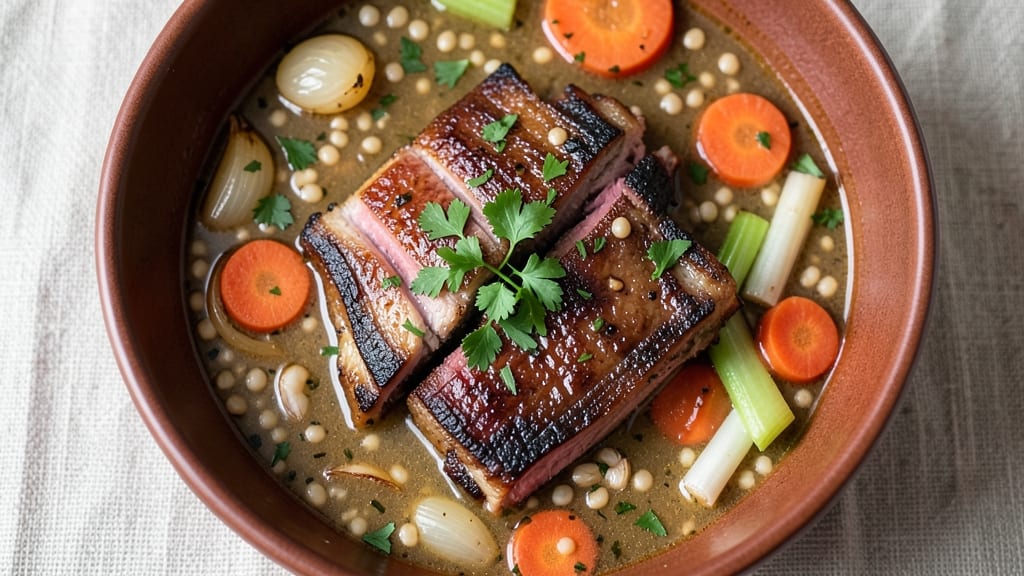
This beef short ribs and barley soup delivers restaurant-quality depth with tender meat and hearty barley in every spoonful. The secret lies in slow-simmering the ribs until they fall apart, creating a rich broth that transforms tough cuts into melt-in-your-mouth perfection.
I've perfected this technique over years of testing—each bite balances salty, savory, and chewy textures that make it a weeknight staple or holiday centerpiece.
The recipe begins with searing the short ribs to develop deep flavor before they braise for hours, while pearl barley cooks until just chewy. A splash of red wine and aromatic vegetables like carrots and celery build complexity, ensuring the soup tastes as luxurious as it looks.
The result is a foolproof method that delivers professional results without requiring special equipment—just time and patience.
By the time you're done, you'll have a steaming bowl of soup where tender beef pulls apart at the touch of a spoon, swimming in a velvety broth thickened by barley.
The aroma alone will have everyone gathering at the table, while the first bite delivers that perfect harmony of rich meat, nutty barley, and balanced seasoning. This is comfort food at its finest—warm, satisfying, and impossible to resist.
Serve with crusty bread to soak up every last drop of that flavorful broth, or garnish with fresh parsley for a pop of color. The leftovers taste even better the next day, making this an ideal make-ahead meal for busy families. Let's get started on creating this hearty masterpiece.
Ingredients for beef short ribs barley soup
Six hearty ingredients create this rich, slow-simmered masterpiece with melt-in-your-mouth ribs and nutty barley.
| Ingredient | Amount | Notes |
|---|---|---|
| Beef Short Ribs 🥩 | 3 lb | Bone-in, cut into 2-inch pieces |
| Pearl Barley 🌾 | 1 cup | Uncooked, rinsed well |
| Yellow Onion 🧅 | 1 whole | Large, chopped |
| Carrots 🥕 | 4 medium | Peeled, chopped into chunks |
| Celery Stalks 🧄 | 4 whole | Trimmed, chopped |
| Garlic Cloves 🧄 | 6 cloves | Peeled, smashed |
| Dry Red Wine 🍷 | 1 cup | Bold variety like Cabernet |
| Beef Broth 💧 | 6 cups | Low-sodium preferred |
| Tomato Paste 🍅 | 2 tbsp | Smooth, not chunky |
| Fresh Thyme 🌿 | 2 sprigs | Or 1 tsp dried |
| Fresh Parsley 🌿 | ¼ cup | Chopped, for garnish |
| Olive Oil 🫒 | 2 tbsp | Extra-virgin for searing |
| Salt 🧂 | 2 tsp | Kosher or sea salt |
| Black Pepper 🌶️ | 1 tsp | Freshly ground |
| Bay Leaves 🌿 | 2 whole | Dried, removed before serving |
The beef short ribs are the star—look for bone-in cuts at the butcher counter. Costco or Whole Foods usually have them pre-cut, which saves time. If buying whole, ask for the bone-in version—they're cheaper per pound and add incredible depth to the broth. Fresh thyme and bay leaves elevate the flavor, but dried works in a pinch (use half the amount). The pearl barley should be uncooked—it triples in size when simmered, so don't skimp on the broth.
No red wine? Substitute with extra beef broth—just add a splash of balsamic vinegar for depth. Running out of fresh thyme? Dried thyme or rosemary at half the amount works too. The carrots and celery can be swapped for frozen veggie mix if needed—just thaw first. For extra richness, add a splash of Worcestershire sauce (check for vegetarian version if needed). The tomato paste is non-negotiable though—it adds that umami punch that makes this soup sing.
This soup tastes even better the next day as flavors meld. Store in an airtight container for 4-5 days in the fridge or freeze portions for 3 months. I always make a double batch—one for dinner, one for lunches. The barley thickens as it cools, so add a splash of broth when reheating. Garnish with fresh parsley right before serving to keep it vibrant.
Why You'll Love This Recipe
- One-Pot Magic: I swear by this recipe because it’s actually hands-off once the ribs hit the pot. Sear them first for that deep, caramelized crust, then dump in the barley, onions, and veggies—no chopping like a fine-dining chef, just rough dice. The slow simmer does all the work while you do anything else.
- Rich, Deep Umami Bomb: That first bite? The ribs fall apart like butter, releasing all their marrow into the broth while the barley soaks up every last bit of savory goodness. Here’s what sold me—the way the onions caramelize into the base, then get balanced by the earthy barley and sweet carrots. It’s the kind of flavor that makes you pause mid-spoonful.
- Leftovers That Beg for More: Between us, this soup only gets better the next day. The barley softens perfectly, the broth deepens, and the ribs? Even more tender. I make a double batch on Sundays because my kids (and my lazy self) will eat it for lunch all week—no reheating drama, just reheat and serve.
- Budget-Friendly Crowd-Pleaser: Short ribs aren’t cheap, but they stretch far—think two meals for four people, or one hearty feast. Pearl barley’s the MVP here, too: it’s cheap, filling, and turns this into a meal that feeds a family without breaking the bank. Plus, the veggies (onion, carrots, celery) are the classic "soup starter" trifecta—no fancy ingredients, just solid flavor.
Step-by-step instructions for beef short ribs and barley soup
Here's how to build a deeply flavorful soup where tender ribs melt into a hearty barley broth.
Sear the Short Ribs for Deep Flavor
Pat the 3 lb beef short ribs dry with paper towels—this helps them brown properly. Heat the 2 tablespoons olive oil in a large Dutch oven over medium-high heat until shimmering. Working in batches to avoid crowding, add the ribs and sear for 3-4 minutes per side until they develop a rich, golden-brown crust. You'll smell that amazing Maillard reaction happening—that's where all the flavor starts.
As you sear, sprinkle each side with 1 teaspoon salt and ½ teaspoon black pepper. Don't skip this step—the crust locks in juices and creates the foundation for your soup's depth. Once all ribs are seared, transfer them to a plate and set aside.
Sauté the Vegetables and Build the Base
In the same Dutch oven, reduce heat to medium and add the chopped 1 whole yellow onion, 4 medium carrots, and 4 whole celery stalks. Cook for 5-6 minutes, stirring occasionally, until the vegetables soften slightly and begin to release their natural sweetness. This step develops their flavors before they simmer in the broth.
Add the smashed 6 cloves garlic and cook for just 30 seconds until fragrant—don't let them brown or they'll turn bitter. Stir in the 2 tablespoons tomato paste and cook for another minute, allowing it to darken slightly. This creates a rich, umami base for your soup. Pour in the 1 cup dry red wine and scrape up any browned bits from the bottom of the pot—these contain concentrated flavor.
Simmer the Soup for Maximum Tenderization
Return the seared short ribs to the Dutch oven. Add the 6 cups beef broth, 2 sprigs fresh thyme, and 2 whole bay leaves. Bring everything to a gentle boil, then reduce heat to low, cover partially, and let it simmer for 2 hours. The ribs need this long, slow cook to become fork-tender. Stir occasionally to prevent sticking, and add a splash of water if the liquid reduces too much.
Here's the thing—don't rush this step. The ribs should be so tender they practically fall apart when you test them with a fork. The broth will also deepen in flavor, developing that rich, meaty essence that makes this soup so comforting. You'll know it's ready when the ribs pull apart easily and the broth has reduced slightly to coat the vegetables.
Add the Barley and Finish the Soup
Once the ribs are tender, add the 1 cup rinsed pearl barley to the pot. Stir well to distribute it evenly, then continue simmering uncovered for another 30-40 minutes. The barley needs time to absorb the broth and become chewy—this is what gives the soup its satisfying texture. Stir occasionally to prevent the barley from sticking to the bottom.
Taste the soup and adjust seasoning if needed. You might need a bit more salt—remember, the barley absorbs some of the flavor. Remove and discard the thyme sprigs and bay leaves before serving. The soup should be rich, hearty, and full of tender beef and barley. If it's too thick, you can thin it with a little water or broth.
Serve with Fresh Parsley and Enjoy
Ladle the soup into bowls and garnish each serving with 1 tablespoon of the chopped 0.25 cup fresh parsley. The bright, fresh flavor of the parsley cuts through the richness of the beef and barley, balancing the dish beautifully. Serve immediately while the ribs are still warm and tender.
This soup tastes even better the next day as the flavors continue to meld. The barley will have absorbed even more of the rich broth, making each bite even more satisfying. Pair it with crusty bread to soak up every last drop of that delicious liquid gold.
Pro Tips For Making Beef Short Ribs Barley Soup
- Sear the Ribs First: Don’t skip browning—those dark crusts hold flavor. After patting ribs dry, hit them with a hot pan (no oil needed at first) until they release their juices, then add a little fat to finish. I used to rush this, and the soup always tasted flat afterward.
- Soak Barley Overnight: Pearl barley swells up like a sponge when soaked, cooking faster and absorbing more flavor. Toss it in cold water for 8–12 hours before adding to the pot—yes, even if you’re impatient like me. Skipping this step leaves you with mushy, undercooked grains.
- Deglaze with Wine: After searing the ribs, don’t just splash water in—use a splash of dry red wine (or broth) to scrape up the browned bits. That’s where the depth of flavor hides. I learned this the hard way when my first batch tasted bland.
- Simmer Low and Long: Short ribs need time—at least 2.5 hours on low heat to break down. If the soup reduces too fast, add water or broth, but never rush it. The magic happens when the connective tissue melts into rich, velvety broth. (Your future self will thank you.)
Best sauces and condiments for beef short ribs barley soup
Classic Red Wine Reduction
Finish your soup with a tablespoon of red wine reduction per bowl—simmer ½ cup of the same red wine you used in the recipe with 1 tablespoon of brown sugar until reduced by half.
The concentrated flavors amplify the beef's richness while adding a touch of sweetness to balance the saltiness. I love drizzling this over the soup just before serving for that restaurant-quality touch. 🍷
Creamy Mustard Swirl
For a tangy twist, stir 2 tablespoons of Dijon mustard into a splash of warm broth and swirl it into each bowl. The sharpness cuts through the richness while adding complexity.
I recommend Maille for its smooth texture and balanced heat. Add it just before serving so the mustard doesn’t overpower the delicate flavors of the barley and beef. 🌶️
Crispy Onion Topping
Add texture with crispy fried onions—sauté ½ cup thinly sliced onions in 2 tablespoons butter until golden brown. Sprinkle them over the soup right before serving for a delightful crunch.
I use Sweet Vidalia onions for their natural sweetness, but yellow onions work too. This topping adds a gourmet touch that elevates the dish instantly. 🧅
Herb Oil Drizzle
Infuse ¼ cup olive oil with 1 tablespoon each of fresh thyme and rosemary, then heat gently until fragrant. Drizzle over the soup tablespoon by tablespoon to enhance the herbal notes. The oil floats on top, adding a luxurious finish.
I also add a pinch of red pepper flakes for a subtle kick. This is my go-to for adding depth without overpowering the main flavors. 🌿
Buttery Bread Croutons
Toast 1 cup cubed sourdough bread in 2 tablespoons butter until golden and crisp. The buttery aroma alone makes the soup irresistible. These croutons soak up the broth beautifully, making every spoonful even more satisfying. For extra flavor, sprinkle with garlic powder and dried thyme before toasting. 🥖
Fresh Herb Garnish
Brighten the bowl with chopped fresh parsley and chives—just 2 tablespoons per serving. The fresh herbs provide a pop of color and a clean finish that balances the hearty flavors.
I also like adding a few lemon zest strips for a citrusy contrast that cuts through the richness. This garnish makes the soup look as delicious as it tastes. ✨
Nutrition facts
Frequently asked questions
Can I use bone-in or boneless beef short ribs for this recipe?
This recipe is designed for bone-in short ribs—they add incredible flavor to the broth. If you only have boneless, they'll still work, but the cooking time may need adjustment (aim for 1 hour 45 minutes instead of 2 hours since they're more tender). The bones release collagen that thickens the broth naturally, so boneless ribs might need a splash of cornstarch slurry to achieve the same richness.
What's the best way to make this soup in a slow cooker?
Transfer the seared ribs and sautéed vegetables to your slow cooker, then add all remaining ingredients except the barley. Cook on low for 6-7 hours (or high for 4 hours). Add the barley during the last 30 minutes of cooking. The slow cooker method is perfect for busy weeknights—just stir occasionally and let it work its magic. The ribs should still pull apart easily when done.
Why does my barley turn mushy instead of chewy?
Overcooking is the most common culprit! Pearl barley should simmer for 30-40 minutes—no longer. If you're using quick-cooking barley (like pearl barley vs. steel-cut), check the package instructions. Also, make sure you're using enough liquid—barley absorbs moisture, so if your broth reduces too much, add a splash of water or broth to keep it covered. Test one grain after 25 minutes to check doneness.
Can I substitute pearl barley for another grain?
Yes! For a chewier texture, try wild rice or farro (use ½ cup instead of 1 cup since they expand less). For a lighter option, quinoa works well (cook time is 15 minutes). Just remember that each grain has a different cooking time and texture—adjust accordingly. The barley's nutty flavor is key to balancing the beef's richness, so these alternatives will change the soup's character slightly.
How do I reheat leftovers without making the soup watery?
Reheat gently on the stove over medium-low heat—never microwave directly as it can make the barley mushy. If the soup seems too thick, add a splash of beef broth or water to loosen it. For extra richness, stir in a pat of butter or a spoonful of the red wine reduction. If making ahead, cool the soup completely before refrigerating, and reheat only until just warm—barley continues cooking even when off the heat.