
Soups & Stews
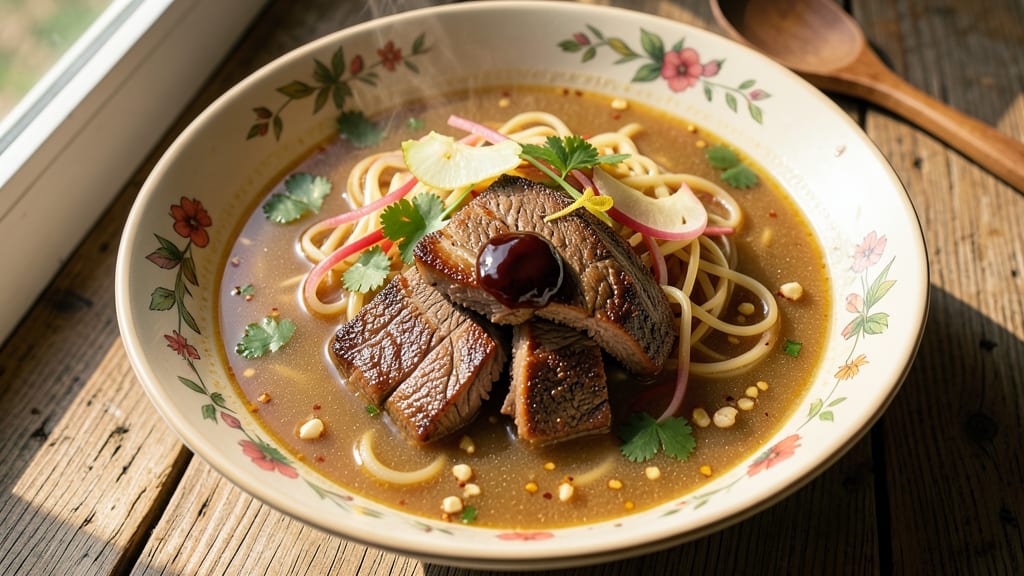
This Filipino beef noodle soup delivers the kind of slow-simmered comfort that warms you from the inside out. 💛 The secret lies in charring aromatics—garlic, onion, and ginger—until they release deep, smoky notes that form the soul of the broth.
What starts as a simple pot of ingredients transforms into a rich, umami-packed soup with tender beef, silky egg noodles, and a balance of savory, sweet, and tangy flavors that define Filipino home cooking.
The recipe builds layer upon layer of flavor, beginning with a fragrant base of charred vegetables and lao po (shrimp paste) for that unmistakable Filipino depth. Soy sauce and fish sauce add umami, while a touch of sugar rounds out the complexity.
The beef simmers until fork-tender, absorbing the broth’s rich essence, while the egg noodles cook just until al dente, so they stay silky when tossed in.
What you’ll end up with is a steaming bowl of soul-soothing soup—golden, aromatic, and packed with hearty beef and tender noodles. The broth is velvety yet robust, carrying the essence of traditional Filipino flavors without being overpowering.
Garnish with fresh green onions and a squeeze of calamansi for brightness, and you’ve got a dish that’s perfect for chilly days or as a comforting meal any time of year.
This recipe serves 4 and can be prepped ahead, making it ideal for meal prep or feeding a crowd. The beauty of Filipino beef noodle soup lies in its adaptability—use leftover broth for rice, or double the noodles for extra servings. Let’s get cooking!
Ingredients for beef noodle soup filipino
Charring aromatics and slow-simmered beef create this soul-warming Filipino beef noodle soup.
| Ingredient | Amount | Notes |
|---|---|---|
| Beef Chuck Roast 🥩 | 1 ½ lb | Cut into 1-inch cubes |
| Egg Noodles 🍜 | 8 oz | Fresh or dried, medium width |
| Yellow Onion 🧅 | 1 whole | Sliced into wedges |
| Garlic Cloves 🧄 | 6 cloves | Peeled, left whole |
| Fresh Ginger 🌿 | 2 tbsp | Grated, packed |
| Lao Po (Shrimp Paste) 🦐 | 1 tbsp | Traditional Filipino paste |
| Soy Sauce 🍶 | 2 tbsp | Light or regular |
| Fish Sauce 🐟 | 1 tbsp | Red Boat preferred |
| Brown Sugar 🍚 | 1 tbsp | Light or dark |
| Vegetable Oil 🫒 | 3 tbsp | For charring aromatics |
| Water 💧 | 8 cups | For broth base |
| Salt 🧂 | 1 tsp | Kosher or sea salt |
| Black Peppercorns 🌶️ | ½ tsp | Freshly cracked |
| Green Onions 🧅 | 4 whole | Sliced for garnish |
| Calamansi or Lime Juice 🍋 | 1 tbsp | For brightness |
The beef is non-negotiable here—chuck roast gives you that melt-in-your-mouth texture after hours of simmering. Costco or local butchers often carry it pre-cubed, but if you're buying a whole roast, ask for the chuck section. The lao po (shrimp paste) is the Filipino soul of this dish—find it at Asian markets or online (try Filipino stores or Amazon). Fresh ginger and garlic should be vibrant and firm; no shriveled or moldy bits. For the noodles, fresh egg noodles from the refrigerated section have the best texture, but dried works in a pinch if you're short on time.
No shrimp paste? Anchovy paste at half the amount works in a pinch, though it won't be identical. Short on brown sugar? White sugar or coconut sugar will do, but the molasses notes from brown sugar are worth it. The Red Boat fish sauce is the gold standard—its clean, salty profile shines here. No fresh ginger? Ginger powder at half the amount, but fresh is always better. For the beef, sirloin or flank steak can substitute if chuck is unavailable, but it won't be as tender. The green onions should be fresh—wilted ones won't add the same brightness to your bowl.
This soup tastes even better the next day as flavors meld. Store leftovers in the fridge for 4-5 days or freeze for 3 months. I like to portion it into containers with a splash of broth and noodles on top—just reheat with a splash of water. The broth freezes beautifully too, perfect for future rice bowls. For extra richness, save the fat from the charred aromatics—it's liquid gold for drizzling on top.
Why You'll Love This Recipe
- One-Pot Magic: I swear by this recipe—just brown the beef chuck, toss in the onions, garlic, and ginger, then let it simmer. No separate pots, no extra bowls. The broth thickens right in the pan while the noodles cook, and honestly? That’s my kind of stress-free meal.
- Ginger-Garlic Bomb: Between us, the ginger and garlic here aren’t just flavor—they’re experience. The ginger’s sharp bite cuts through the rich beef, while the garlic softens into this deep, toasty aroma that makes the whole kitchen smell like a Filipino comfort hug. (Yes, even on a Tuesday night.)
- Lunchbox Hero: This soup is my go-to for meal prep because it actually reheats well. Pack it in thermoses for work or school—no soggy noodles, no sad flavors. My kids dump the leftovers into rice bowls the next day, and I don’t even have to ask.
- Budget Beef Power: A single beef chuck roast stretches for days—I’ve fed four people for three meals from one cut. The egg noodles are cheap, the onions and garlic are pantry staples, and the ginger? A little goes a long way. Not the prettiest, but the taste makes up for it every time.
Step-by-step instructions for Filipino beef noodle soup
Here's the method for crafting a deeply flavorful Filipino beef noodle soup with tender beef and silky noodles.
🔥 Step 1: Sear the Beef for Deep Flavor
Cut the 1.5 lb beef chuck roast into 1-inch cubes and pat them dry with paper towels. Heat 2 tablespoons vegetable oil in a large pot over medium-high heat until shimmering. Working in batches to avoid crowding, add the beef cubes and sear for 3-4 minutes per side until they develop a deep brown crust. This step builds the rich foundation of your soup.
Once the beef is browned on all sides, remove it from the pot and set aside. You'll notice the beef releases some of its juices into the pot—these will form the base of your aromatic broth. Don't wipe out the pot; those browned bits (fond) are packed with flavor that will dissolve into your soup as it simmers.
🍳 Step 2: Char the Aromatics for Complex Depth
In the same pot, add the remaining 1 tablespoon vegetable oil and increase heat to medium-high. Add the 1 whole yellow onion (sliced into wedges) and cook for 3-4 minutes, stirring occasionally, until the edges begin to caramelize. Remove the onion and set aside with the beef.
Add the 6 peeled garlic cloves and 2 tablespoons grated fresh ginger to the pot. Cook for 1-2 minutes until the garlic turns golden and the ginger becomes fragrant. Here's where it gets good—add the 1 tablespoon Lao po (shrimp paste) and stir for 30 seconds until it releases its intense aroma. This paste is the soul of Filipino soups, so don't skip this step. The mixture should smell rich and slightly funky—this is exactly what you want.
🥘 Step 3: Build the Broth Base
Return the beef and onion to the pot. Add 8 cups water, 2 tablespoons soy sauce, 1 tablespoon fish sauce, 1 tablespoon brown sugar, 1 teaspoon salt, and 0.5 teaspoon freshly cracked black peppercorns. Bring everything to a rolling boil over high heat, then immediately reduce heat to low to maintain a gentle simmer.
Cover the pot and let it simmer for 1.5 hours. You'll notice the beef will gradually become fork-tender as it breaks down in the liquid. Stir occasionally to prevent the aromatics from sticking to the bottom. The broth should reduce slightly, becoming more concentrated and flavorful. The beef is done when it's easily pierced with a fork and pulls apart cleanly.
⏰ Step 4: Finish with Noodles and Brightness
While the beef simmers, prepare the 8 oz egg noodles according to package instructions for al dente texture. Drain and set aside. Just before serving, add the cooked noodles to the soup pot and simmer together for 2-3 minutes to absorb the rich flavors. The noodles should be tender but still have a slight bite.
Remove the pot from heat and stir in the 1 tablespoon calamansi or lime juice. This final touch brightens the soup, cutting through the richness of the beef and broth. Taste and adjust seasoning if needed—you might want to add a bit more fish sauce for umami depth or soy sauce for saltiness. The soup should be well-balanced with savory, sweet, sour, and umami notes.
🍽️ Step 5: Serve with Garnishes
Ladle the hot soup into bowls, dividing the noodles evenly. Garnish each serving with sliced green onions for freshness and color. Serve immediately while the noodles are hot and the broth is steaming. The aroma alone will make your kitchen smell like a Filipino comfort food restaurant.
This soup is best enjoyed fresh, with each spoonful delivering layers of flavor—tender beef, silky noodles, and a complex broth that's both comforting and exciting. The beauty of this recipe is in its simplicity; just a few quality ingredients combined with patience and proper technique yield an incredibly satisfying bowl of soup.
Pro Tips For Making Beef Noodle Soup Filipino
- SEAR THE BEEF FIRST: Don’t skip browning that chuck roast—high heat for 4-5 minutes per side builds deep flavor. I learned this the hard way when my first batch tasted like broth, not soup. Use a heavy pot and don’t move it until it’s deeply caramelized.
- SIMMER LOW AND LONG: After boiling, drop the heat to a bare simmer (tiny bubbles, not rolling) and cook the beef for at least 2.5 hours. Too much heat = tough meat, and no one wants chewy beef in their noodle soup.
- PREP THE GINGER RIGHT: Peel and slice ginger thinly—about 1/8-inch thick—and toast it in the pot with the onions and garlic for 30 seconds. This removes the raw bite and adds a warm, aromatic depth that frozen or untoasted ginger can’t match.
- ADD NOODLES LAST: Cook the noodles separately and toss them in the hot broth just before serving—this keeps them from turning to mush. If you’re short on time, use fresh egg noodles (they hold up better than dried) and add them with 2 minutes left on the stove.
Best sauces and condiments for this dish
Traditional Lao Po
This Filipino shrimp paste (lao po) is non-negotiable for authentic flavor—it adds a deep, funky umami that no other ingredient can replicate. I recommend Filipino brand Lao Po from Asian markets, but Red Boat fish sauce can substitute in a pinch if unavailable.
For a milder version, reduce to ½ tablespoon and add ½ teaspoon soy sauce to balance. The paste should sizzle and release aroma within 30 seconds—if it burns, lower the heat immediately. 🦐
Sweet-Savory Balance
Filipino soups thrive on the sweet-savory-sour trifecta, and this recipe nails it with brown sugar, soy sauce, and calamansi. For extra depth, add 1 teaspoon toasted sesame oil at the end—it enhances nutty notes. If you lack calamansi, lime juice works, but the tang won’t be as bright.
For a sweeter broth, increase sugar to 1.5 tablespoons, but taste first—Filipino soups should be savory-forward with just a hint of sweetness. 🍚
Umami Boosters
Take your broth to the next level with optional umami enhancers: Stir in 1 teaspoon oyster sauce for richness or ½ cup diced mushrooms (shiitake or button) during simmering. For a smoky twist, add ½ teaspoon smoked paprika with the spices.
Pro tip: Save the beef fat from the pot—it’s packed with flavor and perfect for drizzling on top like a Filipino "fat drizzle" (chicharon). 💛
Fresh Garnishes
Brighten every bowl with green onions, cilantro, or siling labuyo (bird’s eye chili) for heat. For a restaurant-worthy touch, top with crispy fried garlic (store-bought or homemade) or crumbled queso de bola for a creamy contrast.
If using chili, add it after serving—it burns easily in hot broth. The acidity from calamansi or lime balances the richness, so don’t skip it! 🌿
Broth Upgrades
Transform your broth into a Filipino "sinigang" base by adding 1 cup tamarind pulp (for sourness) or 1 bay leaf for earthiness. For a clearer broth, strain it through a fine-mesh sieve before adding noodles.
If the soup tastes flat, boost umami with 1 extra teaspoon fish sauce or a splash of Pattaya fish sauce—it’s saltier and more complex than Red Boat. 🍶
Dipping Sauces
Serve with sweet chili sauce (mix 1 tbsp soy sauce + 1 tbsp honey + ½ tsp chili flakes) or sour tamarind dip (1 tbsp tamarind paste + 1 tsp sugar + 1 tsp vinegar).
For a spicy kick, blend 1 tbsp siling labuyo, 1 tbsp vinegar, and 1 tsp sugar into a paste. These sauces elevate the soup’s flavors between bites—Filipinos love dipping! 🌶️
Nutrition facts
Frequently asked questions
Can I substitute beef chuck roast with another cut?
Yes, but texture will differ. For similar tenderness, use beef short ribs or chuck shoulder. If using sirloin or flank steak, cut into ½-inch strips and reduce simmering time to 45 minutes—these leaner cuts won't break down as much. The key is fat content; lean meats yield less flavorful broth.
What if I don't have Lao po (shrimp paste)?
Use anchovy paste (½ tablespoon) or Red Boat fish sauce (1.5 tablespoons) as substitutes. For a milder taste, add ½ teaspoon soy sauce to balance. The paste creates that signature Filipino funk—without it, the broth will taste more generic but still delicious.
How can I make this soup spicier?
Add 1-2 tablespoons siling labuyo (bird's eye chili) during simmering, or stir in ½ teaspoon chili flakes at the end. For heat control, serve chili oil on the side or garnish with sliced fresh chili. Remember: chili burns easily in hot broth, so add it last.
Can I make this soup in an Instant Pot?
Sear the beef and aromatics first, then add all ingredients except noodles. Cook on high pressure for 40 minutes, then quick-release. Finish with noodles and calamansi juice. The broth will be slightly thinner—reduce it on the stove if needed. Instant Pot time: 1 hour total.
Why does my broth taste flat?
Flat broth usually means insufficient umami or simmering time. Boost flavor by adding 1 extra teaspoon fish sauce or ½ cup diced mushrooms during cooking. For depth, simmer uncovered for 10 extra minutes to concentrate flavors. The beef should be fork-tender—if not, extend simmering time.