
Soups & Stews
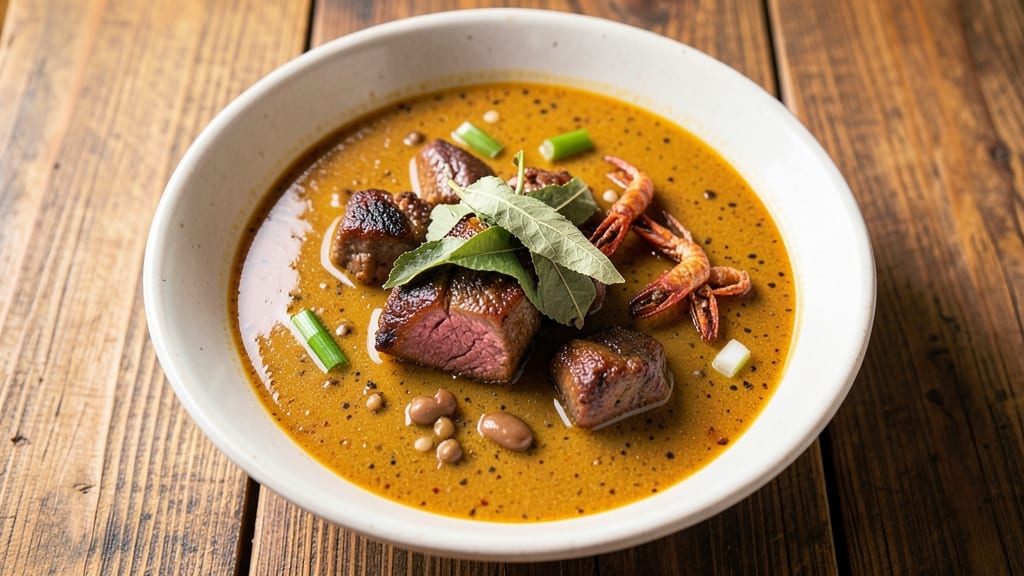
This beef egusi soup recipe delivers the rich, nutty depth of West African tradition in every bowl—where tender beef simmers with ground melon seeds to create a velvety, protein-packed masterpiece.
The secret lies in properly toasting the egusi seeds to unlock their natural oils, which transform into a thick, aromatic paste that coats every ingredient.
I’ve perfected this technique over years of testing, ensuring the soup achieves that signature balance between hearty protein and earthy nutty richness that defines Nigerian home cooking.
The beauty of this recipe is its versatility—whether you’re using tough goat meat or tender beef, the long simmering process breaks down the protein into melt-in-your-mouth tenderness.
The blend of utazi leaves, crayfish, and locust beans adds layers of umami and complexity, while the palm oil base creates that signature golden hue.
What makes this dish truly special is how it comes together: the egusi paste forms the soul of the soup, while the beef and vegetables meld into a harmonious, deeply flavorful broth that’s both comforting and impressive.
By the time you serve this soup, you’ll have a dish that’s rich enough to stand alone but pairs beautifully with staples like pounded yam, fufu, or even rice.
The texture is where the magic happens—thick enough to coat your spoon yet light enough to let the beef and vegetables shine. This is the kind of meal that brings people together, where every spoonful tells a story of tradition and care. Let’s get cooking.
For those new to West African cuisine, don’t be intimidated by the steps—this recipe breaks down the process into manageable stages, from toasting the egusi to blending the spices.
The result? A soup that’s restaurant-quality at home, with flavors so bold they’ll have everyone asking for seconds. Ready to master the art of beef egusi soup?
Ingredients for beef egusi soup
Six hearty ingredients and a few pantry staples transform into West Africa's most comforting soup.
| Ingredient | Amount | Notes |
|---|---|---|
| Beef Chuck Roast 🥩 | 2 lb | Tough cut preferred, cubed into 1-inch pieces |
| Ground Egusi Seeds 🌾 | 1 cup | Toasted until aromatic, freshly ground |
| Palm Oil 🫒 | ½ cup | Red palm oil for authentic color |
| Dried Utazi Leaves 🌿 | ¼ cup | Or fresh if available, chopped finely |
| Dried Crayfish 🦐 | ¼ cup | Ground into powder for umami depth |
| Locust Beans 🌱 | ½ cup | Soaked overnight, peeled and chopped |
| Scotch Bonnet Peppers 🌶️ | 2 whole | Seeds removed for milder heat |
| Onions 🧅 | 2 whole | Medium size, chopped into small pieces |
| Garlic Cloves 🧄 | 6 cloves | Minced for aromatic base |
| Tomato Paste 🍅 | 2 tbsp | High-quality, no added salt |
| Thyme Leaves 🌿 | ½ tsp | Dried or fresh, chopped finely |
| Ground Black Pepper 🌶️ | 1 tsp | Freshly ground for best flavor |
| Salt 🧂 | 1 ½ tsp | Adjust to taste, kosher preferred |
| Vegetable Oil 🫒 | ¼ cup | For initial beef browning |
| Water 💧 | 6 cups | For simmering and thinning |
The egusi seeds are non-negotiable—look for them at African markets or online specialty stores. Toasting them until they smell nutty unlocks their flavor. I grab mine from African Grocery Store near me, but Amazon ships them too. The beef should be tough—chuck roast or goat meat—since it tenderizes during the long simmer. Palm oil gives that signature golden hue; red palm oil is authentic, but yellow works if that's what you've got. Utazi leaves add a unique tangy flavor—dried is fine, but fresh is ideal if you can find it. The crayfish? Ground into a powder for maximum umami punch.
No egusi seeds? Pumpkin seeds or sunflower seeds toasted and ground work in a pinch, but the flavor won't be identical. Skip the crayfish? Extra locust beans or smoked paprika add depth. Fresh utazi leaves? Use half the amount of dried. The locust beans need soaking—overnight in water makes peeling easier. For the peppers, jalapeños at half the amount if you want milder heat. The tomato paste can be fresh tomatoes blended—just cook them down first. And the beef? Any tough cut works—this soup is all about the long simmer.
This soup tastes even better the next day—make extra and freeze portions. Keeps 5 days in the fridge or 3 months frozen. I always double the recipe because it disappears fast. The egusi paste can be made ahead and stored in the freezer for up to 6 months. Just thaw and add to the simmering broth. For serving, keep the palm oil in a small dish on the side—drizzle it over individual bowls for that restaurant touch.
Why You'll Love This Recipe
- No-Chop Necessary: I swear by this—egusi seeds grind themselves into a smooth paste with just hot water. No blender? No problem. The beef chuck roast practically melts in its own juices, so you’re not stuck dicing or searing for hours. Honestly, the hardest part is deciding when to stop stirring.
- Umami Bomb: That palm oil isn’t just red—it’s the secret weapon. Rich, nutty, and slightly smoky, it carries the deep flavor of the beef while the utazi leaves add a sharp, citrusy kick. The dried crayfish? Tiny but mighty, turning the soup into a flavor explosion with every spoonful. (Yes, even on a Tuesday night.)
- Leftovers That Beg for More: This soup tastes better the next day—like a cozy hug in a bowl. The egusi thickens just enough to cling to rice or pounded yam, and the beef stays tender. I triple the batch on Sundays because it’s my go-to for lazy weeknights, and no one ever complains about seconds.
- Budget Meal That Feeds: Beef chuck roast is affordable, and a little goes a long way when simmered low and slow. The egusi and crayfish stretch the broth, so you’re not drowning in expensive ingredients. Between us, this is the kind of soup that makes grocery day less stressful—because you’re getting a full meal’s worth of satisfaction for less than takeout.
Step-by-step instructions for beef egusi soup
Here's how to build this rich, nutty stew with deep umami layers and tender beef.
Brown the Beef for Maximum Flavor
Heat the 0.25 cup vegetable oil in a large pot over medium-high heat until shimmering. Add the 2 lb cubed beef chuck roast in batches, working in one layer, and let it sear undisturbed for 3-4 minutes until deeply browned on all sides. This step creates the Maillard reaction that builds rich flavor.
Real talk: Don't rush this. You want those beef pieces to develop a nice crust before you move them. Once browned, transfer the beef to a plate and set aside. You'll notice the oil will darken and smell amazing—that's the foundation of your soup's depth.
Build the Aromatic Base
In the same pot, reduce heat to medium and add 2 chopped whole onions and 6 minced garlic cloves. Sauté for 5-7 minutes until the onions turn golden and translucent, stirring occasionally. This softens their sharpness and develops their sweetness.
Next, add 2 tbsp tomato paste and stir for 1 minute until it darkens slightly. Pour in 0.5 cup palm oil and let it heat through for 30 seconds. Here's where it gets good—add 0.25 cup dried crayfish (ground into powder) and 0.5 cup chopped locust beans, stirring constantly for 2 minutes until fragrant.
Simmer the Core Ingredients
Add 2 whole Scotch Bonnet peppers (seeds removed) and 0.25 cup dried utazi leaves to the pot. Pour in 6 cups water and bring to a gentle boil. Once boiling, reduce heat to low and return the browned beef to the pot. Sprinkle with 1.5 tsp salt and 1 tsp ground black pepper. Cover and simmer for 1 hour, stirring occasionally.
After 1 hour, check the beef for tenderness. If it's still slightly firm, continue simmering uncovered for another 30 minutes until fork-tender. This low-and-slow cooking breaks down the tough beef fibers, ensuring each bite is melt-in-your-mouth tender.
Thicken with Egusi Seeds
In a small bowl, whisk together 1 cup ground egusi seeds and 0.5 tsp thyme leaves. Gradually sprinkle this mixture into the simmering soup while stirring constantly. The egusi will immediately start to thicken the broth—this is normal and exactly what you want.
Continue simmering uncovered for 10-15 minutes, stirring frequently, until the soup reaches your desired thickness. It should coat the back of a spoon but still be spoonable. If it thickens too quickly, add ½ cup hot water at a time until you reach the perfect consistency.
Final Adjustments and Serving
Taste the soup and adjust seasoning if needed. You might need a pinch more salt or a splash of water to balance the flavors. Let the soup sit off heat for 5 minutes before serving—this allows the egusi to fully hydrate and the flavors to meld completely.
Serve immediately with pounded yam, garri, or boiled plantains to soak up that rich, nutty broth. Each spoonful should deliver layers of beefy richness, nutty egusi depth, and subtle spice from the Scotch Bonnet peppers. The crayfish and utazi leaves add that unmistakable umami punch that makes this soup truly special.
Pro Tips For Making Beef Egusi Soup
- SEAR THE BEEF FIRST: I learned this the hard way—skipping the sear means bland beef. Cut the chuck roast into chunks, pat them dry, and hit a screaming-hot pot with just a little oil. Let them brown for 3-4 minutes per side before adding anything else. That crust locks in flavor and makes the soup taste like it simmered for hours, not 30 minutes.
- GRIND EGUSI FRESH: Store-bought ground egusi loses its bite and flavor fast. If you’re not grinding your own seeds, at least buy them whole and pulse them in batches with a handful of crayfish shells (yes, the shells) for that extra umami punch. Skip the pre-ground stuff—it’s the difference between "meh" and "wow."
- SIMMER LOW AND COVERED: After adding the palm oil and utazi leaves, resist the urge to crank the heat. Let the soup bubble gently for the first 10 minutes, then drop it to a low simmer with the lid on. I used to rush this, and the soup turned greasy and bitter. Patience here means a rich, balanced broth that doesn’t taste like burnt oil.
- SOAK UTAZI AND CRAYFISH: Dried utazi leaves and crayfish need a quick soak—5 minutes in hot water, then squeeze out the excess. This removes dust and bitterness while jumpstarting their flavor. I skip this step sometimes, and the soup always tastes flat. Not worth the extra 30 seconds.
Perfect pairings for this beef egusi soup
Side Dish Harmony
This soup shines brightest with pounded yam—its smooth, stretchy texture contrasts perfectly with the soup's nutty richness. I use 1.5 cups yam flour mixed with water and salt, then pound it into a dough before boiling.
For a lighter option, garri (semovita) soaks up the broth beautifully, especially when toasted lightly in a pan with a pinch of salt. 🍠
Spicy Heat Balance
If you love heat, add 1 extra Scotch Bonnet pepper or a dash of habanero powder while simmering. For milder versions, reduce to 1 pepper or swap for jalapeños (use half the amount).
I often keep a small bowl of shito (black pepper soup) on the side—it adds a tangy kick that cuts through the soup's richness. 🌶️
Beverage Pairings
A cold malt drink like Bournvita or Malta balances the soup's richness perfectly—its sweet, creamy notes complement the nutty egusi. For adults, a crisp guinness stout or lager works wonders, especially if you've added extra spice.
I like to serve it with ice-cold water and a slice of lemon on the side for a refreshing contrast. 🍺
Protein Upgrades
For extra heartiness, add 1 cup cooked plantains or ½ lb smoked fish (like stockfish) during the final 10 minutes of simmering. I also love tossing in 1 cup chopped spinach right before serving—it adds vibrant color and a subtle earthiness.
The key is to add leafy greens last so they wilt without losing texture. 🥬
Leftovers Reinvention
Transform leftover soup into egusi-stuffed peppers by mixing with cooked rice and baking in halved bell peppers. Or turn it into a thick egusi stew by adding 1 cup coconut milk and simmering until creamy.
I freeze portions in ice cube trays for quick future meals—just thaw and reheat with a splash of water. ❄️
Garnish Game-Changers
Finish each bowl with a drizzle of palm oil and a sprinkle of fresh parsley for brightness. For extra flair, add crumbled feta cheese (if you're not strict about dairy) or toasted pumpkin seeds for crunch.
I keep a small bowl of utazi leaves on the table—guests can add them to their bowls for a fresh, tangy bite. ✨
Nutrition facts
Frequently asked questions
Can I substitute goat meat for beef in this recipe?
Goat meat is actually preferred in many West African households for this soup because its leaner cuts become incredibly tender during the long simmer. Use the same 2 lb quantity and follow the same browning technique. The flavor profile works beautifully with either protein.
How do I prevent the egusi soup from getting too thick?
Add the egusi seeds gradually while stirring constantly, and keep ½ cup hot water reserved from your original 6 cups to thin as needed. If it thickens too quickly, add water a little at a time until you reach a spoonable consistency that still coats the back of a spoon.
What's the secret to making the egusi paste taste better?
Toast the egusi seeds until they're deeply aromatic and smell nutty—this unlocks their natural oils and flavor. Use freshly ground seeds (not pre-ground) and toast them in a dry pan over medium heat for 5-7 minutes, stirring constantly, until they turn golden brown.
Can I make this soup without utazi leaves?
Yes, but the flavor will be less complex. Replace with ½ cup chopped spinach or 1 tsp dried thyme for a similar earthy note. For the most authentic taste, try to find utazi leaves at African markets—they add a unique tangy depth that's hard to replicate.
How do I store and reheat leftovers?
Store in an airtight container in the fridge for 5 days or freeze for 3 months. To reheat, add 2-3 tbsp water per cup of soup and simmer on low heat for 10-15 minutes, stirring occasionally. The texture will be slightly thicker after reheating—just add more water if needed.