
Soups & Stews
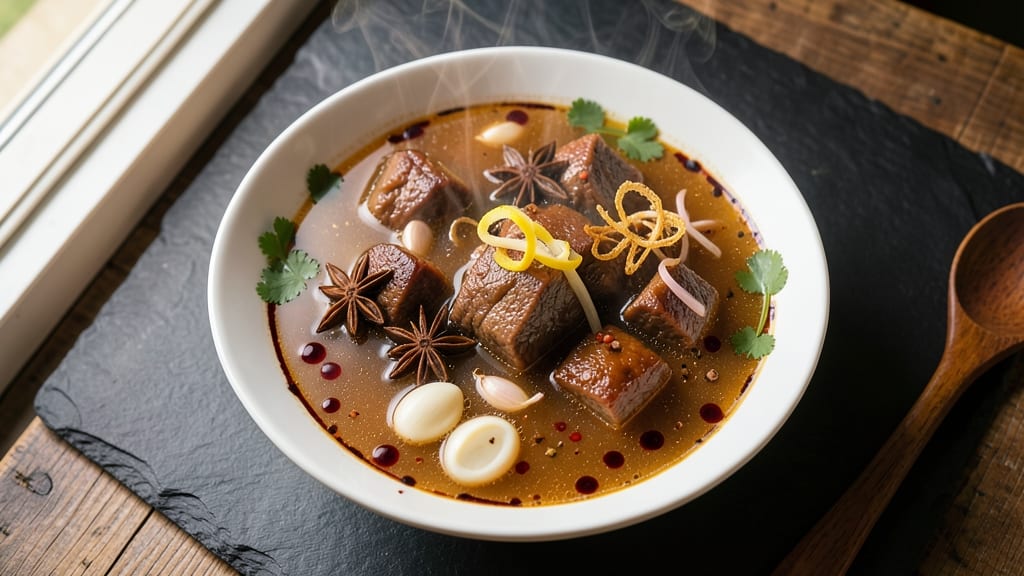
This Chinese beef brisket soup transforms tough meat into melt-in-your-mouth tenderness through a slow-cooked broth infused with star anise and aromatic spices. The key lies in proper preparation—marinating the brisket overnight and simmering it for hours until it practically falls apart with each spoonful.
What makes this recipe special is the balance of deep, smoky flavors from the star anise and soy sauce, creating a rich, savory base that's both comforting and complex.
The secret to achieving that signature texture begins with a high-heat sear to lock in juices, followed by a slow simmer that develops layers of flavor.
Traditional Cantonese techniques ensure the broth remains clear and aromatic, while optional Sichuan variations add a subtle kick of chili for those who prefer a touch of heat. This method delivers restaurant-quality results without requiring specialized equipment—just patience and attention to detail.
By the time you're done, you'll have a steaming bowl of soup where each bite offers tender, flavorful brisket swimming in a fragrant broth that's perfect for chilly evenings. The aroma alone will have everyone gathering around the table, while the rich, umami-packed broth makes every spoonful satisfying.
Serve with steamed rice or crusty bread to soak up every last drop of that delicious liquid gold.
Whether you're making this for a family dinner or meal prepping for the week, this beef brisket soup delivers hearty comfort with minimal effort after the initial preparation.
The beauty of this recipe lies in its versatility—adjust the spice level to taste or add vegetables like daikon and mushrooms for extra texture and nutrition. Let's get started on creating a bowl of warmth that feels like home.
Ingredients for beef brisket soup recipe chinese
Star anise, ginger, and brisket create this deeply aromatic Chinese soup's heart.
| Ingredient | Amount | Notes |
|---|---|---|
| Beef Brisket 🥩 | 2 lb | Flat cut preferred, trimmed of fat |
| Star Anise 🌿 | 2 whole | Whole pods for infusion |
| Fresh Ginger 🧅 | ½ cup | Peeled, sliced into coins |
| Garlic Cloves 🧄 | 6 cloves | Smash lightly before adding |
| Soy Sauce 🍶 | ½ cup | Dark soy for color depth |
| Shaoxing Wine 🍷 | ¼ cup | Or dry sherry substitute |
| Daikon Radish 🥕 | 1 lb | Cut into chunks, skin on |
| Shiitake Mushrooms 🍄 | 8 whole | Stems removed, whole |
| Green Onions 🧅 | ¼ cup | White and green parts separated |
| Sesame Oil 🫒 | 1 tbsp | Toasted for aroma |
| Cornstarch 🌾 | 1 tbsp | For broth thickening |
| Water 💧 | 8 cups | Or good quality beef broth |
| Salt 🧂 | 1 ½ tsp | Adjust to taste |
| White Peppercorns 🌶️ | ½ tsp | Crushed for subtle heat |
| Sichuan Peppercorns 🌶️ | ¼ tsp | Optional for numbing heat |
The brisket is non-negotiable—look for flat-cut with good marbling at Whole Foods or your local butcher. Star anise pods should be whole and plump, not cracked or dusty. For ginger, fresh is essential—the dried version lacks the bright punch this soup needs. I always double-check the brisket's fat cap; trim it down to about 1/4-inch thickness for cleaner broth. Costco often has brisket pre-cut for soup, which saves time. If using frozen brisket, thaw it overnight in the fridge—never at room temperature.
No star anise? Anise seeds at double the amount work in a pinch, but the flavor won't be identical. Shaoxing wine unavailable? Dry sherry or Mirin both bridge the gap, though Shaoxing's deeper caramel notes are ideal. Fresh ginger must be peeled—brown skin is bitter. For daikon, baby daikon works if you're short on time, but larger radishes add better texture. The mushrooms? Dried shiitake rehydrated intensifies umami, but fresh are fine too. Just don't skip them—they're the soup's secret flavor multiplier.
This soup tastes even better the next day as flavors meld. Store in airtight containers for up to 5 days in the fridge, or freeze for 3 months. I portion it into containers with rice so lunches are ready to grab. The broth reduces slightly when reheated—add a splash of water if it gets too thick. For extra richness, reserve some broth before serving and drizzle it over the top at the table. The sesame oil should be added last—just a few drops—to preserve its aroma.
Why You'll Love This Recipe
- One-Pot Magic: I swear by this recipe—just toss everything into a pot, simmer, and walk away. No chopping mountains of veggies or fussing with layers; the brisket practically melts into rich, fragrant broth while the star anise and ginger do all the heavy lifting.
- Deep Umami Bomb: That first sip? Chef’s kiss. The soy sauce and garlic build layers of savory depth, but it’s the star anise that steals the show—like a warm, spiced hug in a bowl. Honestly, I’ll take this over takeout any day.
- Leftover Goldmine: This soup only gets better the next day. The brisket stays tender, the flavors meld, and I’ve turned it into lunches, packed it for work, or even reheated it for dinner—no one ever complains. (Yes, even my picky teenager.)
- Budget Beef Boost: A pound of brisket stretches for days, and the spices cost pennies. I buy it on sale, freeze half, and still have enough for three hearty bowls. It’s my go-to when groceries are tight but I refuse to skimp on flavor.
Step-by-step instructions for Chinese beef brisket soup
Here's the method for creating a deeply flavorful brisket soup with tender meat and aromatic spices.
Prepare the Brisket and Aromatics
Begin by trimming the 2 lb Beef Brisket of any excess fat, leaving about ¼ inch thickness for flavor. Cut the brisket into 2-inch chunks for even cooking. In a separate bowl, combine 6 cloves Garlic Cloves (lightly smashed), 0.5 cup Fresh Ginger (sliced into coins), 2 whole Star Anise, 0.5 tsp White Peppercorns (crushed), and 0.25 tsp Sichuan Peppercorns (lightly toasted in a dry pan for 30 seconds to release aromas).
This aromatic blend forms the flavor foundation of your soup. The star anise and Sichuan peppercorns add that signature Chinese warmth, while the ginger and garlic create depth. Keep these ingredients separate from the brisket until the next step to prevent premature cooking.
Sear the Brisket and Build the Broth
Heat 1 tbsp Sesame Oil in a large pot over medium-high heat. Add the brisket chunks in a single layer, searing for 3-4 minutes per side until they develop a deep golden-brown crust. This step creates the Maillard reaction that forms complex flavors.
Remove the brisket and set aside. In the same pot, add the prepared aromatics and cook for 1 minute until fragrant. Pour in the 0.25 cup Shaoxing Wine and scrape up any browned bits from the bottom of the pot. This deglazing step captures all the flavor you just created.
Simmer the Brisket with Vegetables
Add 8 cups Water, 0.5 cup Soy Sauce, 1.5 tsp Salt, 1 lb Daikon Radish (cut into chunks), and 8 whole Shiitake Mushrooms (stems removed) to the pot. Bring to a boil, then reduce heat to low and add the brisket back in. Cover and simmer for 2 hours, partially uncovered, until the brisket becomes fork-tender.
You'll know it's ready when the meat pulls apart easily and the broth has reduced slightly. The daikon radish should be soft but still hold its shape, and the mushrooms should be tender. This long simmering time is crucial for developing the soup's rich, collagen-based broth.
Finish and Thicken the Soup
Remove the brisket and set it aside. In a small bowl, whisk together 1 tbsp Cornstarch with 2 tablespoons of the soup broth until smooth. Slowly pour this mixture back into the pot while stirring constantly. Simmer for 3-5 minutes until the broth thickens slightly to a velvety consistency.
Return the brisket to the pot and stir in the 0.25 cup Green Onions (white parts only, chopped). Taste and adjust seasoning with additional salt if needed. The soup should be balanced between the umami of the brisket, the sweetness of the daikon, and the aromatic spices.
Serve with Garnish and Fresh Herbs
Ladle the hot soup into serving bowls, garnishing each with 2 tablespoons of the remaining Green Onions (green parts only, sliced). The brisket should be served in the broth, allowing diners to enjoy both the tender meat and flavorful liquid. For extra richness, you can drizzle a small amount of toasted sesame oil over each serving.
This soup is best enjoyed immediately while the brisket is still warm and the broth maintains its velvety texture. The combination of tender beef, aromatic spices, and hearty vegetables creates a comforting dish that captures the essence of Chinese home cooking.
Pro Tips For Making Beef Brisket Soup Recipe Chinese
- BLANCH THE BRISKET FIRST: I learned this the hard way—skipping the quick blanch (2-3 minutes in boiling water) leaves your brisket tough as boot leather. The shock jumpstarts the collagen breakdown, so the soup turns silky instead of stringy. (Yes, even if you're impatient like me.)
- CRUSH THE STAR ANISE: Whole star anise? Nope. Lightly crush it with the flat of a knife before tossing it in—this releases the oils and aromatics faster. I used to toss in the whole pods and wonder why my soup tasted like it was missing something. (It’s not just laziness; it’s flavor.)
- SIMMER LOW AND LONG: This isn’t a race. After the initial sear, drop the heat to a barely simmer—think tiny bubbles, not rolling. I’ve rushed it twice, and the brisket ended up dry. Low and slow (2.5–3 hours) melts the fat and renders the meat into tender perfection.
- TOAST THE GINGER: Skip the raw ginger—it’ll make your soup taste medicinal. Lightly char the slices in a dry pan for 30 seconds until fragrant. The caramelized edges add depth, and it balances the soy’s saltiness. (Sounds weird, but it works.)
Dietary considerations for this dish
Gluten-Free Adaptations
This soup is naturally gluten-free if you use tamari instead of regular soy sauce—just swap the ½ cup soy sauce for ½ cup tamari. I always keep tamari on hand for gluten-free cooking because it has the same rich umami depth without the gluten.
Double-check your Shaoxing wine label too; some brands contain wheat. For extra safety, add a splash of coconut aminos if you're highly sensitive to cross-contamination. 💛
Dairy-Free Considerations
This recipe is already dairy-free, but if you're adding any garnishes, watch for dairy in toppings. Stick to sesame oil, green onions, and toasted sesame seeds to keep it safe. Some Chinese restaurants add a splash of cream, but that's completely optional here.
The natural richness comes from the brisket and broth, so no dairy substitutes are needed. Trust me, the soup shines on its own!
Low-Carb Modifications
To make this soup lower in carbs, reduce the daikon radish to ½ lb and skip the mushrooms entirely. The brisket and broth will still provide hearty satisfaction without the extra carbs.
For extra flavor without the carbs, add ½ cup sliced bok choy or ½ cup napa cabbage—they add texture and nutrients without significant carbs. The soup remains deeply flavorful while fitting better into low-carb meal plans.
Spice Level Control
If you're sensitive to heat, skip the Sichuan peppercorns entirely—they provide that signature numbing spice. The white peppercorns add subtle warmth without overpowering. For a milder version, reduce the soy sauce to ¼ cup and add 1 tsp honey to balance flavors.
The star anise and ginger still deliver that comforting aroma without any heat. I've made this soup for guests with spice sensitivities, and they always ask for seconds!
Vegetarian Substitutions
While this is a beef brisket soup, you can create a vegetarian version by replacing the beef with 2 lbs extra-firm tofu or 2 lbs king oyster mushrooms. For tofu, press and cube it before searing, then simmer with the same aromatics.
King oyster mushrooms have a meaty texture that works beautifully in soups. The star anise and soy sauce will still create that rich, umami-packed broth that makes the soup satisfying. It won't be identical, but it's a delicious alternative! 🌱
Nutrition facts
Frequently asked questions
Can I use a pressure cooker for this Chinese beef brisket soup?
A pressure cooker cuts the cooking time dramatically to about 45 minutes instead of 2 hours. Just sear the brisket first, then add all ingredients except cornstarch. Cook on high pressure for 30 minutes, then natural release for 10 minutes. The meat will be just as tender, and the broth will develop rich flavors faster. For best results, use the sauté function first to build flavor before pressure cooking.
What's the difference between Cantonese and Sichuan-style versions?
The Cantonese version focuses on clear, aromatic broth with star anise, ginger, and light soy sauce for a delicate flavor. Sichuan-style adds 1-2 tbsp chili bean paste and dried chili peppers for heat, plus extra Sichuan peppercorns for that signature numbing sensation. Both use the same brisket technique, but the Sichuan version has more complex, spicy layers. Start with ½ tsp chili bean paste if you want to experiment!
Why did my brisket turn out tough instead of tender?
Tough brisket usually means either not enough simmering time or too much acid (like wine or vinegar). For this recipe, you need at least 2 hours of gentle simmering—don't rush it! Also, check your brisket cut: flat-cut brisket works best. If you used point-cut, it needs even longer cooking. Another tip: remove the brisket from the broth when it's 80% tender, then let it rest in the broth off-heat for 15 minutes before serving.
How can I make this soup more aromatic?
Toast your spices first! Lightly toast the star anise, Sichuan peppercorns, and white peppercorns in a dry pan for 30 seconds until fragrant before adding to the pot. You can also add 1 cinnamon stick and 2 cloves for extra depth. For maximum aroma, simmer the broth uncovered for the last 10 minutes to let the flavors concentrate. The result will be a soup that fills your kitchen with that irresistible Chinese restaurant smell!
Can I make this soup in a slow cooker?
Yes! Follow the same steps for searing the brisket and sautéing aromatics, then transfer everything to your slow cooker. Cook on low for 8 hours or high for 4-5 hours until the brisket is fork-tender. The slow cooker's gentle heat works perfectly for developing the broth's rich flavors. Just