
Soups & Stews
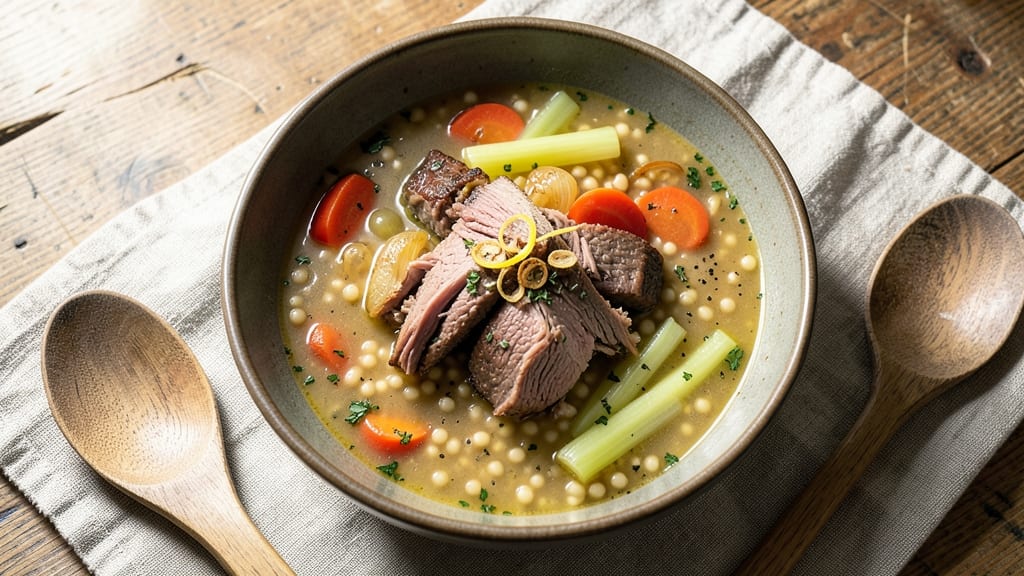
Transforming leftover roast beef into this beef barley soup is one of the most satisfying ways to repurpose dinner into a hearty, comforting meal. The rich, savory broth develops deep flavor as it simmers with tender shredded beef, pearl barley, and aromatic vegetables—turning simple leftovers into something restaurant-worthy.
This recipe proves that good food doesn't have to go to waste, especially when you're working with quality protein like roast beef.
The beauty of this soup lies in its simplicity and flexibility. You'll start with a base of onions, carrots, and celery—classic mirepoix—that builds flavor as they caramelize gently in the pot.
Adding the leftover beef (shredded or chopped) and barley kickstarts the simmering process, where the grains absorb the broth's depth while the meat becomes even more tender. A splash of red wine or beef stock elevates the broth to a rich, velvety consistency that coats every spoonful.
What you'll end up with is a steaming bowl of beef barley soup that's packed with hearty texture and deep umami flavor, perfect for chilly evenings or lazy weekends. The barley softens just enough to be satisfying, while the shredded beef adds pockets of tender richness in every bite.
This is the kind of soup that disappears quickly—whether you're serving it to a crowd or saving leftovers for lunch the next day.
For an extra touch of elegance, garnish with fresh parsley or a sprinkle of cracked black pepper before serving. Pair it with crusty bread to soak up every last drop of that flavorful broth.
Ready in about 45 minutes, this recipe is your go-to solution for turning dinner leftovers into tomorrow's most satisfying meal.
Ingredients for beef barley soup recipe with leftover roast
Leftover roast beef transforms into restaurant-worthy beef barley soup with these simple, flavor-packed ingredients.
| Ingredient | Amount | Notes |
|---|---|---|
| Leftover Roast Beef 🥩 | 1 ½ lb | Shredded or chopped into bite-sized pieces |
| Pearl Barley 🌾 | ½ cup | Rinsed before use |
| Yellow Onion 🧅 | 1 whole | Diced, medium size |
| Carrots 🥕 | 3 medium | Peeled and sliced into rounds |
| Celery Stalks 🧄 | 3 whole | Trimmed, chopped into 1/2-inch pieces |
| Garlic Cloves 🧄 | 4 cloves | Minced, fresh preferred |
| Beef Broth 💧 | 4 cups | Low-sodium preferred |
| Dry Red Wine 🍷 | ½ cup | Bold variety like Cabernet Sauvignon |
| Tomato Paste 🍅 | 1 tbsp | Smooth, not chunky |
| Fresh Thyme 🌿 | 1 tbsp | Leaves only, chopped |
| Bay Leaves 🍃 | 2 whole | Removed before serving |
| Salt 🧂 | 1 tsp | Kosher or sea salt |
| Black Pepper 🌶️ | ½ tsp | Freshly cracked |
| Fresh Parsley 🌿 | ¼ cup | Chopped, for garnish |
| Olive Oil 🫒 | 2 tbsp | Extra-virgin for richness |
The roast beef is the star—look for well-marbled cuts with good fat content. Costco or Whole Foods often have excellent pre-sliced roasts, but any quality leftover works. Pearl barley needs rinsing to remove excess starch, which prevents gumminess. For the vegetables, Trader Joe's organic carrots and celery are my go-to—they're sweeter and more flavorful. Fresh thyme and parsley make all the difference, so grab bunches if they're on sale and freeze extras.
No red wine? Beef broth with a splash of balsamic vinegar works perfectly. Short on carrots? Substitute with sweet potatoes or parsnips—they add natural sweetness. Pearl barley unavailable? Use farro or brown rice at a 1:1 ratio. For the tomato paste, those little squeeze tubes at Trader Joe's are ideal—they're mess-free and last forever. The celery can be swapped for fennel if you're feeling fancy, but regular celery is just fine too.
This soup tastes even better the next day as flavors meld. Store in an airtight container for up to 5 days in the fridge or freeze for 3 months. I like to portion it into individual containers for easy lunches. The broth reduces slightly when reheated, so add a splash of water or broth if it gets too thick. Garnish with fresh parsley right before serving—it brightens up every bowl.
Why You'll Love This Recipe
- Zero-Waste Magic: I swear by this trick—turning yesterday’s roast into today’s soup means no food goes to waste. Just shred that beef, toss it in, and suddenly you’ve got a hearty bowl without extra shopping.
- Deep Umami Boom: Pearl barley soaks up the roast’s rich flavor like a sponge, while the onions and celery caramelize into something seriously satisfying. That first spoonful? Pure comfort in a bowl.
- Weeknight Workhorse: Between us, this is my go-to when I’ve got a house full of people and zero energy. Toss everything in one pot, let it simmer, and boom—dinner’s ready. Even my picky teenager doesn’t complain.
- Budget-Friendly Powerhouse: Barley’s cheap, veggies are cheap, and you’re already using that roast. Honestly, I make this twice a month just to stretch my grocery budget without sacrificing flavor. Win-win.
Step-by-step instructions for beef barley soup with leftover roast
Here's how to transform your leftover roast into a deeply flavorful, comforting soup that tastes even better the next day.
Sauté the Vegetables and Aromatics
Heat the 2 tablespoons olive oil in a large pot over medium heat. Add the diced yellow onion, sliced carrots, and chopped celery stalks. Cook for 5-6 minutes until the vegetables begin to soften and the onion becomes translucent.
Add the minced garlic cloves and chopped fresh thyme to the pot, stirring for 30 seconds until fragrant. This step builds the flavor foundation—don't rush it. The garlic should just begin to turn golden without browning, which would make the soup bitter.
Brown the Leftover Roast Beef
Increase the heat to medium-high and add the 1.5 pounds leftover roast beef in bite-sized pieces. Cook for 3-4 minutes, stirring occasionally, until the beef develops a rich, brown crust. This step adds depth of flavor through the Maillard reaction.
If you notice the beef sticking to the pot, add 1-2 tablespoons of beef broth to deglaze and scrape up any browned bits from the bottom. These bits are packed with flavor—don't let them go to waste. Once the beef is nicely browned, remove it from the pot and set it aside temporarily.
Build the Flavor Base
Return the pot to medium heat and add the 1 tablespoon tomato paste, stirring to coat the vegetables. Pour in the 0.5 cup dry red wine and let it simmer for 2-3 minutes until mostly evaporated. This step deepens the sauce's complexity with a touch of acidity and richness.
Add the 4 cups beef broth, 2 whole bay leaves, 1 teaspoon salt, and 0.5 teaspoon black pepper to the pot. Stir well to combine all ingredients. Bring the mixture to a gentle boil, then reduce the heat to low-medium to maintain a steady simmer.
Simmer the Soup
Return the browned beef to the pot and add the 0.5 cup rinsed pearl barley. Stir gently to distribute the barley evenly throughout the broth. The barley should be fully submerged—if not, add a little more broth.
Cover the pot and let the soup simmer for 45-50 minutes, stirring occasionally, until the barley is tender and the beef is fully heated through. You'll know the barley is done when it's soft but still has a slight bite to it—it should be al dente. The soup should have a rich, velvety texture with deep, savory flavors.
Finish and Serve
Remove the 2 whole bay leaves from the soup and discard them. Stir in the 0.25 cup chopped fresh parsley to brighten the flavors with a touch of freshness. Taste and adjust the seasoning if needed—you might want to add a pinch more salt or pepper to suit your preference.
Serve the soup immediately while it's hot, garnished with additional parsley if desired. The aroma alone will make your kitchen feel like a cozy restaurant. This soup tastes even better the next day as the flavors continue to meld and deepen, making it perfect for meal prep.
Pro Tips For Making Beef Barley Soup Recipe With Leftover Roast
- SHRED THE MEAT FIRST: Cut the leftover roast into ½-inch chunks before adding it to the pot—this guarantees even heating and faster reintegration into the broth. I used to toss in thick slices and spend 20 minutes waiting for them to break down, only to have dry bits at the bottom.
- SOAK BARLEY 20 MINUTES: Pearl barley swells faster and cooks more evenly if you rinse it first, then let it soak in cold water for 20 minutes. Skipping this step means you’ll either end up with grainy texture or undercooked barley—neither of which belongs in a hearty soup.
- SWEAT VEGETABLES LOW AND SLOW: Cook the onion, carrots, and celery at medium-low heat for 8–10 minutes until the onion turns translucent but doesn’t brown. High heat turns them mushy, and you’ll taste it in every spoonful—trust me, you don’t want that.
- ADD BAY LEAF LATE: Tuck a bay leaf into the soup only in the last 15 minutes of cooking—this keeps its flavor bright and aromatic instead of bitter. I learned this after burning my tongue on a soup that tasted like a medicine cabinet.
Creative variations of this dish
Hearty Leftover Roast Upgrade
Turn your roast beef into something extraordinary by adding 1 tablespoon of Dijon mustard to the broth during simmering. The tangy depth complements the beef beautifully—just stir it in with the tomato paste.
For extra richness, fold in ½ cup of crumbled blue cheese at the end, letting it melt slightly into the soup. 💛
Vegetarian Adaptation
Skip the beef entirely and use 1.5 pounds of hearty mushrooms (like cremini or portobello) sautéed until golden. Add 1 cup of cooked lentils for protein and 1 tablespoon soy sauce to mimic umami depth. The barley absorbs the flavors beautifully, creating a satisfying vegetarian version.
Slow Cooker Magic
For hands-off cooking, combine all ingredients in a 6-quart slow cooker on low heat for 6-7 hours. The long simmer enhances flavors without monitoring. Add ½ cup of frozen peas in the last 30 minutes for a pop of color and texture. Perfect for busy days!
Spicy Kick Option
Increase warmth with 1 teaspoon smoked paprika when browning the beef or add ½ teaspoon cayenne pepper to the broth. For heat lovers, stir in 1 tablespoon of hot sauce (like Cholula) at the end. Garnish with chopped jalapeños for fresh spice. 🌶️
Creamy Twist
Stir in ½ cup of coconut milk or ¼ cup of heavy cream during the last 10 minutes of simmering. This adds luxurious texture while keeping the soup light. Top with toasted breadcrumbs for crunch—it’s like a cozy, elevated version of classic beef barley soup.
Herb Variations
Swap thyme for 1 tablespoon of rosemary (finely chopped) for an earthy note or add 1 teaspoon of dried oregano for Mediterranean flair. Fresh dill brightens the soup—try 2 tablespoons chopped at the end. Each herb transforms the soup’s character while keeping it comforting. ✨
Nutrition facts
Frequently asked questions
Can I use any leftover roast beef for this soup?
Yes, but choose well-marbled cuts with good fat content for the best flavor. Leftover prime rib or chuck roast works perfectly. Avoid overly lean cuts—they won't add enough richness to the broth. If your roast is particularly fatty, trim excess before adding to prevent greasiness.
How do I know when the pearl barley is cooked?
The barley should be tender but still have a slight bite—about 45-50 minutes of simmering. Test by tasting a grain: it should be soft with a slight resistance. Overcooked barley becomes mushy and absorbs too much liquid. If needed, add a splash of broth to maintain consistency.
Can I make this soup in a Dutch oven?
A Dutch oven is ideal for this recipe. Its heavy base distributes heat evenly, preventing scorching while allowing the soup to develop rich, deep flavors. Just follow the same simmering time—45-50 minutes—and stir occasionally to prevent sticking.
What if I don't have red wine? Can I substitute?
Use ½ cup beef broth plus 1 tablespoon balsamic vinegar for similar depth. The vinegar adds acidity to balance the richness. For extra umami, add 1 teaspoon soy sauce or a pinch of smoked paprika. Avoid white wine—it lacks the bold flavors needed for this hearty soup.
How can I make this soup ahead of time?
This soup tastes even better the next day! Store in an airtight container in the fridge for up to 5 days or freeze for 3 months. Reheat gently on the stove with a splash of broth or water if it thickens. For meal prep, portion into individual containers for easy lunches.