
Soups & Stews
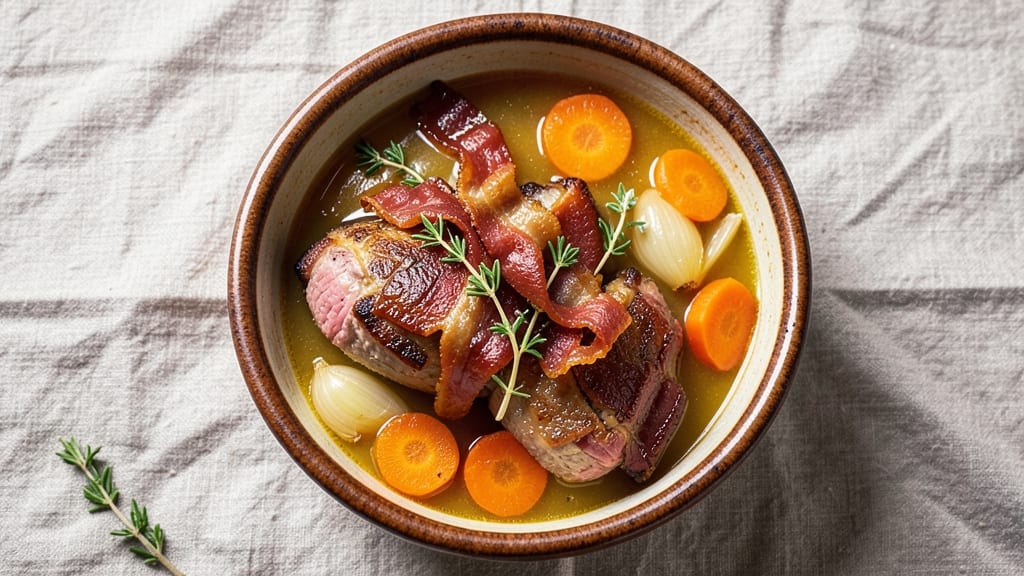
This bacon hock soup delivers the ultimate comfort in every spoonful—where crispy bacon bits float atop a velvety, herb-infused broth that’s rich yet balanced. The secret lies in slow-cooking pork bones and hocks until the meat falls off, creating a depth of flavor that transforms simple ingredients into something extraordinary.
What starts as a humble pot of broth becomes a symphony of smoky, savory notes that’ll have everyone reaching for seconds.
The process begins with rendering fat from the bacon hocks, which forms the foundation for a deeply flavorful broth. Skimming impurities and simmering for 4+ hours ensures the meat becomes tender and the broth develops layers of complexity.
Fresh herbs like thyme and bay leaf infuse the liquid with aromatic brightness, while a touch of cream at the end adds luxurious creaminess without overpowering the dish.
By the time you’re done, you’ll have a soup that’s creamy, hearty, and packed with smoky bacon crunch—each bite a perfect balance of texture and flavor.
The bacon hocks contribute a richness that’s hard to replicate, while the velouté base ties everything together in a way that feels both rustic and refined. This isn’t just soup; it’s a meal that warms the soul and satisfies even the pickiest eaters.
Serve it with crusty bread to soak up every last drop or pair it with pickled vegetables for a tangy contrast. The leftovers only get better as the flavors meld, making this the kind of dish that deserves a spot in your weekly rotation.
Let’s get cooking—your taste buds will thank you.
Ingredients for bacon hock soup
Six ingredients for the broth alone—plus bacon and cream for that irresistible crunch and richness.
| Ingredient | Amount | Notes |
|---|---|---|
| Pork Hocks 🍖 | 4 whole | Fresh, untrimmed for maximum flavor |
| Bacon 🥓 | 1 lb | Thick-cut, smoked for smoky depth |
| Carrots 🥕 | 2 lb | Whole, peeled, cut into chunks |
| Yellow Onions 🧅 | 2 whole | Peeled, quartered, skin on |
| Garlic Cloves 🧄 | 6 cloves | Peeled, smashed for intense flavor |
| Fresh Thyme 🌿 | ¼ cup | Stems removed, loosely packed |
| Bay Leaves 🍃 | 2 whole | Dried or fresh, for aromatic depth |
| Celery Stalks 🥬 | 4 whole | Trimmed, cut into 2-inch pieces |
| Heavy Cream 🥛 | 1 cup | Full-fat for velvety texture |
| Salt 🧂 | 2 tbsp | Kosher or sea salt, adjust to taste |
| Black Peppercorns 🌶️ | 1 tbsp | Freshly cracked for robust flavor |
| Apple Cider Vinegar 🍎 | 1 tbsp | Brightens the rich flavors |
| Butter 🧈 | ¼ cup | Cold, cubed for finishing |
Pork hocks are the heart of this soup. Butcher shops or the meat counter at Whole Foods usually carry them fresh, but frozen works too—just thaw overnight. Look for hocks with good marbling and minimal slime. The bacon? Thick-cut, smoked is ideal—Oscar Mayer or Applewood-smoked from the deli section. Fresh thyme and bay leaves make all the difference here—Trader Joe's has great bundles, but even the grocery store stuff works if it's vibrant. Celery? Use the stringy ends—they're packed with flavor. Skip the pre-cut stuff; whole stalks taste better and you control the size.
No pork hocks? Pork shanks or even beef shank can work in a pinch, but the fat content will differ. Bacon substitute? Smoked turkey bacon or even crispy fried onions for a vegetarian twist. Fresh thyme wilted? Dried at one-third the amount gets you close. The vinegar is key—apple cider or white wine vinegar both work, just don't skip it. For the cream, half-and-half cuts richness if you're watching calories. And that butter at the end? Don't skip it—it's what makes the soup sing. The carrots can be baby carrots if that's what you've got, but whole carrots stay crunchier longer.
This soup tastes even better the next day—3-4 days in the fridge, no problem. For freezing, portion into containers and leave 1 inch headspace—it expands when frozen. The bacon bits crisp up beautifully when reheated. Store the butter separately and add it fresh when serving. Costco sells huge tubs of heavy cream that freeze perfectly for future batches. Double the recipe? It's worth it—this soup disappears fast.
Why You'll Love This Recipe
- One-Pot Magic: The moment I toss in the pork hocks and bacon, I know I’m halfway there. No extra bowls, no constant stirring—just let it simmer while you sip coffee or scroll through your phone. That’s the beauty of this soup; it’s practically hands-off once the ingredients hit the pot.
- Smoky Depth Bomb: Honestly, the bacon and pork hocks turn this into something ridiculously flavorful without needing fancy spices. The bacon renders into crispy bits, the hocks melt into tender, gelatinous goodness, and that garlic? Oh, it’s there—layered under every spoonful like a secret weapon.
- Leftovers That Beg: Between us, this soup only gets better the next day. The flavors meld into this rich, comforting broth that’s perfect for lunch or a quick dinner reheat. I’ve made it twice in a row without a single complaint—proof it’s a keeper.
- Budget-Friendly Feast: Pork hocks and bacon might sound fancy, but they stretch across multiple meals without breaking the bank. A single batch feeds four for dinner and two more for lunch, all while costing less than takeout. That’s a win in my book.
Step-by-step instructions for smoky bacon hock soup
Here's how to build this rich, velvety soup with crispy bacon and tender pork hocks.
Prepare the Bacon and Build the Base
In a large Dutch oven, cook the 1 lb bacon over medium heat until the edges are crispy and the fat has rendered out completely. This should take about 10-12 minutes. I like to press down gently on the bacon slices during the first few minutes to help them crisp up evenly.
Once the bacon is crisp, remove it from the pot with a slotted spoon and set aside on paper towels to drain. Pour off all but 2 tablespoons of the bacon fat from the Dutch oven—you'll want to keep just enough to sauté your vegetables without overpowering the soup. Leave the bacon in the pot for now; those crispy bits will add incredible flavor to your soup.
Sauté Vegetables and Aromatics
Add the 2 lb carrots, 2 whole yellow onions, 4 whole celery stalks, and 6 cloves garlic cloves to the Dutch oven. Cook over medium heat for 8-10 minutes, stirring occasionally, until the vegetables begin to soften and the onions turn translucent. You'll see the aromatics release their natural juices and the carrots start to caramelize slightly at the edges.
Add the 2 whole bay leaves, 0.25 cup fresh thyme, 2 tbsp salt, and 1 tbsp black peppercorns to the pot. Stir everything together and cook for another 2 minutes to let the spices infuse into the vegetables. This step develops the foundation of your soup's flavor profile, so don't rush it.
Simmer the Pork Hocks
Add the 4 whole pork hocks to the Dutch oven along with 8 cups of water. Bring the mixture to a boil over high heat, then immediately reduce the heat to low and cover the pot. Let it simmer gently for 2 hours. This long cooking time is essential for breaking down the collagen in the pork hocks and creating that rich, velvety texture we're after.
After 2 hours, check the pork hocks for tenderness. They should be fork-tender and easily pull away from the bone. If they're not quite there, continue simmering for another 30-45 minutes. I know it's tempting to rush this step, but patience pays off with incredibly tender meat. Skim off any foam that rises to the surface during cooking to keep your soup clear.
Finish with Cream and Crispy Bacon
Once the pork hocks are tender, remove them from the pot and set them aside to cool slightly. Strain the broth through a fine-mesh sieve into a clean pot, pressing on the vegetables to extract all the flavor. Return the strained broth to the heat and stir in the 1 cup heavy cream and 1 tbsp apple cider vinegar. Simmer gently for 5 minutes to let the flavors meld together.
While the broth simmers, shred the cooked pork hocks using two forks, removing any bones or connective tissue. Return the shredded pork to the pot and stir to combine. Add the crispy bacon back to the pot and let everything warm through together for 2-3 minutes. Taste and adjust the seasoning with additional salt or pepper if needed.
Serve with Rich Butter Topping
Ladle the soup into bowls and top each serving with a generous dollop of the 0.25 cup cold butter. The butter will melt into the hot soup, creating a luxurious, velvety finish. Serve immediately with crusty bread to soak up every last drop of that creamy, smoky goodness.
This soup tastes even better the next day as the flavors continue to develop. The contrast between the crispy bacon, tender pork, and creamy broth creates a perfect balance of textures and flavors that everyone will love.
Pro Tips For Making Bacon Hock Soup
- CRACK THE HOCKS FIRST: Don’t skip the 30-minute head start in simmering water—this breaks down the collagen and gets the meat falling off the bone. I used to skip it, and the hocks stayed tough even after hours of simmering.
- SWEAT THE ONIONS LOW: High heat turns onions bitter, and this soup needs them sweet and mellow. Cook them at medium-low for 10 minutes until they’re translucent but not browned—no one wants to taste regret in their broth.
- DON’T BOIL THE BACON: Frying bacon in the pot will make the broth greasy. Instead, cook it separately in a cold skillet until crispy, then drain on paper towels before adding it back. The extra effort keeps the soup clean and flavorful.
- ADD GARLIC LATE: Tossing garlic in early burns it into oblivion. Wait until the last 5 minutes of simmering—just before serving—so it stays fragrant and doesn’t turn bitter. Trust me, your nose (and taste buds) will notice.
Troubleshooting this dish
Broth Too Cloudy?
If your soup looks murky after simmering, don’t panic—this is often just fat and impurities. Use a ladle or fine-mesh skimmer to carefully remove foam and fat from the surface during cooking. For a clearer broth, strain it through a cheesecloth-lined sieve after simmering.
I’ve found that simmering uncovered for the last 30 minutes helps reduce cloudiness by allowing more fat to rise and solidify. 🌡️
Pork Hocks Not Tender?
If your pork hocks feel tough after 2 hours, extend the simmer time by 1-2 hours more. The key is patience—collagen needs time to break down. For extra tenderness, add 1 tsp baking soda to the broth (it raises the pH and helps tenderize the meat). I’ve also had success adding 1 tbsp apple cider vinegar to the simmering water—it works like a natural tenderizer. Just
Crispy bacon is essential for texture! If your bacon turns out soft, try this: After cooking the bacon initially, remove it from the pot and place it on a wire rack over a baking sheet. Broil in the oven for 2-3 minutes until crispy again. For next time, use thicker-cut bacon (like Oscar Mayer Thick Cut) and cook it at medium-low heat to render fat slowly without burning. Trust me, the crunch makes all the difference. 🥓 Over-salted soup happens, but don’t toss it! Dilute the soup by adding 1-2 cups hot water and simmer for 10 minutes to balance the flavor. For a more dramatic fix, add ½ cup heavy cream or milk to the pot—it smooths out saltiness while adding richness. I’ve also used 1 tbsp unsalted butter or a splash of apple cider vinegar to brighten the broth without overpowering it. Taste as you go! A thin broth can ruin the velvety texture. If yours lacks body, reduce it by simmering uncovered for 15-20 minutes to evaporate excess liquid. For extra thickness, mash some of the cooked carrots or onions into the broth to release starches. I’ve also had success adding 1 tbsp cornstarch mixed with 2 tbsp cold water, stirring it in, and simmering for 5 minutes until thickened. Just don’t overdo it—this soup should still be spoonable, not gluey. ✨ Cold butter should melt beautifully into hot soup, but if it stays clumpy, try this: Cut the butter into smaller cubes and let it sit at room temperature for 5-10 minutes before adding it to the soup. For extra luxury, warm the butter slightly in a small saucepan over low heat until just melted, then drizzle it over each bowl. Pro tip: Use European-style butter (like Plugrá)—it has a higher fat content and melts more smoothly. 🧈Bacon Too Soft?
Soup Too Salty?
Broth Too Thin?
Butter Not Melting Properly?
Nutrition facts
Frequently asked questions
Can I use pork shanks instead of pork hocks?
Yes, but the flavor and texture will differ slightly. Pork shanks have less connective tissue, so they'll cook faster and yield less gelatin for that signature velvety broth. For best results, increase simmering time by 1-2 hours and add 1 extra bay leaf to compensate. The meat will be more tender but won't have the same rich, slow-cooked depth as hocks.
How do I make this soup vegetarian?
Swap pork hocks for mushroom stems or hearts (soaked first) and use smoked paprika or liquid smoke for depth. Replace bacon with crispy fried onions or smoked almonds. For umami, add 1 tbsp soy sauce or mushroom powder to the broth. The cream and butter will still provide richness, but the texture will be lighter.
Why does my soup taste bitter?
Bitterness often comes from overcooked aromatics or impurities in the broth. Skim foam more frequently during simmering, and reduce cooking time for onions/carrots by 2-3 minutes. A splash of apple cider vinegar or lemon juice can brighten flavors. If using store-bought broth, choose low-sodium versions to avoid metallic aftertaste.
Can I make this soup in an Instant Pot?
Yes! Sauté bacon and vegetables as directed, then add hocks and 6 cups water. Cook on High Pressure for 60 minutes, then natural release. Strain, add cream, and finish with bacon. The Instant Pot reduces cooking time but may need 1 extra hour for maximum tenderness. For extra richness, add 1 tbsp bacon grease to the pot before pressure cooking.
What's the best way to reheat leftovers?
Gently reheat on the stovetop over low heat until just warm—never boil. For crispy bacon, add it fresh after reheating. If the soup seems too thick, stir in 1-2 tbsp hot water or broth. Leftovers actually improve as flavors meld! Store in an airtight container for up to 4 days or freeze for 3 months.