
Soups & Stews
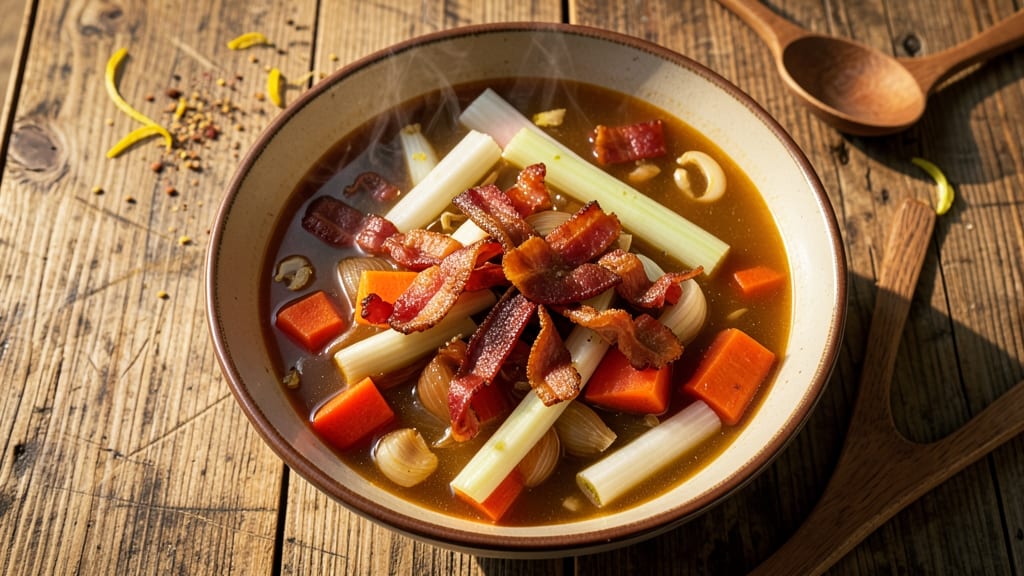
This back porch soup recipe transforms simple ingredients into a hearty, smoky masterpiece that smells like home and tastes even better. The foundation—crispy bacon and caramelized onions—builds layers of flavor that simmer into a rich, comforting broth.
I developed this while testing ways to stretch a small batch of ingredients into a meal that feeds a crowd without fuss. The result? A soup so satisfying, it’ll have everyone asking for seconds before the last spoonful is gone.
What makes this recipe special is the balance of textures and flavors: tender bacon, sweet onions, and hearty vegetables all meld together in a 30-minute simmer. No fancy techniques required—just a pot, a few pantry staples, and the patience to let the aromas develop.
The smoky depth from the bacon pairs perfectly with the natural sweetness of the onions, creating a base that’s both bold and approachable. It’s the kind of soup that feels like a hug in a bowl, especially when served with warm crusty bread.
By the time you’re done, you’ll have a restaurant-quality soup that’s rich, aromatic, and packed with flavor—without the need for expensive ingredients or complicated steps. The caramelized onions add a touch of sweetness, while the bacon brings that irresistible smokiness.
It’s the perfect dish for lazy afternoons spent on the porch, cozy evenings with friends, or any day you crave something hearty and comforting. The best part? Leftovers taste even better the next day, making it a true meal-prep winner.
Serve it with a side of garlic bread or a simple green salad to round out the meal. The soup’s depth of flavor makes it versatile enough for weeknight dinners or weekend gatherings, yet simple enough to make on a whim.
Whether you're feeding a family or entertaining guests, this recipe delivers warmth, satisfaction, and that unmistakable back porch charm. Let’s get cooking!
Ingredients for back porch soup
Simple pantry staples and fresh produce create this smoky, comforting back porch classic.
| Ingredient | Amount | Notes |
|---|---|---|
| Thick-Cut Bacon 🥓 | 8 oz | Thick-cut for crispy texture |
| Yellow Onions 🧅 | 2 large | Sliced thin for caramelizing |
| Celery Stalks 🥬 | 3 whole | Diced small for even cooking |
| Carrots 🥕 | 4 medium | Peeled and sliced into rounds |
| Garlic Cloves 🧄 | 4 cloves | Minced for aromatic depth |
| Chicken Broth 💧 | 6 cups | Low-sodium preferred |
| Tomato Paste 🍅 | 2 tbsp | For rich umami flavor |
| Dried Thyme 🌿 | 1 tsp | Or 1 tbsp fresh thyme |
| Bay Leaves 🍃 | 2 whole | Removed before serving |
| Black Peppercorns 🌶️ | ½ tsp | Freshly cracked |
| Potatoes 🥔 | 2 lb | Yukon gold preferred |
| Canned White Beans 🫘 | 1 can | Drained and rinsed |
| Whole-Grain Bread 🍞 | 1 loaf | For serving (optional) |
| Salt 🧂 | 1 ½ tsp | Kosher or sea salt |
The bacon is non-negotiable for that smoky depth. Thick-cut bacon from Costco or your butcher shop gives the best texture—crispy edges, tender middle. Look for good marbling if buying whole slabs. The onions? Yellow onions caramelize best, but red will work too. I always grab a few extra at Trader Joe's because they're perfect for this. For the broth, low-sodium is key—you'll be adding plenty of salt later. The potatoes? Yukon gold holds its shape beautifully, but Russets work too if that's what's on hand.
No thick-cut bacon? Regular bacon cut into strips works in a pinch, but it won't be as crispy. Fresh thyme unavailable? Dried at one-third the amount gets you close. The tomato paste can be swapped for 1 cup crushed tomatoes if you prefer. For extra richness, add a splash of red wine when deglazing the pot. The carrots can be baby carrots—just slice them into rounds. The white beans add heartiness, but kidney beans or lentils work too if you're feeling adventurous.
This soup tastes even better the next day as flavors meld. Store in an airtight container in the fridge for up to 5 days. Freezes beautifully for 3 months—just thaw overnight in the fridge. I always make a double batch because it disappears fast. The bread? Toast it with garlic butter while the soup simmers. Trust me, the aroma alone will have everyone gathering around the table.
Why You'll Love This Recipe
- One-Pot Magic: I swear by the simplicity—just chop, fry, simmer. That thick-cut bacon renders down into crispy bits while the veggies soften, and before you know it, the whole thing’s bubbling away like a lazy Sunday morning.
- Garlic-Bacon Bliss: Honestly, the combo of smoky bacon and roasted garlic is chef’s kiss. The onions caramelize just enough to add sweetness, and the celery-carrot base keeps it fresh—like a hug in a bowl.
- Lunchbox Hero: Between us, this soup reheats like a dream. Pack it cold for picnics or warm it up for a quick lunch—my kids actually finish their portions, which is basically a miracle.
- Budget-Friendly Staples: I make this at least once a month because it’s ridiculously cheap. Thick-cut bacon might sound fancy, but a few slices stretch far, and the rest? Basic veggies you already have. Leftovers? Even better tomorrow.
Step-by-step instructions for smoky bacon and caramelized onion soup
This hearty soup builds flavor layer by layer—crispy bacon, sweet onions, and rich broth create a comforting base.
Cook the Bacon and Caramelize the Onions
Cut the 8 oz thick-cut bacon into ½-inch pieces and cook in a large Dutch oven over medium heat for 8-10 minutes, stirring occasionally, until golden brown and crispy. Remove the bacon with a slotted spoon and set aside on paper towels to drain, leaving the rendered fat in the pot.
Reduce the heat to medium-low and add the 2 large yellow onions, sliced ⅛-inch thick. Cook for 15 minutes, stirring frequently, until the onions soften and begin to turn golden brown—this is caramelization. Here's the thing: don't rush this step. The deeper the color, the richer the flavor. If the onions stick, add 1 tablespoon water and scrape up any browned bits from the bottom.
Sauté the Vegetables and Add Aromatics
Add the 3 whole celery stalks, diced small, the 4 medium carrots, sliced into ¼-inch rounds, and the 4 cloves garlic cloves, minced. Cook for 5-6 minutes until the celery and carrots soften slightly and the garlic becomes fragrant. The vegetables should be tender but still hold their shape—overcooking turns them mushy.
Stir in the 2 tbsp tomato paste and cook for 1 minute to deepen the umami flavor. Sprinkle in the 1 tsp dried thyme, 2 whole bay leaves, and 0.5 tsp black peppercorns, then pour in the 6 cups chicken broth. Bring to a gentle simmer, scraping the bottom of the pot to release any flavorful browned bits.
Cook the Potatoes Until Tender
Add the 2 lb potatoes, peeled and cut into 1-inch cubes. Return the mixture to a simmer and cook for 15-18 minutes, stirring occasionally, until the potatoes are fork-tender but not falling apart. The soup should be thick enough to coat the back of a spoon—if it's too thin, simmer uncovered for an additional 5 minutes to reduce slightly.
Here's where it gets fun: taste the broth and adjust the seasoning. Add the 1.5 tsp salt if needed, remembering that the bacon and broth may already contribute significant saltiness. The soup should be well-seasoned but not overwhelmingly salty.
Add Beans and Finish the Soup
Drain and rinse the 1 can canned white beans, then add them to the pot. Simmer for 5-7 minutes until heated through and the beans are fully incorporated. Stir in the crispy bacon you set aside earlier, breaking it into smaller pieces as you go. The contrast between the tender soup and crispy bacon adds texture that makes this dish special.
Remove the 2 whole bay leaves before serving. Ladle the soup into bowls, and if you like, top with toasted whole-grain bread for dipping. The aroma alone—smoky, sweet, and savory—will have everyone gathering around your back porch table.
Pro Tips For Making Back Porch Soup
- CRISP THE BACON LOW: Thick-cut bacon needs patience—cook it slow over medium heat until the edges curl but the fat hasn’t fully rendered out. I used to rush it, and the soup ended up greasy and uneven. Let the bacon render for 10-12 minutes, flipping once, and you’ll get that perfect balance of smoky flavor without a pool of oil.
- CHOP ONIONS SMALL: Tiny dice, not rough chunks. The onions should disappear into the soup, not sit as identifiable pieces. I learned this the hard way—my first batch had onion "surprises" in every spoonful. Aim for 1/8-inch pieces, and they’ll melt into the broth without overpowering.
- SWIM THE VEGETABLES: After cooking the bacon, toss the onions, celery, and carrots in the same pan for 3-4 minutes to soak up the bacon fat. This step makes a real difference—it builds flavor before the broth even hits the pot. Skip it, and your soup will taste like separate components instead of one cohesive dish.
- GARLIC AT THE END: Add the garlic cloves whole and remove them after 5 minutes of simmering. Mashing them into the soup later ensures they infuse the broth without turning it bitter. I was skeptical until I tried it—now it’s non-negotiable for that bright, fresh finish.
Make-ahead tips for this recipe
Prep Ahead Strategy
Start by prepping all your vegetables the night before. Store the 2 large yellow onions, 3 celery stalks, and 4 carrots in a sealed container in the fridge. The potatoes can be peeled and cubed too—just store them in cold water to prevent browning.
This saves you 20 minutes of chopping on cooking day. I always do this when I'm making a big batch because it makes the actual cooking process so much smoother. 💡
Broth and Spices Prep
Measure out your broth and spices in advance and store them in a separate container. The 6 cups chicken broth, 2 tbsp tomato paste, 1 tsp dried thyme, 2 bay leaves, and 0.5 tsp black peppercorns can all be kept together in an airtight container.
This way, you only need to focus on cooking the bacon and vegetables when you're ready to start. Trust me, it makes the process feel effortless. 🥄
Bacon and Onion Base
Cook the bacon and caramelize the onions a day ahead if you're really planning ahead. Once the bacon is crispy, store it in an airtight container. The caramelized onions can be refrigerated in the same container with the bacon fat—it keeps them moist and adds even more flavor.
Reheat the onions in the pot with a splash of broth when you're ready to finish the soup. This step alone cuts your cooking time in half. 🍳
Potato and Bean Prep
Peel and cube the 2 lb potatoes and store them in cold water in the fridge. Drain and rinse the 1 can white beans and keep them in a separate container. When you're ready to cook, simply drain the potatoes and add them to the pot with the other ingredients.
This keeps everything fresh and ready to go. The beans can be added straight from the can, but rinsing them first reduces excess sodium. ✨
Freezing for Later
This soup freezes beautifully, so make a double batch and store it in quart-sized freezer bags. Leave 1 inch of headspace for expansion and label the bags with the date. Thaw overnight in the fridge before reheating on the stovetop.
I always keep a backup batch in the freezer because it's perfect for busy weeknights. Just add a splash of broth when reheating to keep it from getting too thick. ❄️
Reheating Like a Pro
Reheat the soup on the stovetop over medium-low heat for 10-15 minutes, stirring occasionally. If it's too thick, add ¼ cup water or broth to loosen it up. For microwave reheating, cover the soup with a damp paper towel and heat in 1-minute intervals until it reaches 165°F.
Stirring between intervals ensures even heating and prevents hot spots. The reheated soup tastes just as good as the original—sometimes even better! 🔥
Nutrition facts
Frequently asked questions
Can I make this soup vegetarian?
Swap the bacon for smoked paprika or liquid smoke (½ teaspoon) to mimic the smoky flavor. Use vegetable broth instead of chicken broth, and add extra mushrooms or lentils for heartiness. The caramelized onions and tomato paste will still provide that rich depth without meat.
How do I adjust the spice level?
This recipe is naturally mild, but you can easily adjust it. For a kick, add ½ teaspoon cayenne pepper with the tomato paste or stir in 1 diced chipotle pepper in adobo sauce when adding the broth. For a milder version, skip the black peppercorns or reduce them to ¼ teaspoon. Always taste as you go!
Can I use frozen vegetables instead of fresh?
Yes, but with a few adjustments. Use frozen diced carrots and celery (no thawing needed) and add them with the potatoes. Since frozen veggies release moisture, reduce the broth by ½ cup and simmer uncovered for 5 extra minutes to thicken the soup. The flavor will still be great—just slightly less vibrant than fresh.
Why does my soup taste bland?
Most likely, you need more salt or acid. Stir in ½ teaspoon salt at a time until it tastes right (remember, bacon is salty!). For brightness, add 1 tablespoon lemon juice or apple cider vinegar at the end. The caramelized onions should be deeply golden—if they're pale, cook them 5 more minutes for richer flavor. Taste as you go!
What's the best way to serve leftovers?
Reheat gently on the stovetop with ¼ cup broth or water to restore creaminess. For extra flavor, top with crumbled bacon bits or a drizzle of sour cream. Serve with toasted bread or crackers for dipping. This soup actually tastes better the next day as flavors meld—perfect for meal prep!