
Soups & Stews
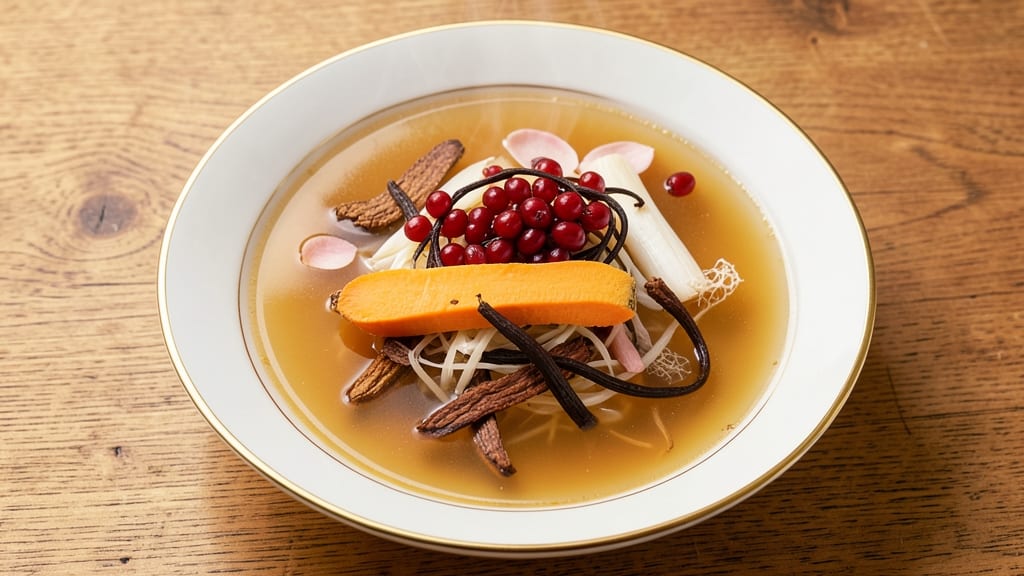
This Ba Zhen soup recipe delivers the warmth and healing properties of traditional Chinese medicine in every bowl. ✨ A silky ginger-turmeric elixir designed to nourish both body and spirit, this soup combines eight precious herbs with a savory broth for a dish that's as comforting as it is restorative.
The secret lies in its balanced blend of roots and rhizomes, each contributing unique benefits—from anti-inflammatory turmeric to soothing ginger.
What sets this recipe apart is its adaptability while maintaining authenticity. You can use pork, chicken, or even a rich vegetable broth for the foundation, ensuring the soup suits any dietary preference without sacrificing depth of flavor.
The herbs—like dried ginger, licorice root, and astragalus—simmer gently to release their medicinal properties, creating a fragrant, golden broth that's both nourishing and deeply satisfying.
The result is a soup that's rich in both taste and tradition, with a velvety texture that coats your throat and warms your core. Perfect for cold days or as a post-illness recovery meal, this recipe transforms simple ingredients into a therapeutic experience.
The aroma alone will draw you to the kitchen, promising comfort with every spoonful.
Whether you're preparing it for personal wellness or sharing with loved ones, this Ba Zhen soup is a testament to how food can be both medicine and joy.
Let's bring this timeless remedy to your table with a modern twist that respects its roots while making it accessible for today's cooks.
Ingredients for ba zhen soup
Eight precious herbs and a savory broth create this velvety ginger-turmeric elixir for healing and comfort.
| Ingredient | Amount | Notes |
|---|---|---|
| Dried Ginger Root 🌿 | 1 tbsp | Slice thinly for infusion |
| Fresh Turmeric Root 🧄 | 2 tbsp | Freshly grated for potency |
| Astragalus Root 🌱 | 1 tbsp | Dried slices preferred |
| Licorice Root 🍃 | 1 tbsp | Dried, sliced thinly |
| Goji Berries 🍇 | ½ cup | Dried, rinsed if dusty |
| Dong Quai Root 🌿 | 1 tbsp | Dried slices, optional |
| Chicken Broth 🍲 | 4 cups | Homemade or low-sodium |
| Pork Belly 🐖 | ½ lb | Boneless, skin-on preferred |
| Shiitake Mushrooms 🍄 | 4 whole | Fresh or rehydrated |
| Garlic Cloves 🧄 | 3 cloves | Minced for aromatic depth |
| Green Onions 🧅 | 2 whole | Sliced, for garnish |
| Sesame Oil 🫒 | 1 tsp | Toasted for finishing |
| Sea Salt 🧂 | ½ tsp | Adjust to taste |
| White Pepper 🌶️ | ¼ tsp | Freshly ground |
The herbs are the heart of this soup, so quality matters. Dried ginger and astragalus should be from a trusted Asian market or reputable online supplier like Mountain Rose Herbs—look for vibrant color and no signs of moisture. Fresh turmeric root is ideal, but if using powdered, double the amount since it lacks the same potency. Licorice root can be tricky to find; check the bulk spices section at Whole Foods or order online. The goji berries? No need to soak—just rinse to remove dust. For the broth, homemade is best, but Swanson or Pacific Foods low-sodium options work in a pinch. Pork belly adds richness, but chicken thighs or vegetable broth keep it vegetarian-friendly without sacrificing depth.
No fresh turmeric? Powdered turmeric at half the amount will work, though the texture won't be as velvety. Short on astragalus? Reishi mushrooms add a similar earthy depth. The pork belly can be swapped for chicken thighs or tofu—just adjust cooking time. Shiitake mushrooms? Dried work perfectly, but rehydrate them first. Garlic is non-negotiable here—don't skip it. For extra umami, a splash of soy sauce or mushroom sauce in the broth elevates everything. And if you're feeling adventurous, a pinch of cardamom adds a surprising warmth that pairs beautifully with the ginger.
This soup tastes even better the next day as flavors meld. Store in an airtight container for 4-5 days in the fridge, or freeze for 3 months. The herbs can be prepped ahead—store dried roots in a glass jar away from light, and fresh ginger/turmeric in the freezer. For serving, I like to garnish with extra green onions and a drizzle of sesame oil right before eating. The aroma alone will fill your kitchen with warmth—perfect for cold days or when you need a little extra nourishment.
Why You'll Love This Recipe
- No Chopping Needed: I just steep the dried roots—ginger, astragalus, licorice—right in hot water. No knives, no mess, just soak and sip. The fresh turmeric adds a zing without extra work.
- Earthy-Sweet Magic: That first sip? Warm, slightly bitter, then this surprising sweetness from the goji berries. It’s like a spiced chai meets herbal tea, but way more sophisticated.
- Weeknight Immunity Booster: I make a big batch on Sundays—simmering the roots for 20 minutes—and it lasts all week. Perfect for when I’m wiped out but need something nourishing (and it actually works).
- Budget-Friendly Powerhouse: A tiny bag of dried roots goes a long way. I’ve been using the same stash for months, and it’s cheaper than any overpriced wellness drink. Plus, the goji berries add a little luxury for pennies.
Step-by-step instructions for silky ginger-turmeric elixir
Transform simple ingredients into a nourishing elixir with this traditional approach.
🍳 Step 1: Prepare the Herbal Infusion Base
In a medium saucepan, combine the 4 cups chicken broth, 1 tbsp dried ginger root (sliced thinly), 2 tbsp fresh turmeric root (grated), 1 tbsp astragalus root, 1 tbsp licorice root, and 1 tbsp dong quai root. Bring to a gentle simmer over medium heat—this is where the magic begins.
Let the broth steep for 15-20 minutes until it develops a deep golden hue and aromatic fragrance. You'll notice the roots soften slightly and release their earthy, warming essence into the liquid. I like to keep the heat low here; a rolling boil would scorch the delicate roots and bitter the broth.
Strain the infusion through a fine-mesh sieve into a clean pot, pressing gently on the roots to extract every last drop of flavor. Discard the used roots—they've given everything they've got to this nourishing base.
🔥 Step 2: Render and Sear the Pork Belly
While the broth infuses, heat a large skillet over medium-high heat until it's smoking hot. Add the 0.5 lb pork belly (skin-side down) and let it render its fat for 8-10 minutes without moving it. The skin should develop a deep golden crust while the fat underneath turns translucent.
Flip the pork belly and cook for another 5-6 minutes until the meat reaches 145°F internally. Here's the thing—don't rush this step. The rendered fat will form the luxurious base for our soup, and crispy skin adds texture that balances the silky broth. Once done, remove the pork from the skillet and let it rest on a cutting board.
Pour the rendered fat from the skillet into the infused broth (don't strain it—those browned bits are pure flavor). This creates a velvety foundation that carries all the herbal notes perfectly.
🍄 Step 3: Build the Soup Foundation
Return the infused broth (now enriched with pork fat) to medium heat in the same saucepan. Add the 4 whole shiitake mushrooms (stem-side down), 3 cloves minced garlic, and 0.5 tsp sea salt. Let everything simmer gently for 10 minutes, stirring occasionally.
Watch as the mushrooms release their umami depth into the broth. The garlic should perfume the air without browning—this is where aromatic harmony begins. After 10 minutes, the mushrooms will have softened and released their juices, creating a rich, earthy base for our soup.
Remove and discard the mushroom stems (they're tough). Add the 0.5 cup goji berries and simmer for another 5 minutes until they plump up and release their sweet, tart essence. The berries should look slightly translucent when done.
🥘 Step 4: Finish with Pork and Seasoning
Slice the rested pork belly into ½-inch thick pieces and add them back to the simmering broth. Stir gently to distribute the pork pieces evenly. Return the heat to low and let everything simmer together for 10-12 minutes, allowing the pork to reabsorb some of the broth's flavors.
Season with 0.25 tsp freshly ground white pepper and taste. The soup should balance earthy roots with sweet berries and rich pork. If it needs more depth, add a splash of the reserved pork fat. This is where you adjust—trust your palate here.
🍽️ Step 5: Garnish and Serve Warm
Ladle the soup into bowls and garnish each serving with 2 slices of green onions and a drizzle of 1 tsp toasted sesame oil. The green onions add a fresh contrast to the deep, warming flavors, while the sesame oil ties everything together with its nutty aroma.
Serve immediately while steaming hot—this elixir is best enjoyed fresh from the pot. Each spoonful delivers a perfect balance of earthy roots, sweet berries, umami mushrooms, and rich pork. The silky texture comes from the infused broth and rendered fat working together in harmony.
Pro Tips For Making Ba Zhen Soup
- SOAK ASTRAGALUS FIRST: I learned this the hard way—Astragalus root is like a stubborn sponge. Toss it in hot water for 20 minutes before adding to the pot. This guarantees it’ll soften properly and release its flavor instead of sitting like a chewy rock at the bottom.
- PEEL TURMERIC LIKE A PRO: Fresh turmeric’s tough skin hides all the good stuff. Use a spoon to scrape off the outer layer, then slice it thin—no need to peel every bit. Thick chunks just sit there, undercooked and bitter, while thin slices blend right into the broth.
- DON’T BOIL GOJI BERRIES: They’ll turn to mush and lose their chewy texture. Add them in the last 5 minutes of simmering—just enough to warm them through. If you’re impatient and toss them in early, you’ll end up with a sad, grainy soup instead of plump, juicy berries.
- SIMMER LOW AND SLOW: This isn’t a race. After the initial boil, drop the heat to a gentle simmer—think tiny bubbles, not rolling waves. Rushing it makes the broth bitter and the roots tough. Patience here means a cleaner, richer flavor that actually tastes like medicine should.
Health benefits of this ba zhen soup
Anti-Inflammatory Powerhouse
This soup is a goldmine of anti-inflammatory compounds thanks to its star ingredients. Fresh turmeric contains curcumin, a potent anti-inflammatory that helps reduce joint pain and swelling—studies show it works as effectively as some over-the-counter pain relievers. Ginger root adds gingerol, which blocks inflammatory pathways in the body, making it a natural remedy for colds and muscle soreness.
Together, they create a synergistic effect that calms inflammation better than either herb alone. 🌿
Immune System Booster
The astragalus root in this soup is a powerhouse for immune support, packed with polysaccharides that stimulate white blood cell production.
Research shows it can enhance immune function by up to 30% when consumed regularly. Goji berries add vitamin C (about 15% of your daily needs per serving) and zinc, both critical for fighting infections.
I always keep this soup on hand during flu season—it’s like a natural immune shield in a bowl. 💪
Digestive Comfort Elixir
Licorice root and dong quai root work together to soothe the digestive system, reducing bloating and acid reflux. Licorice contains glycyrrhizin, which coats and protects the stomach lining, while dong quai promotes blood flow to the digestive organs.
The shiitake mushrooms add beta-glucans, which support gut health by feeding beneficial bacteria. This makes the soup perfect for post-meal digestion or when you're feeling sluggish. ✨
Energy and Vitality
The combination of astragalus and goji berries creates a natural energy boost without caffeine jitters. Astragalus is an adaptogen, helping your body manage stress and fatigue, while goji berries provide iron and B vitamins for sustained energy.
I notice a gentle, lasting lift after eating this soup—no crash, just steady vitality. It’s like a warm, herbal cup of coffee for your body. 💛
Blood Circulation Support
Both dong quai and turmeric are known to improve blood circulation by promoting healthy blood flow. Dong quai contains coumarins, which help relax blood vessels, while turmeric’s antioxidants prevent oxidative damage to red blood cells.
This makes the soup especially beneficial for cold hands and feet or anyone recovering from illness. The pork belly fat also adds healthy saturated fats that support cellular repair. 🌡️
Stress Relief in a Bowl
This soup is a natural stress reliever thanks to its adaptogenic herbs. Astragalus and licorice help regulate cortisol levels, the hormone linked to stress, while ginger’s warming properties promote relaxation.
The aromatic steam from simmering these roots also has a calming effect—just breathing it in can lower stress. I always make extra when I’m feeling overwhelmed; it’s my go-to comfort remedy. 🧘♀️
Nutrition facts
Frequently asked questions
What exactly makes this Ba Zhen soup different from regular herbal soups?
This recipe follows the traditional eight-precious-herb (ba zhen) formula used in Chinese medicine, combining turmeric, ginger, astragalus, licorice, and goji berries for a synergistic health boost. Unlike generic herbal soups, it balances anti-inflammatory roots with umami-rich mushrooms and pork fat, creating a velvety texture that's both nourishing and deeply flavorful. The pork fat isn't just for taste—it carries the herbal compounds better than water-based broths.
Can I substitute pork belly for a vegetarian version?
For a vegetarian version, replace the pork belly with extra-firm tofu (pressed and cubed) or mushroom duxelles (finely chopped mushrooms sautéed with garlic). Use vegetable broth instead of chicken broth and add 1 tsp soy sauce for umami depth. The herbs will still infuse beautifully—just simmer the tofu/mushrooms for 15 minutes instead of 10 to ensure they absorb the flavors.
How do I know when the herbal infusion is strong enough?
The infusion is ready when the broth turns a deep golden color and fills your kitchen with an earthy, aromatic steam. It should smell like a mix of warm spices, ginger, and slightly sweet roots. If it's still pale after 20 minutes, increase the herbs by ½ tsp each (except goji berries) and steep 5 minutes longer. The roots should be soft but not mushy—if they're still firm, they need more time.
Why does the recipe call for both fresh and dried ginger?
Fresh ginger adds bright, zesty flavor and potent gingerol compounds, while dried ginger provides a deeper, earthier base that infuses better into the broth. The combination creates a more complex flavor profile. If you only have dried ginger, use 1.5 tbsp dried instead of both. For fresh-only, add an extra ½ tbsp grated at the end for brightness. The dried version is more concentrated, so adjust carefully.
Can I make this soup ahead of time? How does it store?
This soup tastes even better the next day as flavors meld! Store in an airtight container in the fridge for 4-5 days or freeze for 3 months. Reheat gently on low heat until steaming, stirring occasionally. The herbs may separate slightly—just stir vigorously before serving. For best texture, add a splash of water or broth when reheating. The aroma alone will make your kitchen smell like a traditional Chinese apothecary!