
Soups & Stews
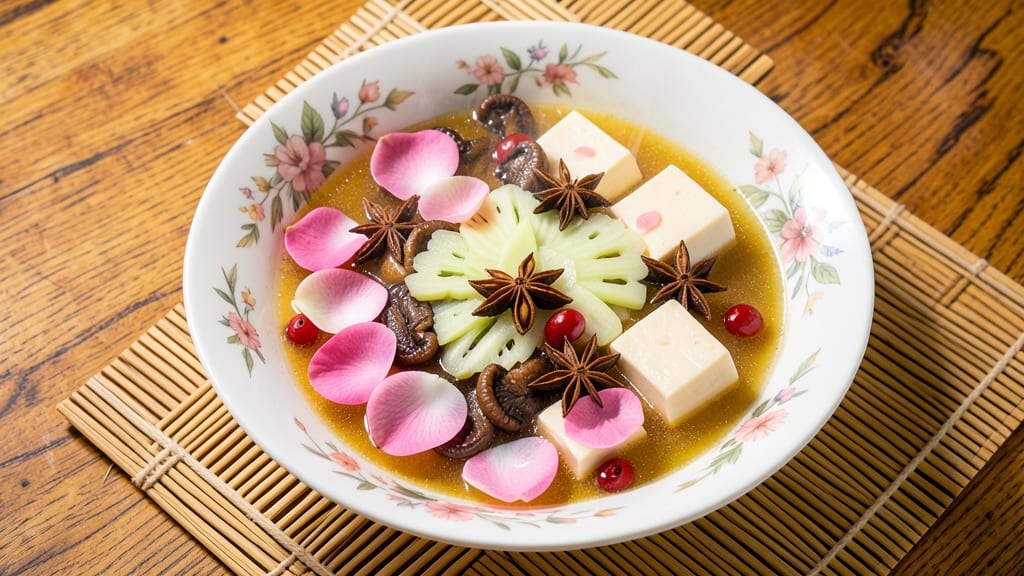
This Ba Wang Hua soup recipe brings warmth and tradition to your kitchen with its delicate rosebud infusion and silky noodles. 🌸 The dish isn't just nourishing—it's a time-honored remedy, blending fragrant herbs with tender ingredients to support immunity while delighting the palate.
Every spoonful delivers a harmonious balance of earthy and floral notes, making it a comforting staple in Chinese households.
The beauty of this soup lies in its simplicity and depth. You'll start with a fragrant broth infused with rosebuds, ginger, and star anise, then add silky noodles and protein for heartiness.
The secret to its medicinal benefits comes from the herbs—ba wang hua (rosebuds) soothe the throat, while ginger and goji berries boost circulation and vitality. It's the kind of dish that feels like a hug in a bowl.
What makes this recipe special is how it transforms humble ingredients into something extraordinary. The noodles become silky and tender, the broth rich yet light, and the rosebuds impart a subtle floral aroma that lingers with every sip.
Perfect for chilly days or when you need a boost, this soup is both restorative and deeply satisfying.
Whether you're preparing it for a family gathering or a quiet evening at home, this recipe delivers restaurant-quality results with minimal effort. The process is straightforward—simmer, season, and savor—but the reward is a bowl of comfort that's impossible to resist. Let's get started on creating this fragrant, nourishing masterpiece.
Ingredients for ba wang hua soup
Fragrant herbs, tender noodles, and silky tofu transform simple ingredients into this nourishing Chinese remedy.
| Ingredient | Amount | Notes |
|---|---|---|
| Ba Wang Hua (Rosebuds) 🌸 | 2 tbsp | Dried, food-grade quality |
| Fresh Ginger 🧄 | 2 tbsp | Grated, skin removed |
| Star Anise 🌟 | 2 whole | Lightly crushed |
| Goji Berries 🍇 | ½ cup | Dried, rinsed |
| Dried Shitake Mushrooms 🍄 | 4 pieces | Rehydrated, stems removed |
| Silken Tofu 🧀 | 8 oz | Soft or medium |
| Rice Noodles 🍜 | 8 oz | Flat or round type |
| Chicken Breast 🍗 | 1 lb | Boneless, skinless |
| Green Onions 🧅 | 3 whole | White and green parts |
| Sesame Oil 🫒 | 1 tbsp | For finishing |
| Light Soy Sauce 🥢 | 2 tbsp | For seasoning |
| Salt 🧂 | 1 tsp | Sea salt preferred |
| White Pepper 🌶️ | ¼ tsp | Freshly ground |
| Water 💧 | 6 cups | Filtered preferred |
| Vegetable Oil 🫒 | 1 tbsp | For cooking chicken |
Ba Wang Hua is the heart of this soup—look for food-grade dried rosebuds at Asian markets or specialty stores. Penzeys carries a quality version if you can't find it locally. The ginger should be fresh and firm, not fibrous or shriveled. Star anise is non-negotiable for that subtle anise flavor, but don't over-crush it or you'll get bitter notes. Goji berries? Rinse them well—they're often dusted with anti-caking agents. For the shiitake mushrooms, soak them in hot water for 20 minutes to rehydrate completely.
No ba wang hua? Dried rose petals at one-third the amount work in a pinch, though the flavor will be milder. Out of star anise? One cinnamon stick gives a similar warmth. Silken tofu can be swapped for soft tofu if you prefer texture, but it won't be as silky. The rice noodles should be fresh—dried ones need soaking and tend to get mushy. For the chicken, boneless thighs work better than breasts since they stay moist longer in broth. If you're vegetarian, mushrooms or extra tofu make excellent protein substitutes.
This soup tastes even better the next day as flavors meld. Store leftovers in the fridge for 3-4 days, covered tightly to preserve the delicate aromas. For longer storage, freeze portions in airtight containers for up to 3 months. The broth can be made ahead—just reheat gently and add fresh noodles and protein when serving. I always double the recipe because it disappears fast, especially when someone gets sick—everyone wants a bowl.
Why You'll Love This Recipe
- Minimal Chopping Required: I swear by this—just slice the shiitakes, dice a thumb of ginger, and toss in the dried goji berries whole. No finicky prep, no small cuts, just a handful of ingredients that sing together without fuss.
- Earthy-Sweet Magic: That first sip? The rosebuds perfume the broth like a spring garden, while the star anise and ginger add warmth. The shiitakes soak up the flavor like sponges, and the goji berries burst with chewy sweetness—it’s the kind of soup that makes you pause mid-slurp.
- Weeknight to Special Occasion: Serve it steaming in mugs for a lazy Tuesday or ladle it into bowls for guests—same recipe, two vibes. Honestly, it’s my go-to when I want something nourishing but not boring, and it never feels like I’m trying too hard.
- Leftovers That Beg for More: This soup actually improves after sitting overnight. The flavors meld deeper, the shiitakes get even more tender, and the rosebud aroma lingers like a cozy blanket. I make a big batch on Sundays and eat it all week—no waste, just pure satisfaction.
Step-by-step instructions for ba wang hua soup
Here's how to craft this delicate, aromatic soup with perfect balance and texture.
🔥 Step 1: Sear the Chicken for Deep Flavor
Heat the 1 tablespoon vegetable oil in a large pot over medium-high heat until shimmering. Pat the 1 lb chicken breast dry with paper towels and season generously with 1 teaspoon salt and ¼ teaspoon white pepper on both sides. Add the chicken and sear for 4-5 minutes per side until golden brown and cooked through to 165°F internally.
Remove the chicken from the pot and let it rest on a cutting board for 5 minutes before slicing into thin strips. The resting prevents overcooking while slicing, and the sear builds foundational flavor that infuses the broth. Keep the pot on the burner—we'll use it for everything else.
🍳 Step 2: Build the Aromatic Broth Base
In the same pot, add the 2 whole lightly crushed star anise, 2 tablespoons grated fresh ginger, and 2 tablespoons ba wang hua (rosebuds). Toast these aromatics over medium heat for 30 seconds until fragrant—you should smell the delicate rosebud notes and warm ginger. This quick toasting awakens their flavors without burning them.
Pour in the 6 cups water and bring to a boil. Once boiling, reduce heat to medium-low and add the 4 rehydrated dried shitake mushrooms (stems removed) and 0.5 cup rinsed goji berries. Let the broth simmer uncovered for 15 minutes to extract maximum flavor from the aromatics and mushrooms. The goji berries will plump and release their sweet, tangy essence into the liquid.
🥘 Step 3: Prepare the Silky Noodle and Tofu Components
While the broth simmers, prepare the noodles and tofu separately to maintain their delicate textures. Cook the 8 oz rice noodles according to package instructions (usually 5-7 minutes in boiling water) until just tender but still slightly firm to the bite. Drain immediately and rinse under cold water to stop cooking, then drain again thoroughly. Toss with 1 tablespoon light soy sauce to prevent sticking.
Cut the 8 oz silken tofu into ½-inch cubes and gently toss them with 1 tablespoon light soy sauce and ½ teaspoon white pepper. The tofu should be lightly coated but not falling apart—this ensures it absorbs the soup's flavors without disintegrating. Keep both components covered at room temperature until ready to add.
⏰ Step 4: Assemble and Simmer the Soup
Return the sliced chicken to the pot with the simmering broth. Add the prepared rice noodles and silken tofu cubes, then adjust the heat to low to maintain a gentle simmer. Let everything cook together for 5-7 minutes—just enough time for the flavors to meld without overcooking the delicate noodles and tofu.
Taste the broth and adjust seasoning if needed. The ba wang hua should lend a subtle floral note, while the ginger and star anise provide warmth. If the broth needs more depth, add another ½ teaspoon salt or ½ teaspoon light soy sauce. The soup should be fragrant with a delicate balance of floral, savory, and umami flavors.
🍽️ Step 5: Finish and Serve with Elegance
Remove the pot from heat and let the soup rest for 2 minutes to allow the ingredients to fully absorb the flavors. Just before serving, drizzle each bowl with ½ teaspoon sesame oil and garnish with sliced green onions (white and green parts). The sesame oil adds a nutty finish, while the green onions provide fresh contrast to the rich broth.
Serve immediately while the noodles are still warm and the tofu maintains its silky texture. Each spoonful should deliver a harmonious blend of floral rosebud aroma, tender chicken, chewy yet delicate noodles, and the subtle sweetness of goji berries. The soup's beauty lies in its balance—never overpowering, always elegant.
Pro Tips For Making Ba Wang Hua Soup
- SOAK SHITAKE FIRST: Toss dried shitake in hot water for 10 minutes before adding them to the pot—this guarantees they rehydrate evenly and won’t turn into rubbery, flavorless blobs. I learned this the hard way after serving a bowl where the mushrooms were still chewy as leather.
- PEEL GINGER THINLY: Use a spoon to scrape off just the outer skin, leaving the pale inner layer intact—this keeps the heat without the bitterness. Thick slices? You’ll just be chewing on ginger after the soup’s done.
- SIMMER LOW AND LONG: After adding ba wang hua and star anise, keep the heat at a bare simmer (tiny bubbles, no splashing) for at least 20 minutes. Rushing this step means the rosebuds won’t release their floral notes properly—you’ll end up with a weak, underwhelming broth.
- ADD GOJI BERRIES LAST: Toss them in during the final 5 minutes of cooking so they stay plump and chewy, not mushy. If you toss them in early, they’ll turn into a sad, colorless paste—no one wants that. (And yes, even if you’re impatient like me.)
Storing and reheating your ba wang hua soup
Fridge Storage Tips
Store your Ba Wang Hua soup in an airtight container with a lid to preserve its delicate floral aroma and prevent absorption of fridge odors. I recommend using glass Pyrex containers—they maintain temperature better than plastic and won't warp over time.
Let the soup cool to room temperature (no more than 2 hours) before refrigerating to prevent bacterial growth. The soup stays fresh and flavorful for 3-4 days in the fridge, with flavors actually deepening as the ingredients meld. 🌸
Freezer Preservation
For longer storage, portion the soup into freezer-safe containers or heavy-duty resealable bags, leaving 1-inch headspace for expansion. I like using quart-sized containers because they're perfect for individual servings. Label everything with the date—this soup keeps its quality for up to 3 months in the freezer.
The broth freezes particularly well, so you can make it ahead and add fresh noodles and protein when serving. Just thaw overnight in the fridge before reheating. ❄️
Reheating Methods
For the best texture, reheat the soup on the stovetop over medium-low heat. Pour the soup into a pot and add 2-3 tablespoons of water to prevent sticking and maintain moisture. Heat gently until steaming (10-12 minutes), stirring occasionally.
Avoid high heat—it can make the noodles mushy and the tofu rubbery. If using the microwave, cover with a damp paper towel and heat in 1-minute intervals at 50% power, stirring between each interval until reaching 165°F. 🔥
Broth Separation Fix
If you notice the broth separating after reheating (common with long storage), gently stir in 1 teaspoon of cornstarch mixed with 1 tablespoon cold water and simmer for 2 minutes to restore thickness. For extra richness, add a splash of chicken or vegetable broth to balance flavors.
The key is patience—never rush the reheating process, or you'll lose that silky texture we worked so hard to achieve. 💫
Garnish Refresh
Before serving reheated soup, always add fresh green onions and a drizzle of sesame oil—this brightens the flavors and makes it feel restaurant-fresh. I also like adding a pinch of white pepper if the soup tastes flat after reheating.
The contrast of fresh herbs against the warm broth is what makes this soup feel special every time, even after storage. ✨
Nutrition facts
Frequently asked questions
What's the best way to find ba wang hua (rosebuds) for this recipe?
Look for food-grade dried rosebuds at Asian grocery stores or specialty herb shops. Brands like Penzeys or Mountain Rose Herbs often carry them online. If unavailable, use dried rose petals at one-third the amount—they'll give a milder floral note but still work in a pinch. Always check for purity and avoid decorative varieties that may contain dyes or preservatives.
Can I make this soup vegetarian or vegan?
Replace the chicken with extra silken tofu (12 oz) or rehydrated shiitake mushrooms (6-8 pieces) for protein. For vegan broth, use vegetable or mushroom broth instead of water, and add 1 tbsp soy sauce for umami depth. The floral notes from ba wang hua and goji berries will still shine through beautifully.
Why does my soup taste bitter? How can I fix it?
Bitterness usually comes from overcooking the aromatics (star anise, ginger, or ba wang hua) or using old ingredients. To fix it, stir in 1 tsp honey or brown sugar while simmering to balance flavors. If the bitterness persists, add ½ cup fresh cilantro or green onions at the end—their freshness cuts through harsh notes. For prevention, toast aromatics for only 30 seconds and remove star anise before serving.
How can I adjust the soup's thickness?
For a lighter broth, add ½ cup extra water during simmering. To thicken, stir in 1 tsp cornstarch mixed with 2 tbsp cold water and simmer for 2 minutes. If using noodles, cook them slightly less than package instructions for a more brothy texture. The key is balance—this soup should be silky, not gluey. For extra body, add 1 tbsp miso paste at the end for depth.
What are the main health benefits of ba wang hua soup?
Ba wang hua (rosebuds) are prized in traditional medicine for soothing sore throats and coughs, while ginger aids digestion and circulation. Goji berries provide antioxidants and vitamin A, and shiitake mushrooms boost immunity. The combination makes this soup particularly nourishing during cold seasons or when recovering from illness. For extra benefits, add a slice of fresh ginger while serving.