
Soups & Stews
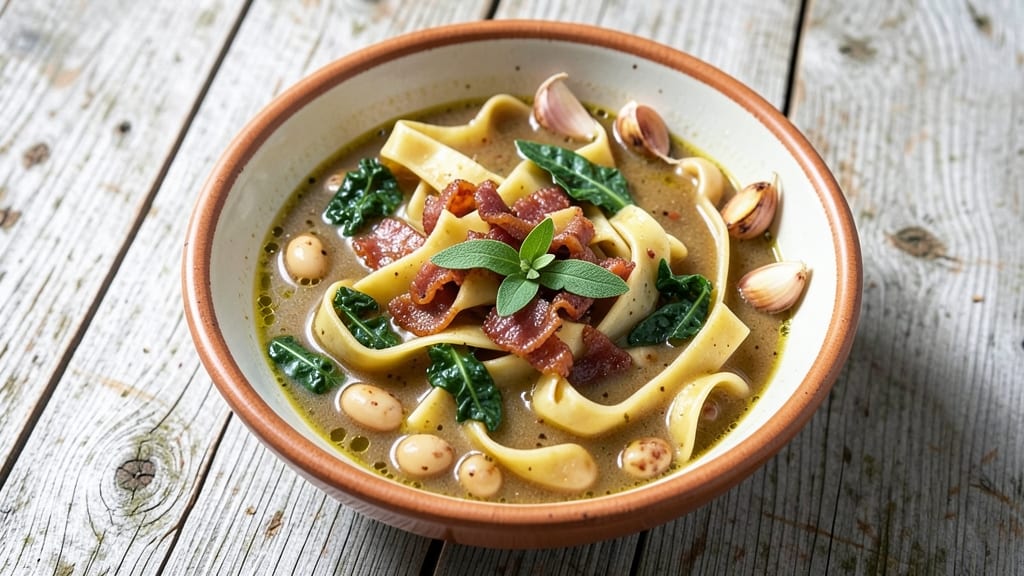
This authentic Tuscan soup recipe transports you straight to the rolling hills of Italy with its rustic charm and bold flavors. 🌿 The secret lies in slow-simmered cannellini beans, hearty kale, and tender pappardelle ribbons bathed in a fragrant sage-infused broth—every spoonful tells a story of Tuscan tradition.
What sets this recipe apart is its commitment to authenticity, using traditional ingredients like pancetta for depth and crusty bread to thicken the broth naturally. The long simmering process develops rich, complex flavors that transform simple ingredients into something extraordinary.
Perfect for chilly evenings, this soup is hearty enough to satisfy even the heartiest appetites.
The result is a velvety, aromatic soup with tender beans, wilted greens, and perfectly cooked pappardelle that soak up every bit of the flavorful broth. The addition of fresh sage and a splash of Chianti wine at the end elevates it to restaurant-quality without requiring fancy techniques.
This is comfort food at its finest—simple, honest, and deeply satisfying.
Pair it with a glass of Tuscan red wine and crusty bread to soak up every last drop. The beauty of this recipe lies in its versatility—it tastes even better the next day as the flavors meld together. Let's bring a taste of Tuscany to your kitchen.
Ingredients for authentic tuscan soup
Fifteen traditional Tuscan ingredients transform into velvety, aromatic soup with restaurant-quality depth.
| Ingredient | Amount | Notes |
|---|---|---|
| Dried Pappardelle Ribbons 🍝 | 8 oz | High-quality, 8-inch wide |
| Cannellini Beans 🌱 | 1 ½ cups | Dried, soaked overnight |
| Pancetta 🥓 | 6 oz | Diced, not cured bacon |
| Fresh Sage Leaves 🌿 | ½ cup | Packed, stems removed |
| Fresh Kale 🥬 | 4 cups | Chopped, stems removed |
| Garlic Cloves 🧄 | 4 cloves | Peeled, lightly crushed |
| Crusty Bread 🍞 | 1 piece | Stale, torn into chunks |
| Chianti Wine 🍷 | ½ cup | Dry red, room temperature |
| Vegetable Broth 💧 | 4 cups | Homemade preferred |
| Extra-Virgin Olive Oil 🫒 | ¼ cup | High-quality, fruity |
| Parmigiano-Reggiano Cheese 🧀 | ½ cup | Freshly grated from block |
| Diamond Crystal Kosher Salt 🧂 | 1 ½ tsp | For seasoning |
| Freshly Ground Black Pepper 🌶️ | ½ tsp | Coarsely ground |
| Onion 🧅 | 1 whole | Yellow, chopped |
| Celery Stalks 🥬 | 2 whole | Chopped, with leaves |
Pancetta is the soul of this soup—look for Italian-style pancetta at specialty markets or well-stocked grocery stores like Whole Foods. The difference between pancetta and regular bacon is subtle but crucial: pancetta has a delicate, sweet-savory flavor that doesn't overpower the broth. If you can't find it, guanciale works perfectly, though it's pricier. For the cannellini beans, dried is ideal—they develop more complex flavor than canned, but if you're short on time, high-quality canned beans (like Mutti) will work. The pappardelle should be authentic dried pasta, not fresh—it holds up better to the long simmering process. Avoid pre-cut ribbons that aren't labeled as traditional Tuscan width.
No pancetta? Smoked bacon works in a pinch, but reduce the amount to 4 oz for a milder flavor. Fresh sage is non-negotiable—dried simply can't replicate its aroma, though you can use it at half the amount if absolutely necessary. The Chianti wine should be dry and robust—avoid sweet varieties. For the vegetable broth, homemade is best, but a good-quality low-sodium store-bought version works too. If you're using canned beans, rinse them thoroughly to remove excess sodium. The crusty bread should be stale—it thickens the broth naturally without adding a raw flour taste. For the Parmigiano-Reggiano, grate it yourself at the last minute to prevent clumping.
This soup improves dramatically overnight, so make it a day ahead if possible. Store in an airtight container in the fridge for up to 4 days. The pasta will soften further and absorb all the flavors. For reheating, warm gently on the stove with a splash of water or broth—never microwave, as it can make the pasta mushy. The pancetta and cheese can be stored separately in the fridge for 5 days or frozen for 3 months. Freeze the broth separately if you want to extend its shelf life. The sage and garlic should be used within 3 days of chopping for maximum freshness.
Why You'll Love This Recipe
- Pasta in 10 Minutes: The pappardelle soaks while you cook—no pre-boiling, no fuss. Just toss the dried ribbons in simmering broth, and they soften right in the pot. Honestly, I’ve made this on nights when I forgot to take pasta out of the cabinet.
- Sage & Pancetta Magic: That crispy pancetta crumble? It’s the star—salty, smoky, and it melts into the broth like a hug. Add the fresh sage at the end, and suddenly your kitchen smells like an Italian countryside dinner.
- Weeknight to Potluck: Same soup, endless uses. Serve it steaming in bowls for a cozy Tuesday night, or ladle it into a baking dish with grated cheese for a crowd-pleasing casserole. (Yes, even on a Tuesday night.)
- Budget-Friendly Leftovers: Cannellini beans stretch this soup into three meals without breaking the bank. The kale wilts down to nothing, so you’re not left with sad, wilted greens—just flavor-packed seconds. My wallet (and freezer) thank me every time.
Step-by-Step instructions for authentic Tuscan soup
This classic Tuscan recipe delivers rich, rustic flavors through precise technique and quality ingredients.
🍳 Step 1: Render the Pancetta and Sauté Aromatics
Heat the 0.25 cup extra-virgin olive oil in a large Dutch oven over medium heat. Add the 6 oz diced pancetta and cook for 5-6 minutes until the fat renders out and the pancetta becomes crispy and golden. Real talk: don't rush this - the rendered fat is the flavor foundation.
Remove the pancetta with a slotted spoon and set aside, leaving the fat in the pot. Add the 1 whole chopped onion and 2 whole chopped celery stalks (with leaves) to the pot. Cook for 5-7 minutes until softened and translucent. Stir in the 4 cloves lightly crushed garlic and cook for 30 seconds until fragrant but not browned - garlic burns fast.
🍳 Step 2: Build the Sage-Infused Broth
Pour in the 0.5 cup Chianti wine and scrape up any browned bits from the bottom of the pot. This deglazing captures all the flavor. Let it simmer for 2 minutes until reduced by half. Add the 4 cups vegetable broth and bring to a gentle boil.
Add the 1.5 cups soaked cannellini beans (drained), 1.5 tsp kosher salt, and 0.5 tsp freshly ground black pepper. Stir in the 0.5 cup packed fresh sage leaves and reduce heat to medium-low. Let it simmer uncovered for 15 minutes to develop the flavors - you'll smell that earthy sage aroma permeating the kitchen.
🥘 Step 3: Add Kale and Cook Until Tender
Add the 4 cups chopped fresh kale and stir to combine. Simmer for 8-10 minutes until the kale is tender but still vibrant green. The soup should have a thick, hearty texture at this point. If it's too thin, simmer uncovered for another 5 minutes to reduce.
Return the crispy pancetta to the pot and stir gently to distribute. Taste and adjust seasoning - you might need a pinch more salt to balance the acidity from the Chianti. Here's the thing - authentic Tuscan soup should be rich but not heavy, with bright vegetable flavors shining through.
🔪 Step 4: Cook the Pappardelle Perfectly
In a separate pot, bring 4 cups salted water to a rolling boil. Add the 8 oz dried pappardelle ribbons and cook for 8-10 minutes until al dente. Reserve 1 cup pasta water before draining. The ribbons should be tender but still have a slight bite - they'll finish cooking in the soup.
Add the drained pappardelle to the soup pot and toss gently to coat. If needed, add reserved pasta water 1 tablespoon at a time to achieve your desired consistency. The soup should be thick enough to coat the back of a spoon but still ladle easily.
🍽️ Step 5: Finish and Serve with Crusty Bread
Remove from heat and stir in the 0.5 cup freshly grated Parmigiano-Reggiano cheese until melted and creamy. Ladle into warm bowls and serve immediately with torn chunks of crusty bread on the side. The bread soaks up the rich broth beautifully, intensifying all those Tuscan flavors.
Each spoonful should deliver layers of smoky pancetta, earthy sage, bright kale, and the subtle acidity from the Chianti. The pappardelle ribbons should be perfectly al dente, holding their shape while soaking up the flavorful broth. This is comfort food at its finest - rustic, hearty, and deeply satisfying.
Pro Tips For Making Authentic Tuscan Soup
- CRISP THE PANCETTA FIRST: Cook the pancetta until it’s golden and slightly crispy—don’t stop at just rendering fat. I learned this the hard way; mushy pancetta makes the soup taste flat. Use a cold pan and low heat at first, then crank it up to medium-high until the edges darken. That’s when the flavor hits.
- SOAK BEANS IN SALTED WATER: Toss the dried cannellini beans in a bowl of warm, lightly salted water for at least 30 minutes before cooking. This keeps them from splitting open and turning mushy—especially important since you’re simmering them in broth, not boiling. (Yes, even if you’re impatient like me.)
- ADD KALE IN STAGES: Tear the kale into rough pieces and add half of it with the beans, the rest just before serving. The first batch wilts into the soup, while the last gets that bright, slightly crisp texture. Overcooking kale turns it to sludge, and nobody wants that in their pappardelle.
- SALT THE PASTA WATER HARD: Use the full 2 tablespoons of salt in the pasta water—more if you’re using a big pot. The pappardelle needs to be al dente but still hold up when tossed with the soup. Under-salted water makes the dish taste bland, and you’ll regret it when you’re halfway through eating.
Creative variations of this recipe
Classic Ribollita Twist
Transform this soup into traditional Tuscan ribollita by adding 1 cup diced stale sourdough bread during the final 10 minutes of simmering. The bread thickens the soup naturally while absorbing all those rich flavors.
For extra authenticity, top each bowl with ½ cup sautéed escarole or spinach and a sprinkle of grated Pecorino Romano instead of Parmigiano. 🌿
Pappa al Pomodoro Fusion
Create a Tuscan tomato-bread soup hybrid by replacing the kale with 2 cups San Marzano tomatoes (crushed by hand) and adding 1 cup grated day-old Tuscan bread to the broth during the initial simmer.
Stir in 1 tbsp tomato paste for depth, then finish with fresh basil instead of sage. This version keeps the rustic charm while introducing bright tomato acidity.
White Bean & Rosemary Variation
Swap cannellini beans for 1.5 cups soaked borlotti beans and infuse the broth with 1 sprig fresh rosemary instead of sage. Add ½ cup diced fennel with the onions for a refreshing anise note.
The rosemary pairs beautifully with the pancetta, creating a completely different but equally authentic Tuscan profile. 🌱
Meat Lover's Version
For heartier portions, add 6 oz diced Italian sausage (like Calabrese) with the pancetta in Step 1. Remove the sausage after browning and set aside, then return it with the kale in Step 3.
The sausage adds a spicy kick that balances the earthy flavors perfectly. Serve with extra Parmigiano-Reggiano on the side for a true Tuscan trattoria experience.
Vegetarian Adaptation
Make this completely plant-based by replacing pancetta with 6 oz smoked tofu (crumbled) and using 1 cup vegetable broth instead of Chianti wine. Boost umami with 1 tbsp soy sauce in the broth.
The tofu mimics the texture of rendered pancetta while keeping the dish rich and satisfying. Garnish with extra fresh sage and a drizzle of high-quality olive oil.
Winter Comfort Upgrade
For a cozy winter version, add 1 cup diced roasted butternut squash (tossed with olive oil, salt, and pepper before roasting) to the pot with the kale. The natural sweetness of the squash complements the earthy flavors, making this soup even more comforting.
Top with crispy fried sage leaves for an elegant touch that feels restaurant-worthy. ❄️
Nutrition facts
Frequently asked questions
Can I substitute fresh sage for dried sage in this recipe?
Fresh sage is essential for authentic flavor—it releases its aroma much better than dried. If you absolutely must use dried, reduce the amount to ¼ cup (half of what's called for) and add it with the kale. For best results, toast the dried sage leaves in a dry pan for 30 seconds before adding to deepen the flavor.
How do I make this soup vegetarian?
Replace the pancetta with 6 oz smoked tofu (crumbled) and use 1 cup vegetable broth instead of Chianti wine. Add 1 tbsp soy sauce to the broth for umami depth. The tofu mimics the texture of rendered pancetta while keeping the dish rich and satisfying. Garnish with extra fresh sage and a drizzle of high-quality olive oil.
Why does the recipe call for Chianti wine?
The Chianti wine adds acidity and depth that balances the richness of the pancetta and beans. A dry red wine is traditional—it enhances the earthy sage and brightens the kale. If you don't have Chianti, use another dry Italian red like Sangiovese. For a non-alcoholic version, substitute with ½ cup red wine vinegar or extra vegetable broth.
Can I make this soup ahead of time?
Yes! This soup tastes even better the next day as flavors meld. Store in an airtight container in the fridge for up to 4 days. Reheat gently on the stove with a splash of water or broth—never microwave, as it can make the pasta mushy. The pappardelle will soften further and absorb all the flavors beautifully.
What if my soup is too thick or too thin?
For a thicker soup, simmer uncovered for 5-10 extra minutes to reduce the liquid. If it's too thin, stir in 1 tbsp cornstarch mixed with 2 tbsp water or add 1-2 tbsp reserved pasta water. The ideal consistency should coat the back of a spoon but still ladle easily—like a thick stew.