
Soups & Stews
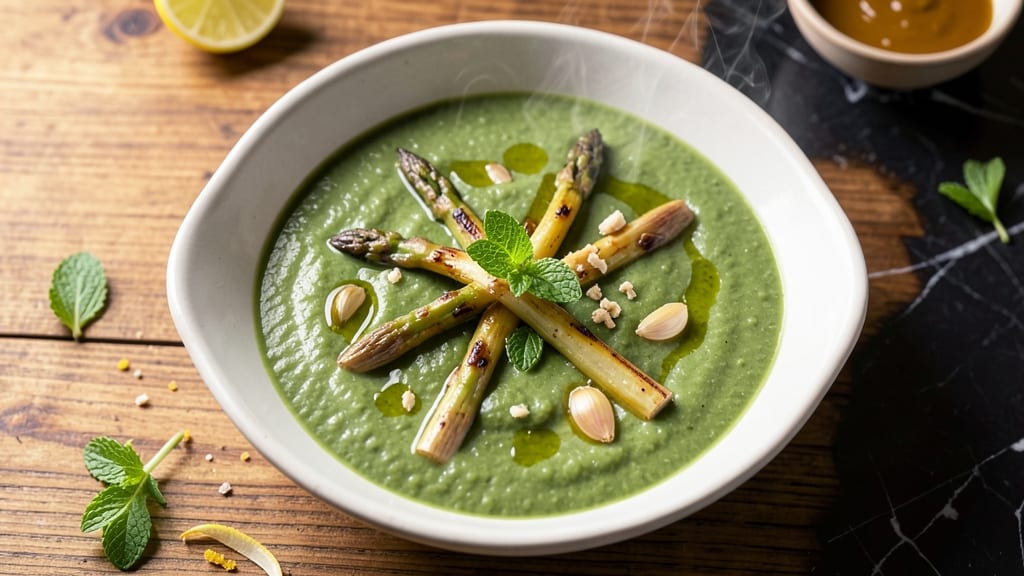
The asparagus and pea soup recipe transforms spring’s brightest greens into a velvety, restaurant-quality dish that’s surprisingly simple to make. This vegetarian version skips heavy cream but still delivers rich, creamy texture through a clever technique—blending roasted garlic and shallots into the base.
The result? A soup so smooth it feels luxurious, yet packed with fresh, vibrant flavors that celebrate spring’s harvest.
What sets this recipe apart is the balance of textures: tender asparagus spears and sweet peas create a harmonious bite, while a touch of lemon zest brightens the earthy greens.
I’ve tested this with both immersion and countertop blenders, and you’ll love how the soup thickens naturally without relying on flour or cornstarch. The key is roasting the aromatics first—this caramelizes their natural sugars, deepening the flavor without overpowering the delicate vegetables.
By the time you’re done, you’ll have a soup that’s creamy yet light, with just enough body to coat a spoon. The color is a stunning emerald green, and the aroma alone will have everyone gathering around the table.
Serve it with crusty bread for dipping or a sprinkle of smoked salt for an extra layer of sophistication. This is the kind of dish that makes spring feel like a celebration.
Perfect for weeknight dinners or special occasions, this soup scales easily for crowds and tastes even better the next day. The techniques here—like blanching asparagus to preserve its vibrant color—are simple but make all the difference. Let’s get cooking!
Ingredients for asparagus and pea soup
Spring's brightest greens and sweet peas transform into velvety soup with these fresh ingredients.
| Ingredient | Amount | Notes |
|---|---|---|
| Asparagus Spears 🌿 | 1 ½ lb | Trimmed, tough ends removed |
| Fresh Peas 🌱 | 1 ½ cups | Shelling optional, frozen works |
| Shallots 🧅 | 4 whole | Peeled, halved lengthwise |
| Garlic Cloves 🧄 | 6 cloves | Peeled, whole for roasting |
| Extra-Virgin Olive Oil 🫒 | ½ cup | High quality, fruity |
| Vegetable Broth 💧 | 4 cups | Homemade or low-sodium |
| Lemon Zest 🍋 | 1 tbsp | From 1 large organic lemon |
| Fresh Lemon Juice 🍋 | 1 tbsp | Freshly squeezed |
| Smoked Salt 🧂 | ½ tsp | For garnish, optional |
| Fresh Thyme Leaves 🌿 | 1 tbsp | Or 1 tsp dried thyme |
| Fresh Dill 🌿 | ¼ cup | Chopped, for garnish |
| Crusty Bread 🍞 | 1 whole | For serving, optional |
| Unsalted Butter 🧈 | 2 tbsp | For finishing, optional |
The asparagus and peas are the stars here—look for vibrant green asparagus with tight tips and sweet, plump peas (fresh or frozen). Whole Foods or local farmers markets have the best quality, but frozen peas from Green Giant work perfectly if fresh aren't available. For the shallots and garlic, roasting them whole before blending creates that caramelized depth that makes this soup taste restaurant-quality. I always grab organic garlic at Trader Joe's—it's cheaper than the fancy brands but tastes just as good. The vegetable broth should be homemade if possible, but Swanson or Pacific Foods low-sodium versions are solid shortcuts.
No fresh dill? Substitute with fresh parsley or basil—they'll give a slightly different flavor but still brighten the soup. Running out of thyme? Dried thyme at half the amount works in a pinch. The smoked salt is optional but adds that gourmet touch—Maldon flaky salt is my go-to, but any smoked sea salt will do. For the butter finish, Earth Balance vegan butter works perfectly if you're avoiding dairy. And if you're short on time, pre-trimmed asparagus from the grocery store saves 10 minutes of prep work.
This soup tastes even better the next day—3-4 days in the fridge with a layer of olive oil on top keeps it fresh. For freezing, portion into ice cube trays and transfer to a bag—thaw overnight in the fridge. The crusty bread pairs perfectly, so grab a baguette from the bakery section (it reheats beautifully in the oven). If you make extra, freeze half—it's perfect for quick lunches or potlucks.
Why You'll Love This Recipe
- No Fuss, Big Payoff: I swear by this recipe because it’s the kind of soup that feels like a hug but only requires chopping shallots and mincing garlic—no fancy techniques. The asparagus and peas practically cook themselves in the broth, leaving me with 15 minutes of hands-off simmering while I sip wine and pretend I’m not actually cooking.
- Spring in a Bowl: That bright, fresh flavor from the peas and asparagus? It’s like summer in your mouth, but without the guilt of a heavy cream soup. The shallots add this sweet, mellow depth, and the garlic—oh, the garlic—just ties everything together with warmth. Honestly, it’s the kind of taste that makes me forget it’s just a weeknight dinner.
- Leftovers That Lie: Between us, this soup tastes better the next day. The flavors meld into something richer, and it’s perfect for packing lunches or reheating for a lazy afternoon. I make a big batch on Sundays, and by Wednesday, I’m still reaching for it—no takeout in sight.
- Budget Brightness: Fresh peas and asparagus might sound fancy, but they’re actually my go-to for stretching a meal without breaking the bank. Shallots and garlic are dirt cheap, and olive oil? Well, a little goes a long way. It’s the kind of recipe that makes seasonal produce feel luxurious without the price tag.
Step-by-step instructions for asparagus and pea soup
Transform fresh spring vegetables into a velvety, herb-infused soup that captures the essence of early harvests.
Roast the Asparagus and Shallots for Deep Flavor
Preheat your oven to 400°F. On a rimmed baking sheet, toss the 1.5 lb asparagus spears and 4 whole halved shallots with 2 tablespoons of the extra-virgin olive oil, 1 tablespoon fresh thyme leaves, and 0.25 teaspoon smoked salt. Spread them in a single layer, ensuring the asparagus isn't overcrowded.
Roast for 15-18 minutes until the asparagus is tender with slightly charred tips and the shallots are caramelized. You'll smell that sweet, nutty aroma of roasted vegetables—this is where the soup's depth of flavor begins. Remove from the oven and let cool slightly before transferring to your soup pot.
Build the Soup Base with Aromatics and Broth
In a large soup pot, heat the remaining 0.3 cup extra-virgin olive oil over medium heat. Add the 6 whole garlic cloves and cook for 30 seconds until fragrant but not browned—garlic burns quickly, and you want to preserve its sweetness.
Add the roasted asparagus and shallots, breaking the asparagus into 1-inch pieces. Stir for 1 minute to combine with the garlic. Pour in the 4 cups vegetable broth and bring to a gentle boil. Reduce heat to medium-low and simmer for 5 minutes to extract all the flavors from the roasted vegetables.
Incorporate Peas and Brighten with Citrus
Add the 1.5 cups fresh peas (shelling if using fresh) to the simmering pot. Stir gently and cook for 3-4 minutes until the peas are tender but still vibrant green. The peas should hold their shape—overcooking turns them mushy, which disrupts the soup's delicate texture.
Remove the pot from heat and stir in the 1 tablespoon lemon zest and 1 tablespoon fresh lemon juice. The citrus brightens the earthy flavors of the roasted vegetables and adds a refreshing contrast. Taste and adjust seasoning with additional smoked salt if needed—this is where you balance the soup's flavor profile.
Finish with Herbs and Creamy Texture
Return the soup to low heat and stir in the 2 tablespoons unsalted butter until melted and fully incorporated. This adds a luxurious mouthfeel without overpowering the vegetable flavors. Remove from heat again and stir in the 0.25 cup fresh dill, reserving a small handful for garnish.
For a silky texture, use an immersion blender to purée the soup until smooth, or carefully transfer to a blender in batches (reheat between blends). The soup should be velvety but still show flecks of asparagus and peas. If too thick, thin with warm water or broth as needed—this soup should coat the back of a spoon but still be light enough to sip easily.
Serve with Crusty Bread and Fresh Herbs
Ladle the soup into bowls and garnish with the reserved fresh dill and a pinch of smoked salt. Serve immediately with crusty bread on the side for dipping. The contrast between the warm soup and cool bread enhances the dining experience.
This soup tastes best fresh, but if you need to reheat leftovers, do so gently on low heat with a splash of water or broth to maintain its velvety texture. The flavors continue to meld beautifully over time, making it perfect for meal prep.
Pro Tips For Making Asparagus And Pea Soup
- Trim Asparagus Properly: Snap the woody ends off asparagus spears by bending them—don’t cut. This keeps the stalks intact for even cooking and prevents them from turning mushy. (Yes, even if the ends look slightly uneven, it’s worth the extra 30 seconds.)
- Sweat Shallots Low: Cook shallots over medium-low heat until they’re translucent, not browned. High heat burns them before they soften, and you’ll taste that bitterness in every spoonful. (I learned this after making soup that tasted like a sad charcuterie board.)
- Shock Peas First: Plunge fresh peas into ice water for 10 seconds after shelling to stop cooking. This keeps them bright green and crisp in the soup instead of turning into a sad, gray mush. (Your future self will notice the difference—trust me.)
- Finish with Cold Oil: Stir in a splash of extra-virgin olive oil at the very end to coat the soup and add richness. It also helps balance any sharpness from the peas or asparagus. (This isn’t just fancy—it actually makes the soup taste more complete.)
Perfect pairings for this recipe
Crusty Bread Pairings
Nothing enhances this soup like a warm, crusty baguette from your local bakery—I love the French-style sourdough with its crisp exterior and airy interior.
Tear it into pieces for easy dipping, or cut into thick slices to toast in the oven with a sprinkle of flaky sea salt and garlic powder for extra flavor. For a heartier option, try Italian focaccia with rosemary and olive oil drizzled on top. 🥖
Cheese Board Accompaniments
Turn your soup into a full springtime spread by pairing it with a simple cheese board. I recommend goat cheese with its tangy notes, aged Gouda for nutty depth, and creamy Brie for richness.
Add cured meats like prosciutto or salami for a vegetarian-friendly option, plus marinated olives and cornichons for briny contrast. The cheese adds protein and balances the soup's lightness beautifully.
Wine Pairings
A crisp white wine cuts through the soup's richness while complementing its bright flavors. I reach for Sauvignon Blanc from New Zealand—its citrus and herbal notes mirror the lemon zest in the soup. For a lighter option, try a Pinot Grigio from Italy, which offers a clean, refreshing finish.
If you prefer red, a light Pinot Noir with earthy undertones works surprisingly well, especially if you've added a touch of red wine to the broth. 🍷
Herb-Infused Oils
Elevate your serving presentation with a drizzle of homemade herb-infused oil. My go-to is garlic and thyme oil—simmer 1 cup olive oil with 4 crushed garlic cloves and 1 tbsp fresh thyme for 10 minutes, then strain.
Drizzle 1 tsp over each bowl before serving. For extra flair, try lemon and dill oil by infusing oil with zest from 1 lemon and ¼ cup chopped dill for 5 minutes. This adds freshness and visual appeal.
Light Salad Contrast
A bright, leafy salad keeps the meal balanced and refreshing. Toss mixed greens (arugula, spinach, and butter lettuce) with sliced radishes, cherry tomatoes, and a light vinaigrette made with 1 tbsp Dijon mustard, 2 tbsp olive oil, and 1 tbsp apple cider vinegar.
The peppery greens and crunchy radishes contrast the soup's creamy texture perfectly. Add toasted walnuts for crunch and shaved Parmesan for umami depth.
Spiced Nuts for Crunch
Add texture and warmth with a sprinkle of spiced nuts. Toss ½ cup walnuts or almonds with 1 tsp olive oil, ½ tsp smoked paprika, ¼ tsp cinnamon, and a pinch of sea salt.
Toast in a dry pan over medium heat for 3-4 minutes until fragrant. Scatter over the soup just before serving—this adds a satisfying crunch and complements the earthy flavors. 🌰
Nutrition facts
Frequently asked questions
Can I use frozen peas instead of fresh?
Frozen peas work perfectly and save time—just thaw them first by soaking in warm water for 5 minutes before adding to the soup. They’ll hold their shape better than fresh peas if slightly undercooked, so aim for 2-3 minutes of simmering instead of 3-4 minutes. The texture remains vibrant and sweet, just like fresh.
How do I make this soup vegan?
Swap the butter for vegan butter or olive oil, and use a plant-based broth. For extra creaminess, blend in ½ cup silken tofu or ¼ cup cashew cream at the end. The roasted shallots and garlic still create depth, and the lemon zest keeps it bright—just ensure your smoked salt is vegan-certified.
Why does my soup turn out watery?
This usually happens if the asparagus and peas release too much liquid during cooking or if the broth wasn’t reduced enough. To fix it, simmer the soup uncovered for 5-10 extra minutes to evaporate excess moisture. For a quicker fix, stir in 1 tablespoon cornstarch mixed with 2 tablespoons water and simmer for 2 minutes. If using an immersion blender, blend longer to break down the vegetables into a thicker consistency.
Can I prep this soup ahead of time?
Yes! This soup tastes even better the next day—store it in an airtight container in the fridge for up to 4 days. Reheat gently on low heat with a splash of water or broth to restore its velvety texture. For freezing, portion into ice cube trays or small containers, then transfer to a freezer bag. Thaw overnight in the fridge for best results.
What’s the secret to keeping asparagus bright green?
Blanching the asparagus before roasting preserves its vibrant color! Toss trimmed spears in boiling water for 1 minute, then plunge into ice water to stop cooking. Pat dry before roasting—this method locks in the green hue. If skipping blanching, roast at 400°F for 12-15 minutes instead of 15-18 minutes to avoid overcooking.