
Soups & Stews
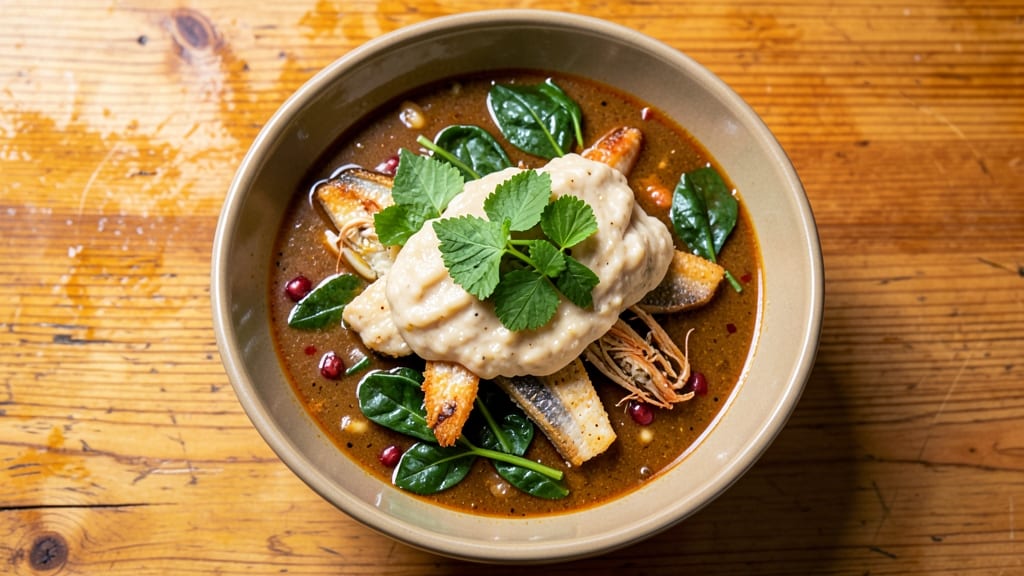
This African Afang soup recipe with its key ingredients delivers a rich, smoky depth that comes from traditional West African cooking techniques.
The heart of the dish lies in its velouté base—palm oil simmered with leafy greens like bitterleaf or spinach, creating a bold, earthy flavor that pairs perfectly with protein. What makes Afang special is how it balances bitterness with richness, transforming simple ingredients into a complex, satisfying stew.
The recipe builds layer upon layer of flavor starting with a deep-fried crayfish and locust bean paste that forms the aromatic foundation. This paste infuses the broth with umami and nutty depth, while the palm oil adds its signature smoky aroma.
The leafy greens wilt into the broth, releasing their nutrients and creating a hearty, nourishing soup that's both comforting and deeply flavorful.
What you'll achieve is a soup that's rich in texture and tradition—creamy from the palm oil, hearty from the protein, and vibrant from the greens. Each spoonful carries the essence of West African cuisine, where every ingredient plays a role in creating something greater than the sum of its parts.
The result is a dish that's as satisfying to make as it is to eat.
Whether you're preparing it for a family gathering or a special occasion, this Afang soup recipe brings authenticity and warmth to your table. The process is straightforward, but the flavors are anything but simple. Let's get started on creating this traditional West African masterpiece.
Ingredients for afang soup recipe ingredients
Sixteen ingredients transform into a rich, smoky West African masterpiece with layers of umami and earthy greens.
| Ingredient | Amount | Notes |
|---|---|---|
| Red Palm Oil 🫒 | ½ cup | High-quality, unrefined preferred |
| Dried Crayfish 🦐 | ¼ lb | Whole, not powdered |
| Locust Bean Paste (Iru) 🌾 | ½ cup | Traditional West African paste |
| Fresh Bitterleaf 🌿 | 1 lb | Or spinach as substitute |
| Fresh Spinach 🌿 | 1 lb | Substitute for bitterleaf |
| Smoked Fish 🐟 | ½ lb | Dried or smoked mackerel |
| Fresh Okra 🌰 | ½ lb | Whole, sliced lengthwise |
| Fresh Ginger 🧄 | 2 tbsp | Grated, peeled |
| Garlic Cloves 🧄 | 6 cloves | Peeled, minced |
| Fresh Red Bell Pepper 🌶️ | 1 whole | Seeds removed |
| Fresh Onion 🧅 | 1 whole | Medium, chopped |
| Fresh Tomatoes 🍅 | 3 whole | Medium, chopped |
| Salt 🧂 | 1 ½ tsp | Kosher or sea salt |
| Black Pepper 🌶️ | ½ tsp | Freshly ground |
| Fresh Cilantro 🌿 | ¼ cup | Chopped, for garnish |
The palm oil is non-negotiable here—look for unrefined, red palm oil at African markets or specialty stores like African & Caribbean Foods Market (online). The locust bean paste (iru) is the soul of Afang; it's available in African grocery sections or online at AfricanGourmetFoods.com. Fresh bitterleaf is ideal but spinach works in a pinch (it won't be as bitter). For the smoked fish, check West African markets or freeze-dried sections at World Market—it's what gives Afang its signature depth. If you can't find dried crayfish, shrimp or squid can substitute, though the texture will differ slightly.
No locust bean paste? Blend 1/4 cup roasted peanuts with 1 tsp smoked paprika for a rough substitute. Short on bitterleaf? Swiss chard or kale add earthiness, though they're milder. The okra can be omitted if unavailable, but it adds that signature slimy texture that balances the richness. For the ginger and garlic, fresh is non-negotiable—dried lacks the bright punch. The red bell pepper adds a subtle sweetness; if you prefer heat, swap for scotch bonnet or habanero. Always taste the broth before adding salt—palm oil is already salty, so adjust carefully.
Palm oil keeps for 6-12 months in a cool, dark place once opened. The locust bean paste lasts years unopened, but once mixed into the soup, it's best used within 3 days. Fresh greens should be washed and dried thoroughly before adding to the pot—excess moisture dilutes the broth. For meal prep, portion the soup into containers with a thin layer of palm oil on top to preserve freshness. Reheats beautifully; the flavors deepen overnight, making it even more comforting the next day.
Why You'll Love This Recipe
- One-Pot Magic: I swear by this recipe—just a pot, a few ingredients, and 30 minutes. No fancy gadgets, no chopping marathon. The bitterleaf and spinach wilt into submission while you stir in the iru and crayfish, and suddenly, dinner’s ready.
- Rich Without Effort: That red palm oil? It’s the MVP—deep, earthy, and cheap flavor in a bottle. The iru thickens the soup naturally, and the crayfish adds this briny, umami punch that makes it taste like you slaved over it (but you didn’t).
- Weeknight to Weekend: Between us, this soup is my lazy Sunday lunch and my “I have no idea what’s for dinner” go-to. Double the batch—it reheats like a dream, and the flavors only get better the next day. (Yes, even on a Tuesday night.)
- Budget-Friendly Powerhouse: Iru and crayfish might sound fancy, but they stretch a meal into a feast. A single bag of bitterleaf and spinach feeds four, and the palm oil? A little goes a long way. Honestly, it’s the kind of recipe that makes grocery day feel like a win.
Step-by-step instructions for authentic Afang soup
Master this West African classic with rich palm oil base and tender leafy greens.
Prepare the Base with Palm Oil and Aromatics
In a large pot, heat the 0.5 cup red palm oil over medium heat until it shimmers but doesn't smoke. Add the 0.5 lb smoked fish, breaking it into smaller pieces as it renders its flavor into the oil. This should take about 5 minutes—watch carefully as the oil will darken to a deep amber color.
Once the fish is fully rendered and the oil smells rich and nutty, add the 0.5 cup locust bean paste (iru). Stir continuously for 2-3 minutes until the paste dissolves completely and the mixture thickens slightly. This creates the velouté base that gives Afang its signature body. If you notice any lumps forming, add 2-3 tablespoons of water to help smooth it out.
Build Flavor with Ginger, Garlic and Peppers
Add the 2 tbsp grated fresh ginger, 6 minced garlic cloves, and 1 chopped red bell pepper to the pot. Cook for 3-4 minutes until the garlic becomes fragrant and the peppers soften slightly. You'll know it's ready when the mixture smells deeply aromatic—almost like a spice market in West Africa.
Next, add the 1 chopped onion and cook for another 2 minutes until softened. Then add the 3 chopped tomatoes and cook for 5-7 minutes until they break down into a thick, pulpy consistency. This step develops the soup's complex flavor profile—don't rush it. The tomatoes should reduce significantly and release their juices into the oil base.
Incorporate Okra and Leafy Greens
Add the 0.5 lb sliced okra to the pot and cook for 5 minutes, stirring occasionally. Okra releases a natural thickener that helps create the soup's signature texture. Then add the 1 lb fresh bitterleaf (or 1 lb spinach as substitute) and 1 lb fresh spinach (if using bitterleaf as substitute).
Stir gently to combine all ingredients. The bitterleaf should wilt and soften in about 8-10 minutes. If using spinach as a substitute, it will cook faster—watch closely to avoid overcooking. Add 3 cups of water to the pot and bring to a gentle simmer. This amount of water ensures the soup has the right consistency without being too thin.
Season and Simmer to Perfection
Add the 0.25 lb dried crayfish, 1.5 tsp salt, and 0.5 tsp black pepper to the pot. Stir well to distribute the seasoning evenly. The crayfish should rehydrate and release their flavor into the soup within 5-7 minutes of simmering.
Simmer the soup uncovered for 20-25 minutes on medium-low heat, stirring occasionally. This slow cooking allows all the flavors to meld together and the leafy greens to become tender. Taste the soup and adjust the seasoning if needed—you might need a bit more salt to balance the flavors, especially if you used smoked fish. The final soup should have a rich, velvety texture with a deep, smoky aroma from the palm oil.
Finish and Serve
Once the soup has simmered to your desired consistency, remove it from heat. Stir in the 0.25 cup chopped fresh cilantro just before serving to add a bright, fresh contrast to the rich flavors. Ladle the soup into bowls and serve immediately with your choice of pounded yam, fufu, or eba.
The perfect Afang soup should have a rich, slightly thick consistency with tender leafy greens that hold their shape. Each spoonful should deliver layers of smoky palm oil flavor, the earthiness of the leafy greens, and the subtle heat from the crayfish. Serve with extra crayfish on top for those who want more texture and flavor.
Pro Tips For Making Afang Soup Recipe Ingredients
- Bloom the Iru: Dissolve your locust bean paste (iru) in a splash of hot water first—about ¼ cup—before adding it to the pot. I learned this the hard way: clumping iru makes your soup taste like glue. Stir it into the simmering broth until fully incorporated, then let it cook for 5 minutes to mellow its bitterness.
- Toast the Crayfish: Lightly fry your dried crayfish in 1 tablespoon of red palm oil for 2-3 minutes before adding them to the soup. This removes the dusty residue and intensifies their flavor—no, they won’t turn crunchy, but they’ll taste deeper. Skip this, and your soup will taste like crayfish flakes instead of crayfish.
- Wash the Bitterleaf: Rinse your bitterleaf in three changes of cold water, then give it a final soak in a bowl of water for 10 minutes to draw out the bitterness. Drain well before cooking—wet leaves dilute the soup and make it watery. (Yes, even if you’re impatient like me.)
- Simmer, Don’t Boil: Keep your afang soup at a gentle simmer (tiny bubbles, not rolling) once everything’s in. Boiling turns the red palm oil rancid faster and makes the spinach turn to mush. If it’s too hot, lower the heat—your soup’s depth depends on patience, not speed.
Dietary considerations for this recipe
Vegetarian Adaptations
Afang soup thrives with protein, but you can make it vegetarian by replacing smoked fish with extra-firm tofu (½ lb) or mushrooms (1 lb cremini). Press tofu for 30 minutes to remove excess water, then cube and pan-fry until golden.
For mushrooms, sauté with 1 tbsp olive oil until deeply browned before adding to the pot. The crayfish can be omitted entirely or replaced with ½ lb dried shiitake mushrooms for umami depth. 🌱
Gluten-Free Assurance
This recipe is naturally gluten-free as it contains no wheat, barley, or rye. The locust bean paste (iru) is typically gluten-free, but always check the label if store-bought.
All other ingredients—palm oil, leafy greens, fish, and spices—are inherently gluten-free. For extra caution, prepare the soup in a dedicated gluten-free kitchen if you're sensitive to cross-contamination. ✨
Low-Sodium Options
Palm oil and crayfish contribute significant sodium, so reduce salt to ½ tsp and use low-sodium vegetable broth (2 cups) instead of water. For extra flavor without salt, add 1 tsp smoked paprika or ½ tsp onion powder during the simmer.
Taste frequently—palm oil's natural richness often masks the need for extra salt. 🧂
Allergen Considerations
If shellfish allergies are a concern, omit crayfish entirely and boost umami with 1 tbsp soy sauce or ½ tsp fish-free Worcestershire sauce. For nut allergies, avoid store-bought locust bean paste (iru) and use the peanut-paprika substitute mentioned in the notes.
Always verify ingredient labels for hidden allergens like peanuts or soy in pre-made products. 🚨
Nutritional Boosts
Add ½ cup quinoa or 1 cup chopped sweet potatoes to the pot during the final 15 minutes of simmering for extra fiber and vitamins. For protein, stir in ½ cup cooked black-eyed peas or ½ cup chickpeas at the end.
These additions enhance the soup's heartiness while keeping it authentically West African. 💪
Nutrition facts
Frequently asked questions
What makes Afang soup different from other West African soups?
Afang stands out with its signature bitter-sweet balance from leafy greens like bitterleaf, combined with the rich, smoky depth of palm oil and the nutty umami from locust bean paste (iru). Unlike lighter soups, Afang has a velvet-like texture from the okra and crayfish, making it heartier and more complex in flavor. The smoked fish adds another layer of depth that's unique to this dish.
Can I make Afang soup without bitterleaf?
While bitterleaf is traditional, you can substitute with 1 lb spinach, Swiss chard, or kale for a milder flavor. For a closer match, blend ½ lb collard greens with ½ lb spinach—the collards add earthiness while the spinach keeps it approachable. Just reduce simmering time by 3-5 minutes since spinach cooks faster.
How do I know when the locust bean paste is fully dissolved?
The paste should blend smoothly into the palm oil, creating a thick, nutty-scented sauce with no visible lumps. Stir continuously for 2-3 minutes—if you see any gritty bits, add 1-2 tbsp water to help emulsify. The mixture should look like a rich, caramel-colored paste rather than chunky. If it separates, whisk vigorously or blend briefly with a little broth.
Why does my Afang soup taste too bitter?
Overcooked bitterleaf or spinach releases more bitterness, while undercooked greens taste grassy. Balance it by adding 1 tsp sugar or ½ tsp honey to the pot during the final 5 minutes of simmering. Alternatively, stir in 1 tbsp tomato paste to mellow the flavor. For future batches, reduce simmering time by 2-3 minutes once greens are wilted.
Can I prepare Afang soup ahead of time?
Yes! Afang soup actually improves overnight—the flavors meld deeper. Let it cool completely, then refrigerate in an airtight container for up to 3 days. Reheat gently on low heat, stirring occasionally and adding 1-2 tbsp water if it thickens too much. For longer storage, freeze portions for up to 3 months, though texture may change slightly upon thawing.