
Soups & Stews
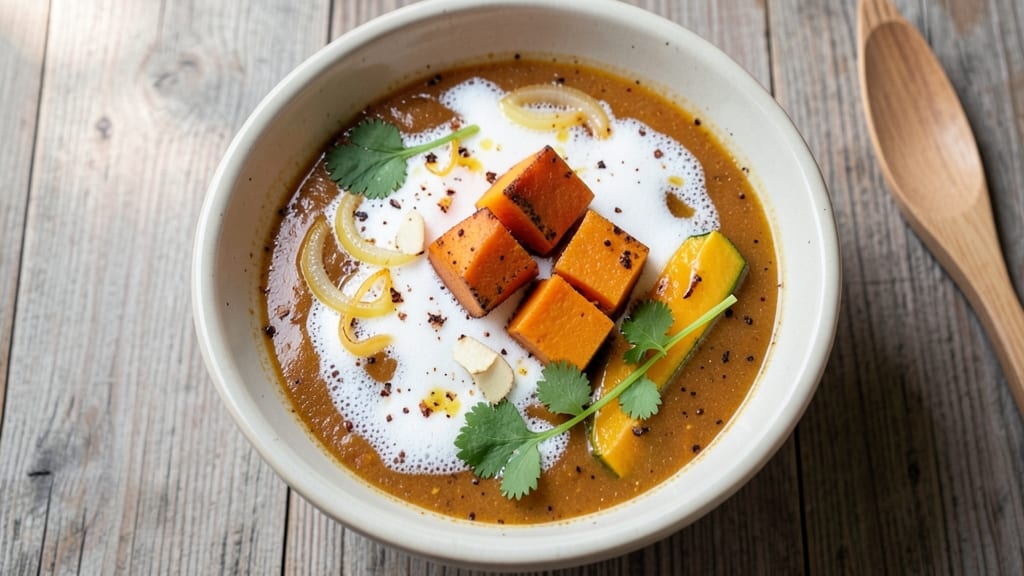
This acorn squash and sweet potato soup delivers autumn in every spoonful—velvety sweetness from roasted vegetables and crunchy spiced seeds that add texture without overpowering. The secret lies in roasting the squash and sweet potatoes first, which deepens their natural sweetness and caramelizes their edges for a restaurant-quality depth.
I developed this recipe during a particularly chilly October when I wanted something hearty yet light enough for a weeknight dinner.
What makes this soup special is the balance of flavors and textures: the creamy roasted base pairs perfectly with toasted pumpkin seeds and a touch of coconut milk for richness. Unlike many soups that rely on heavy cream, this version stays plant-based while delivering satisfying body and warmth.
The roasting step isn't just for flavor—it also softens the vegetables enough that blending becomes effortless, resulting in a silky consistency without any graininess.
By the time you're done, you'll have a soup that's naturally sweet, subtly spiced, and topped with addictive crunch—perfect for cozy evenings or holiday gatherings.
The aroma alone will fill your kitchen with the essence of fall, while each bite delivers layers of flavor that keep you reaching for seconds. This recipe scales beautifully too, making it ideal for feeding a crowd or prepping meals for the week ahead.
The best part? Every component comes together in under an hour, with minimal active time. Roast while you prep, blend while you toast seeds, and assemble with just a few minutes of stirring.
Whether you're serving it as a main dish or pairing it with crusty bread, this soup proves that plant-based meals can be both comforting and impressive. Let's get started on making yours.
Ingredients for acorn squash and sweet potato soup
Roasted squash and sweet potatoes create velvety sweetness—paired with toasted seeds for addictive crunch.
| Ingredient | Amount | Notes |
|---|---|---|
| Acorn Squash 🎃 | 1 ½ lb | Halved, seeds removed |
| Sweet Potatoes 🍠 | 1 ½ lb | Medium, peeled and cubed |
| Yellow Onion 🧅 | 1 whole | Medium, chopped |
| Fresh Garlic Cloves 🧄 | 4 cloves | Peeled, roughly chopped |
| Fresh Ginger 🌿 | 1 tbsp | Grated, fresh preferred |
| Coconut Milk 🥥 | 1 can | Full-fat, 13.5 oz can |
| Vegetable Broth 💧 | 4 cups | Low-sodium preferred |
| Pumpkin Seeds 🥜 | ½ cup | Raw, unsalted |
| Maple Syrup 🍁 | 2 tbsp | Pure, grade B preferred |
| Ground Cinnamon 🌶️ | 1 tsp | Freshly ground preferred |
| Ground Cumin 🌿 | ½ tsp | Toasted for depth |
| Smoked Paprika 🌶️ | ½ tsp | For subtle smokiness |
| Sea Salt 🧂 | 1 tsp | Adjust to taste |
| Black Pepper 🌶️ | ½ tsp | Freshly cracked |
| Extra-Virgin Olive Oil 🫒 | 2 tbsp | For roasting |
The acorn squash and sweet potatoes are the stars here. Look for organic squash with smooth, unblemished skin—they roast more evenly. Sweet potatoes should be firm and vibrant orange; Trader Joe's and Whole Foods carry the best varieties. Roasting them first brings out their natural sweetness and caramelizes the edges, giving that restaurant-quality depth. If you can't find acorn squash, butternut squash works too, but the flavor will be slightly milder. The key is to roast them at 400°F for 35-40 minutes until fork-tender—don't rush it. This step transforms the vegetables into a silky base that blends effortlessly.
No fresh ginger? Powdered ginger at half the amount works in a pinch, but fresh is ideal for that bright, zesty kick. The pumpkin seeds can be swapped for pecans or walnuts if you prefer a different texture, though they toast up beautifully with the same spices. Coconut milk adds richness without dairy—full-fat gives the best creaminess, but light works too if that's what you have. For extra depth, toast the spices (cumin and smoked paprika) in a dry pan for 30 seconds before adding them to the soup. The maple syrup balances the earthy flavors, so don't skip it—grade B has more molasses notes, but grade A works fine.
This soup reheats beautifully—just stir in a splash of water or broth if it thickens. Store leftovers in an airtight container for up to 5 days in the fridge, or freeze for 3 months. The toasted seeds keep their crunch best when stored separately, so sprinkle them fresh before serving. For meal prep, portion the soup into jars and keep the seeds in a separate container. The aroma alone makes this worth reheating—it's like autumn in a bowl every time.
Why You'll Love This Recipe
- One-Pot Magic: I swear by this recipe—just roast the squash and potatoes together, then blend. No separate pans, no extra bowls. The onion and garlic caramelize right in the oven while you chop ginger, and suddenly, dinner’s almost done.
- Warm Spice Hug: That fresh ginger and garlic? They turn this soup into a cozy hug in a bowl. The acorn squash adds a subtle earthiness while the sweet potatoes bring natural sweetness—like autumn in every bite. Honestly, it’s the kind of flavor that makes you want to linger.
- Meal Prep MVP: I make a big batch on Sundays, and it lasts me all week. The texture holds up beautifully when reheated, and it’s perfect for lunchboxes or quick dinners. Even my picky-eating teen asks for seconds—no joke.
- Budget-Friendly Luxury: Sweet potatoes and acorn squash stretch further than you’d think, and they’re often cheaper than other winter veggies. Plus, the ginger and garlic add depth without breaking the bank. It’s the kind of recipe that feels fancy but won’t drain your wallet.
Step-by-step instructions for acorn squash and sweet potato soup
Transform humble root vegetables into a rich, spiced soup with a perfect balance of velvety texture and toasted crunch.
Roast the Vegetables for Deep Flavor
Preheat your oven to 400°F and line a large baking sheet with parchment paper. Toss the peeled and cubed 1.5 lb sweet potatoes and chopped 1 whole yellow onion with 1 tbsp extra-virgin olive oil, 1 tsp sea salt, 0.5 tsp black pepper, 1 tsp ground cinnamon, 0.5 tsp ground cumin, and 0.5 tsp smoked paprika. Spread them in a single layer on the baking sheet.
Cut the 1.5 lb acorn squash in half, remove the seeds, and scoop out the flesh into 1-inch cubes. Toss these with another 1 tbsp extra-virgin olive oil and the same spice blend. Arrange all vegetables on the baking sheet, leaving space between them for even browning. Roast for 25-30 minutes until the sweet potatoes are tender and the edges are caramelized.
Build the Soup Base with Aromatics
While the vegetables roast, heat a large pot over medium heat and add 2 tbsp extra-virgin olive oil. Add the peeled and roughly chopped 4 cloves garlic and 1 tbsp grated fresh ginger, cooking for 1-2 minutes until fragrant but not browned. Be careful not to burn them—garlic turns bitter quickly.
Add the roasted vegetables directly to the pot. Pour in the 4 cups vegetable broth and bring to a gentle simmer. Let it cook for 10 minutes to meld the flavors. Stir occasionally, ensuring the vegetables break down into a creamy consistency. If the soup seems too thick, add a splash of water or broth to reach your desired texture.
Blend and Sweeten the Soup
Use an immersion blender to purée the soup directly in the pot until completely smooth. If you prefer a chunkier texture, blend only half and leave the rest as-is. Stir in the 1 can coconut milk and 2 tbsp maple syrup, then taste and adjust the seasoning with additional sea salt or black pepper if needed.
Return the soup to a gentle simmer for 5 minutes to let the coconut milk blend seamlessly. The soup should now have a luxurious, velvety texture with a subtle sweetness from the maple syrup and warmth from the spices. Keep it warm over low heat while you prepare the topping.
Toast the Pumpkin Seeds for Crunch
Spread the 0.5 cup pumpkin seeds on a separate baking sheet and toast in the oven at 350°F for 8-10 minutes, stirring once halfway through. Watch them closely—they should turn golden and smell nutty. Remove them as soon as they begin to darken, or they'll burn quickly.
Let the seeds cool for 2 minutes before sprinkling them over the finished soup. The contrast between the creamy soup and toasted seeds adds a delightful textural element. Serve immediately with a drizzle of coconut milk and a pinch of fresh cracked black pepper for an extra layer of flavor.
Serve with Warm Bread and Extra Garnish
Ladle the soup into bowls, ensuring each serving gets a generous portion of the toasted pumpkin seeds. Garnish with a sprinkle of freshly cracked black pepper and a drizzle of extra-virgin olive oil for added richness. Pair with crusty bread or warm naan to soak up every last drop of this comforting, spiced soup.
The soup's flavors will only deepen as it sits, so if you have leftovers, store them in an airtight container in the refrigerator for up to 3 days. Reheat gently on the stove, stirring in a splash of broth or water to restore the creamy texture. The toasted seeds can be stored separately and added back when reheating.
Pro Tips For Making Acorn Squash And Sweet Potato Soup
- CHAR THE SQUASH FIRST: Cut the acorn squash in half, scoop out the seeds, then roast it cut-side down at 400°F (200°C) for 20 minutes before blending. This caramelizes the edges and deepens the flavor—no one notices if you skip it, but the soup tastes noticeably richer when you don’t.
- PEEL GINGER LIKE A PRO: Use a spoon to scrape the skin off fresh ginger in one smooth motion, then slice it thinly—about 1/8-inch thick. Thicker slices burn before releasing their heat, and you’ll end up with a bitter, overpowering soup. (Yes, even if you’re impatient like me.)
- SAUTÉ ONIONS LOW AND SLOW: Cook the yellow onion in butter or oil at medium-low heat until deeply golden—about 12-15 minutes. Rushing this step turns the onions mushy and dulls the sweetness that balances the earthy squash. (Your future self will taste the difference.)
- BLEND IN STAGES: Pulse the soup in batches if your blender’s full—half the ingredients first, then the rest—to avoid splattering hot liquid everywhere. A splash of vegetable broth thinned out first? That’s how you end up with a soupy mess instead of a creamy texture. (Trust me, I’ve been there.)
Storing and reheating this acorn squash and sweet potato soup
Refrigerator Storage
Store your soup in an airtight glass container (I love Pyrex with snap-on lids) for up to 5 days in the fridge. The toasted pumpkin seeds should be kept separately in a small jar or airtight bag to maintain their crunch.
When reheating, stir in 1-2 tablespoons of water or vegetable broth to restore the creamy texture—this prevents the soup from becoming too thick. 🥄
Freezer Prep Tips
For longer storage, freeze the soup in quart-sized freezer bags (leave 1-inch headspace for expansion) or glass jars (leave ½-inch headspace). The soup keeps its quality for 3 months—just thaw overnight in the fridge before reheating.
Never refreeze once thawed, as this can degrade the texture. Label bags with the date to track freshness. ❄️
Stovetop Reheating
My preferred method is stovetop reheating over medium-low heat—it preserves the silky texture best. Stir occasionally and add 2-3 tablespoons of broth or water as needed.
Bring to a gentle simmer for 8-10 minutes, then taste and adjust seasoning (a pinch of sea salt or maple syrup often helps). Keep the heat low to prevent scorching. 🔥
Microwave Safety
For quick reheating, transfer soup to a microwave-safe bowl and heat in 30-second intervals, stirring between each. Use 50% power to avoid overheating—this keeps the coconut milk from separating.
If the soup looks too thick, add 1-2 tablespoons of water and stir well. Always let it sit for 1 minute after heating to ensure even temperature. 💡
Reviving Toasted Seeds
If your seeds lose crunch during storage, toast them fresh in a dry skillet over medium heat for 3-4 minutes until fragrant. Store them in a small airtight container at room temperature for up to 1 week—they’ll keep their nutty flavor even if they lose a little crunch.
Sprinkle generously over reheated soup for that addictive texture contrast. 🥜
Meal Prep Strategy
Double the recipe and freeze half for future meals—I often prep this soup on weekends to save time during busy weeks. When reheating, add the seeds directly to individual bowls so they stay crispy.
The soup’s flavors actually improve overnight, making it perfect for meal prep. Just remember: always store seeds separately to avoid sogginess. 📅
Nutrition facts
Frequently asked questions
Can I substitute butternut squash for acorn squash?
Yes, butternut squash works beautifully—it's milder and sweeter than acorn squash. For best results, peel and cube it the same way, then roast for 30-35 minutes at 400°F until tender. The texture will be slightly creamier, but you'll still get that velvety base. Just reduce the roasting time by 5 minutes since butternut squash softens faster.
How can I make this soup creamier without dairy?
For extra richness, stir in 2-3 tablespoons of cashew cream (blend soaked cashews with water) or an additional ½ cup coconut milk while blending. You can also add 1 roasted white potato to the vegetable mix—it breaks down beautifully and adds natural creaminess. Avoid over-blending to prevent a gluey texture.
What if I don't have pumpkin seeds?
No problem! Try toasted pecans, walnuts, or sunflower seeds for a different texture. For a seed-free option, sprinkle with crumbled coconut flakes or a drizzle of tahini for nutty flavor. The key is toasting them first—this adds that essential crunch. Toast pecans at 350°F for 8-10 minutes until golden brown.
Can I make this soup in an Instant Pot?
Sauté the garlic and ginger first, then add all roasted vegetables, broth, and spices. Cook on high pressure for 5 minutes, then quick-release. Blend directly in the pot (use caution with hot liquids) or transfer to a blender. The pressure cooking reduces the roasting time significantly—just 10 minutes at 375°F before blending works well.
Why did my soup turn out too thick?
This usually happens when the coconut milk separates or the soup reduces too much. Fix it by stirring in 2-4 tablespoons of warm water or broth while reheating. For prevention, use full-fat coconut milk and avoid over-simmering. If blending, pulse briefly rather than fully puréeing to maintain some texture that can absorb liquid.